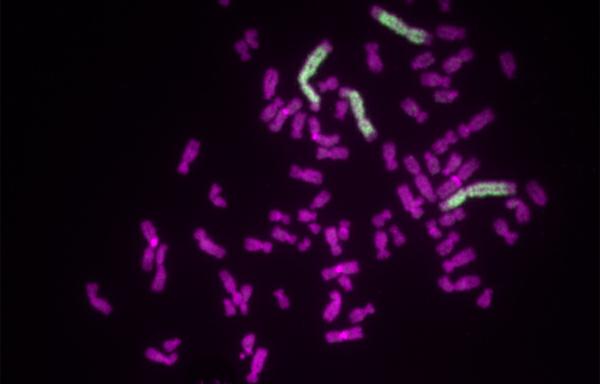







Highly-paid environmental lobbyists invoke Frankenstein's monster for everything, apparently never having read the novel. But there is some biology that is a little like Shelley's monster, massive DNA molecules stitched together from other parts of the genome  that appear in some tumors, according to a new study.

In the first decade of the the new millennium, there was a lot of hand-wringing about the cutting of science journalism jobs at mainstream news outlets. The groundswell of support was...okay, it was nonexistent, really just limited to science journalists. No one else cared.

Laundry detergent pods became popular 2010, because they are more precise than liquids or powder. Are they more dangerous than liquids or powder?

Though marijuana use has gone up sharply since 2007, claims about its lack of harm compared to cigarettes or drugs are not based on evidence. Instead, studies have shown abnormalities in brain function and structure of long-term marijuana users and that chronic marijuana users have smaller brain volume in the orbitofrontal cortex (OFC), a part of the brain commonly associated with addiction, but also increased brain connectivity. 

But the effects of chronic marijuana use on the brain may depend on the age of first use and duration of use, according to researchers. 

The need for a moral higher power may have been as necessary for adapting to a dangerous world as physical adaptations, according to a new paper.

The authors suggest that societies with less access to food and water are more likely to believe in such deities. They believe there is a strong correlation between belief in high gods who enforce a moral code and other societal characteristics. Political complexity - namely a social hierarchy beyond the local community - and the practice of animal husbandry were both strongly associated with a belief in moralizing gods, though how raising livestock factored in is a mystery, since everyone did it.


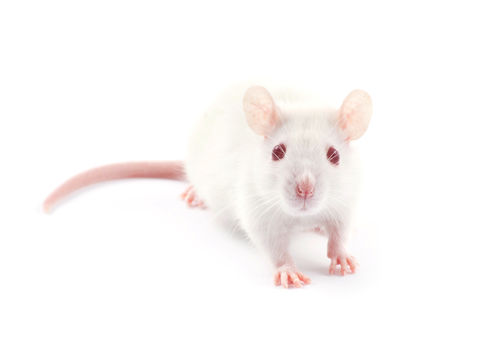
I'll have a clean cage with a side of fertility issues. Mouse image via www.shutterstock.com

By Anne-Marie Hodge, University of Wyoming

Boston, MA - Among pregnant women infected with HIV, the use of antiretroviral (ARV) medications early in pregnancy to treat their HIV or to prevent mother-to-child transmission of HIV does not appear to increase the risk of birth defects in their infants, according to a new study led by Harvard School of Public Health (HSPH). It is one of the largest studies to date to look at the safety of ARV use during pregnancy.

While the study found that overall risk was low--in keeping with previous research that has found ARV use in pregnancy to be generally safe--the researchers did find that one ARV drug, atazanavir, was associated with increased risk of birth defects and they said it should be studied further.


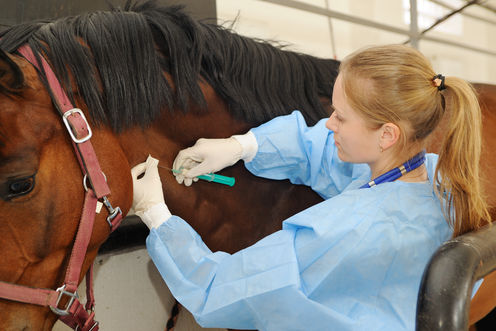
Neigh problem with injections. Shutterstock

By Adele Williams, University of Surrey

Picture this. Your prize horse needs a vaccination. Who should turn up to deliver this but a veterinary graduate of ten years, specialist in equine internal medicine and teacher to veterinary undergraduates.

Today is your lucky day! Or not.

“I specifically requested one of the male vets, but it is just a vaccination so I do hope you’ll be able to do that …”

The adult human body is made up of about 37 trillion cells. Microbes, mainly bacteria, outnumber body cells by 10 to 1. This huge community of microbes, called the microbiome, affects the health, development and evolution of all multicellular organisms, including humans, according to the latest craze in health supplement marketing and plenty of science papers latching onto the fad.

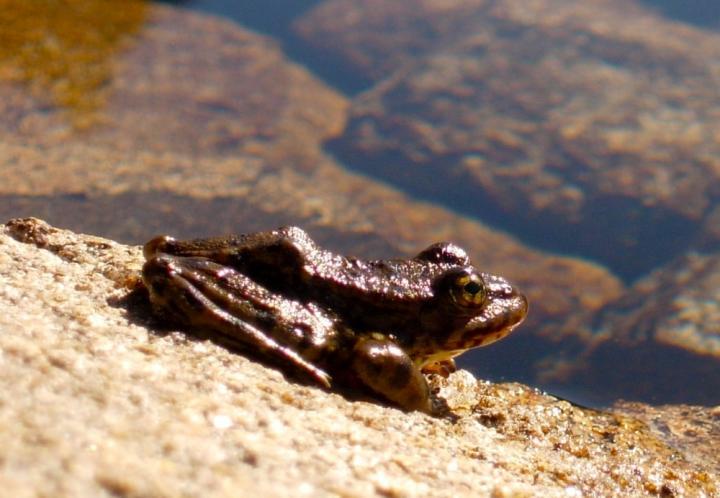
Symbiotic microbes can help prevent infection by disease-causing pathogens but sometimes the interaction goes the other way, with a pathogen or disease disrupting the normal community of symbiotic bacteria. In a new paper in the Proceedings of the National Academy of Sciences, a team of scientists from UC Santa Barbara say that a fungal pathogen of amphibians does just that.


Black holes aren’t black. Warner Bros.

By Alasdair Richmond, University of Edinburgh

Note: this article has spoilers.

In Interstellar’s near-ish future, our climate has failed catastrophically, crops die in vast blights and America is a barely-habitable dustbowl. Little education beyond farming methods is tolerated and students are taught that the Apollo landings were Cold War propaganda hoaxes.


