








Dalibor Levíček, CC BY-NC-SA

By Mick Reed, University of New England

The Jack the Ripper murders are the most potent cold case ever. More than a century on from the first killing in 1888 they are still attracting global attention.


via: The Telegraph

By Jane Palmer, Genetic Literacy Project

Sometimes I think I’ve outsourced my consciousness to Google. Can’t remember something? Google it. Want to remember something? Google Doc it. Want to get noticed? Get on Google News. If Google ever does pull the plug it will take my career, my social life and my memories leaving me a mere shell of an intelligence thinking human being, such is my sad dependent state.


Air pollution is harming India's wheat farmers. EPA

By Zongbo Shi, University of Birmingham

Researchers have long known that man-made climate change will harm yields of important crops, possibly causing problems for the world’s food security. But new research shows air pollution doesn’t just harm crops indirectly through climate change; it seems to harm them directly.

It's common sense that if you have ne mess and add another mess, you have created an even bigger mess.

But in arcane statistics, economics and social science, a bigger mess can lead to more order - a concept known as antifragility. 

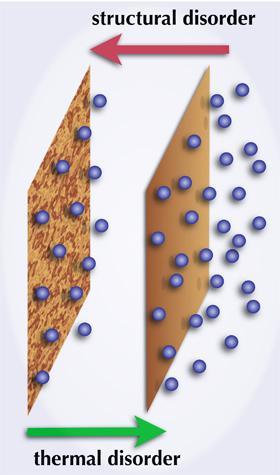
In a paper published in The Journal of Chemical Physics, researchers found a counterintuitive interplay between two different types of disorder. One is thermodynamic disorder, or entropy. The other is the structural disorder—defects in an idealized system that can change its properties.

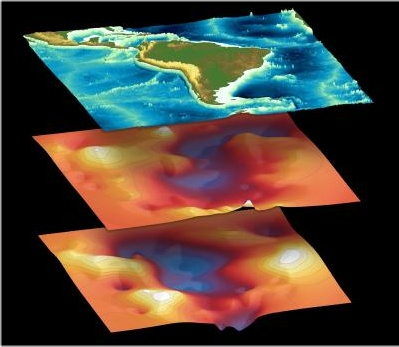
Tectonic plates, which make up the outer layer of the earth, are rigid. It is giant layers of rock, after all. But that is a bit of a simplification. They are not rigid and don't fit together as nicely as we imagine, according to a new paper in Geology by Corné Kreemer, an associate professor at the University of Nevada, Reno, and his colleague Richard Gordon of Rice University, which quantifies deformation of the Pacific plate and challenges the central approximation of the plate tectonic paradigm that plates are rigid. 

There are a number of government-funded campaigns to promote more participation in Science, Technology, Engineering and Math (STEM) fields, with the promise that a PhD means basic discovery and improving the human condition.

Yet what is left out of expensive marketing efforts is that there are now 6 PhDs for every job in academia - just because more people want to work at a university does not mean the government will increase funding to pay for it.  Instead of selling STEM careers to students, the National Science Foundation would be doing a greater service by showing students that academia is a lot like the corporate world - you will have to compete to get ahead, otherwise you will be trapped in a low-end job in a lab forever.

It's hard to have our steak and eat it too. Red meat was once implicated in a wave of studies and linked to heart disease and other maladies, before being absolved.

But the microbiome and the surge in advertising for probiotics to promote 'healthy' gut bacteria has implicated red meat again - this time by correlating a nutrient that the authors say is changed by gut bacteria into an atherosclerosis-causing metabolite, which means hardening of the arteries.


In 2013, when PLoS One published a research paper, Complete Genes May Pass from Food to Human Blood, anti-GMO activists claimed they had proof that GMOs can “transfer” into our bodies, and threaten human health.

Now it turns out the hysteria they tried to generate was based on a study that its researchers believe went awry.

There is concern about pollution, overfishing and even climate change when it comes to reduced wild fish populations.

Farmed fish is the obvious solution but critics have a response for that also - they contend that hatchery-raised fish won't be as well adapted to their new environments or that the wild population will be "tainted" by breeding with domesticated counterparts.

In what they are terming the largest MRI study to date, a group of researchers writing in Cerebral Cortex have found that the brain anatomy in MRI scans of people with autism above age six is mostly indistinguishable from that of typically developing individuals and, therefore, of little clinical or scientific value.


