










Up to 64% of people worldwide use medicinal plants to treat illnesses and relieve pain, and the herbal medicine market is worth $60 billion annually. Despite the increasing popularity of herbal medicine, the sale of medicinal plants is mostly unregulated, because they do not claim to be medicine in countries where regulation happens. 

It's obvious why people in developing nations embrace herbal alternatives to medicine - medicine is expensive. In wealthier countries, it is instead embraced by people who have plenty of money but don't trust science.


A new paper suggests that planets from the remnants of the universe's earliest stars could have supported life on dim, warm planets. Credit: NASA/WMAP Science Team

By: Ker Than, Inside Science

(Inside Science) -- Life in the universe could be much older than previously thought, forming as early as fifteen million years after the Big Bang, according to a provocative new idea proposed by a Harvard astrophysicist.

While studying the atmosphere on Saturn's moon Titan, scientists discovered intriguing zones of organic molecules unexpectedly shifted away from its north and south poles. These misaligned features seem to defy conventional thinking about Titan's windy atmosphere, which should quickly smear out such off-axis concentrations.

"This is an unexpected and potentially groundbreaking discovery," said Martin Cordiner, an astrochemist working at NASA's Goddard Space Flight Center in Greenbelt, Maryland, and the lead author of a study published online today in the Astrophysical Journal Letters. "These kinds of east-to-west variations have never been seen before in Titan's atmospheric gases. Explaining their origin presents us with a fascinating new problem."


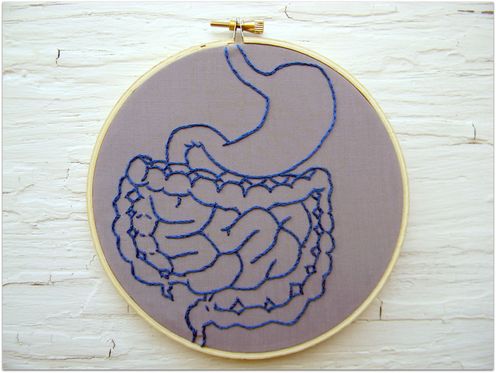
Your second brain? Credit: hey__paul, CC BY

By Clio Korn, University of Oxford

A new study found that people ages 60 and older who do not have dementia benefit from light alcohol consumption; it has been associated with higher episodic memory, the ability to recall memories of events. 

Moderate alcohol consumption was also linked with a larger volume in the hippocampus, a brain region critical for episodic memory. The relationship between light alcohol consumption and episodic memory goes away if hippocampal volume is factored in, providing new evidence that hippocampal functioning is the critical factor in these improvements.  


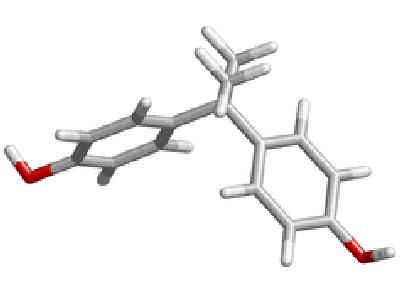
Structure of Bisphenol A. Credit: Ian Musgrave

By Ian Musgrave

Bisphenol A is in the news again. A paper just published in the Public Library of Science with the alarming title of “Holding Thermal Receipt Paper and Eating Food after Using Hand Sanitizer Results in High Serum Bioactive and Urine Total Levels of Bisphenol A (BPA)” is bound to ratchet up anxiety levels about this chemical yet again.


Credit: The Conversation

By Jordan Gaines Lewis, Penn State College of Medicine

If you’ve ever applied for a job, you know how hard it is to write the perfect cover letter that will make you stand out above all the other applicants. It’s a competitive job market, and more often than not, career seekers find themselves face-to-face with blank computer screens in an attempt to pen that one short masterpiece.

Beta Pictoris is a young star, only about 20 million years old, located about 63 light-years from us. It is surrounded by a huge disc of material, a very active young planetary system where gas and dust are produced by the evaporation of comets and the collisions of asteroids.

By sequencing the genomes of tumor cells, thousands of genetic mutations have been linked with cancer.

Sifting through this deluge of information to figure out which of these mutations actually drive cancer growth has proven to be a tedious, time-consuming process but MIT researchers have now developed a new way to model the effects of these genetic mutations in mice. Their approach, based on the genome-editing technique clustered regularly interspaced short palindromic repeats (CRISPR) is much faster than existing strategies, which require genetically engineering mice that carry the cancerous mutations.

A new paper finds that the same specialized immune cells that patrol the body and spot infections also trigger the expansion of the immune organs known as lymph nodes.

The immune system defends the body from infections but can also spot and destroy cancer cells and lymph nodes are at the heart of this response, but it was unclear how they expand during disease. 

Researchers  at Cancer Research UK's London Research Institute found that when a type of immune cell known as dendritic cells recognizes a threat, they make a molecule called CLEC-2 that tells the cells lining the lymph nodes to stretch out and expand to allow for an influx of disease fighting cells.

