Females are naturally more resistant to respiratory infections than males
and now researchers have linked that increased resistance to bacterial pneumonia in female mice to an enzyme called  enzyme nitric oxide synthase 3 (NOS3), which is activated by the female sex hormone estrogen.

COLUMBUS, Ohio—Our view of other solar systems just got a little more familiar, with the discovery of a planet 25,000 light-years away that resembles our own Uranus.

Astronomers have discovered hundreds of planets around the Milky Way, including rocky planets similar to Earth and gas planets similar to Jupiter, but there is a third type of planet in our solar system — part gas, part ice, like Uranus and Neptune — called an "ice giant" and researchers have spotted one outside Sol's orbit for the first time.

But let's not build a cute robot and send it there just yet; it's 25,000 light years away.

The Natural Resources Defense Council became the first environmental group to file suit 


The Ebola crisis in Africa is getting a lot of attention but coverage of a regional problem is displacing concern over a more pressing problem worldwide; influenza. 

The pandemic risk from strains of influenza virus is far more worrisome than Ebola. Influenza pandemics arise when a new virus strain – against which humans have yet to develop widespread immunity – spreads in the human population.

French growers have to endure a lot of strange restrictions - they can't use seeds with neonicotinoids on them, for example, because of a manufactured controversy about colony collapse disorder, but they can spray neonics on the plants themselves, which is actually worse for the environment. They can't use GMOs but they can use products created using mutagenesis, even though it is far less rigorous and precise.

Now the European Commission has gone too far; they are putting warning labels on products made with lavender oil, which reportedly can cause allergic reactions for some people. According to an article in Chemical&Engineering News, the French are getting ready to fight anti-science regulations for the first time this century.

A joke in the European business community is that most young people turn 18 and start thinking about their pensions. They may have good reason, according to a study by the Max Planck Institute for Demographic Research (MPIDR), which found that for each additional euro the eastern Germans received in benefits from pensions and public health insurance after reunification, they gained on average three hours of life expectancy per person per year. 

Public spending appears to have contributed substantially to life expectancy, they say, so much that in just a generation life expectancy in eastern Germany has increased to be almost equivalent to life expectancy in the west, a big victory for proponents of more government spending.


Pulsars were discovered by a woman, Jocelyn Bell. Credit: Wikimedia

By Hazel Hall, Edinburgh Napier University

What was the greatest astronomical discovery of the 20th century?

Some would say pulsars – highly magnetized, rotating neutron stars emitting beams of electromagnetic radiation. The scientific world was informed of these in a paper published by Nature in 1968.

It's Ada Lovelace day. Image credit: unknown

By Jan Bogg, University of Liverpool

Throughout the year there are special days that see newsagents fill with celebratory cards. Perhaps punched cards would be more appropriate for Ada Lovelace Day, which marks both the mathematical prowess of the woman dubbed the “first computer programmer” and the cultural barriers she faced – those women in science and technical fields still face today.

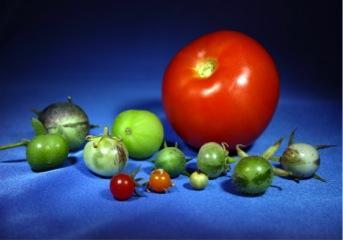
What's not red and about the size of your thumb?

Tomatoes, before ancient scientists set out to make them patabale.  This genomic history of tomato breeding, based on sequencing of 360 varieties of the tomato plant, has vaulted beyond the first tomato genome sequence completed just two years ago. It will lend insight into science for people who believe genetic modification only began happening during the Clinton administration.

Analysis of the genome sequences of these 360 varieties and wild strains shows which regions of the genome were under selection during domestication and breeding. The study identified two independent sets of genes responsible for making the fruit of modern commercial tomatoes 100 times larger than their wild ancestors.

Given a critical change in the environment, how exactly do species adapt?