




By Marsha Lewis, Inside Science

(Inside Science TV) – One of the deadliest forces on earth is the humble mosquito. Mosquito-borne diseases like malaria, chikungunya, yellow fever and West Nile virus infect more than 350 million people and kill another 1 million people every year.

Now, scientists in Florida hope to wipe out some of these deadly diseases by genetically modifying their winged carriers.

“Mosquitoes are probably the most dangerous animal in the world. More people are killed by them [than] by anything else," said Michael Doyle, an entomologist at the Florida Keys Mosquito Control District in Key West, Florida.

That DNA makes RNA which makes protein is a simplified explanation molecular biologists use to explain for how genetic information is deciphered and translated in living organisms.

The process is more complicated than the schema first articulated nearly 60 years ago by Nobel Laureate Francis Crick, co-discoverer of the DNA's double-helix structure. Now it is known that there are multiple types of RNA, three of which—messenger RNA (mRNA), transfer RNA (tRNA), and ribosomal RNA (rRNA)—are essential for proper protein production. Moreover, RNAs that are synthesized during the process known as transcription often undergo subsequent changes, which are referred to as "post-transcriptional modifications."

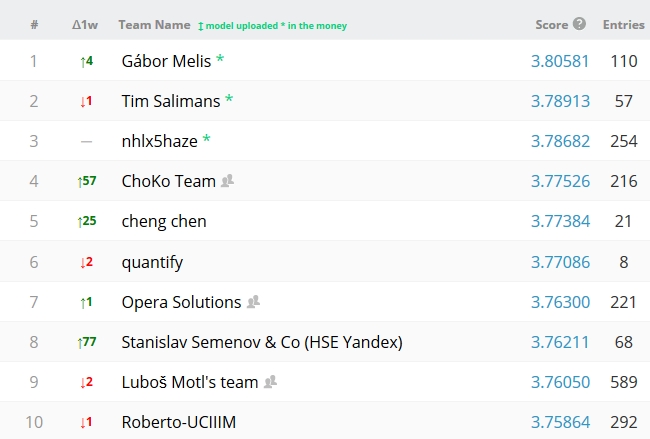
After four months of frenzy by over 1500 teams, the very successful Higgs Challenge launched by the ATLAS collaboration ended yesterday, and the "private leaderboard" with the final standings has been revealed. You can see the top 20 scorers below.


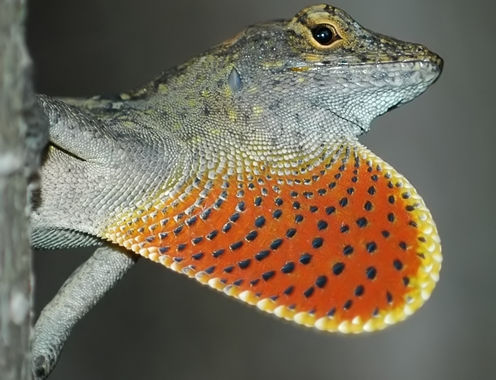
Can the brown anole lizard outrun climate change? Credit: Ianaré Sévi, CC BY

By Amanda Bates, University of Southampton

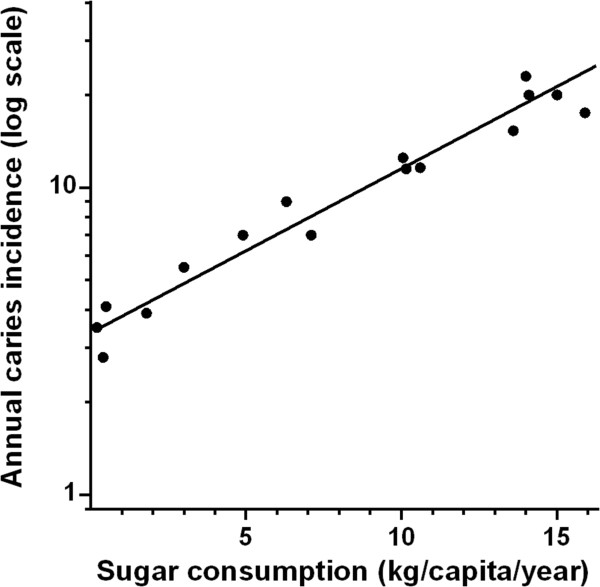
If we get sugars down to 3% of total energy intake, it may put dentists out of business, according to a paper in BMC Public Health which analyzed the effect of sugars on tooth decay and found that sugars are the only cause of tooth decay in children and adults.

Free sugars are defined by the World Health Organisation Nutrition Guidance Advisory Group as "Free sugars include monosaccharides and disaccharides added to foods by the manufacturer, cook or consumer, and sugars naturally present in honey, syrups, fruit juices and fruit concentrates." 

Calculating the pros and cons is a time-honored method for making analytical decisions but focusing too much on numberscalculations, especially those involving money, can lead to negative consequences, including social and moral transgressions, says a new paper.

Based on several experiments, researchers concluded that people in a "calculative mindset" as a result of number-crunching are more likely to analyze non-numerical problems mathematically and not take into account social, moral or interpersonal factors.

Chen-Bo Zhong. Credit: Rotman School


Is this really necessary? Credit: EPA

By John Weeks, SOAS, University of London

The Obama administration has proposed several ad hoc multi-country economic agreements, and in doing so has abandoned de facto the World Trade Organization (WTO) as insufficiently malleable to its interests. The two most important of these are the Trans-Pacific Partnership (TPP) and the more recent Transatlantic Trade and Investment Partnership (TTIP).

Good nose. Credit:  Lowjumpingfrog, CC BY

By Joao Pedro de Magalhaes, University of Liverpool

Molecules containing carbon-halogen bonds are produced naturally across all kingdoms of life and constitute a large family of natural products with a broad range of biological activities. 

The presence of halogen substituents in many bioactive compounds has a profound influence on their molecular properties and a goal of chemical science has been to find the late-stage, site-specific incorporation of a halogen atom into a complex natural product by replacing an sp³ C-H bond (one of the most inert chemical bonds known in an organic compound) with a C-X bond (X=halogen).

There has been no reliable synthetic or biological method known to be able to achieve this type of transformation but in Nature Chemical Biology

In 2010, McGill Redmen receiver Charles-Antoine Sinotte suffered a concussion during his last home game. "It was like nothing I had experienced before," recalls Sinotte. "I felt like I was out of my body."

Although he received medical attention and missed the rest of the game, he admits he downplayed his symptoms in order to play in the next game – his last before leaving McGill.