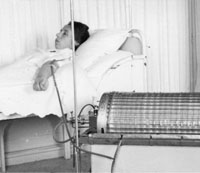









Artificial hearts were invented at a time when progress in science couldn't come fast enough. In 1969, when they first went into human use, DDT hadn't been banned, vaccines were considered the medical highlight of the century, and the Green Revolution promoted genetic modification as the way to feed the world's poor in the future.
I just read with interest the new paper on the arxiv by my INFN-Padova colleague Massimo Passera and collaborators, titled "Limiting Two-Higgs Doublet Models", and I thought I would explain to you here why I consider it very interesting and what are its conclusions.
Data from an initial representative 938-subject sample of  a 4,800-subject colorectal cancer trial at Hvidovre Hospital, Copenhagen demonstrated that the NuQ® blood-based diagnostic platform  is able to correctly diagnose 84% of colorectal cancers, including early-stage cancers.

Most adults need seven to nine hours sleep to function at their best. Credit: Jiuck/Flickr, CC BY-NC-SA

By Gemma Paech, University of South Australia

Merck is discontinuing the clinical development program of its investigational MUC1 antigen-specific cancer immunotherapy tecemotide (L-BLP25) as a monotherapy in Stage III non-small cell lung cancer (NSCLC).

Tecemotide is an investigational MUC1 antigen-specific cancer immunotherapy that is designed to stimulate the body's immune system to identify and target cells expressing the cell-surface glycoprotein MUC1. MUC1 is expressed in many cancers, including NSCLC, and has multiple roles in tumor growth and survival. Tecemotide was being investigated in the Phase III START2, START and INSPIRE trials for the treatment of unresectable, locally advanced Stage III NSCLC.

Rebuilding Microsoft one block at a time.Credit: animeareftw, CC BY-NC-ND

By Mark Skilton, University of Warwick

Just as the game Minecraft sees players build their virtual world block by block, Satya Nadella’s bid for its parent company is his first solid move in Microsoft’s new platforming strategy.


Snooping is not allowed. Credit: Paul Walsh, CC BY-NC-SA

By Grant Blank, University of Oxford

The U.S. Food and Drug Administration has approved Keytruda (pembrolizumab), a new immunotherapy drug to treat advanced melanoma after it was tested on more than 600 patients who had melanoma that had spread throughout their bodies.

Because so many of the patients in the early testing showed significant long-lasting responses, the study was continued and the FDA granted the drug “breakthrough therapy” status, allowing it to be fast-tracked for approval. The largest Phase 1 study in the history of oncology, the research was conducted at UCLA and 11 other sites in the U.S., Europe and Australia.
A 'less is more' approach is not only making 3-D printed parts lighter and stronger, but faster and more economical.

A new technique under development is high speed sintering (HSS). Unlike commercial 3-D printers that use lasers, HSS marks the shape of the part onto powdered plastic using heat-sensitive ink, which is then activated by an infra-red lamp to melt the powder layer by layer and so build up the 3-D part.

The researchers from the University of Sheffield have discovered they can control the density and strength of the final product by printing the ink at different shades of grey and that the best results are achieved by using less ink than is standard.

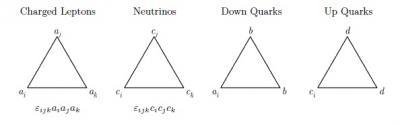
A recent paper makes a connection between the quantum group SLq(2), which describes knots, and the elementary particles of the Standard Model.  A mathematical knot is an embedding of a circle in 3-dimensional Euclidean space. Unlike your shoes, with their knot
the ends are joined together so it cannot be undone. The Standard Model, created in the 1970s, is the dominant hypothesis concerning electromagnetic, weak, and strong nuclear interactions in fundamental particles.

Some suggest that leptons, neutrinos, and quarks might be composite and the authors seeks to make the case that the structure is described by the quantum group SLq(2).

