





Cigarette smoking is considered a leading cause of preventable death worldwide and implicated in as many as 440,000 deaths in the United States each year by the U.S. Centers for Disease Control and Prevention.

In the United States, about 20 percent of people still smoke cigarettes and half claim they try to quit each year, though only 10 percent do so and most change their minds within 48 hours. Learning about withdrawal and difficulty of quitting can lead to more effective treatments to help smokers quit and so a new study on nicotine addiction measured a behavior that can be similarly quantified across species like humans and rats; the responses to rewards during nicotine withdrawal. 

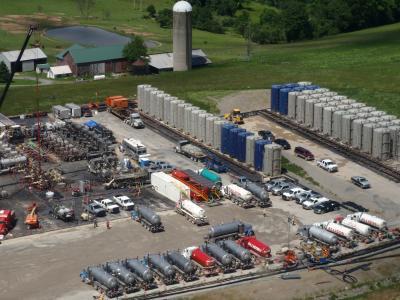
A strange thing happened during climate change policy debates: Advances in hydraulic fracturing - fracking - put trillions of dollars' worth of previously unreachable oil and natural gas within humanity's grasp, and using it led to reductions in CO2 in the United States.

American cars didn't cause all climate change, no matter what you may have read. Around 13,000 years ago, a sudden, catastrophic event caused drastic climate change and much of the Earth was plunged into a period of cold climatic conditions and drought. This drastic climate change, now called the Younger Dryas, coincided with the extinction of Pleistocene megafauna, such as the saber-tooth cats and the mastodon, and resulted in major declines in prehistoric human populations, perhaps including the termination of the Clovis culture in America.

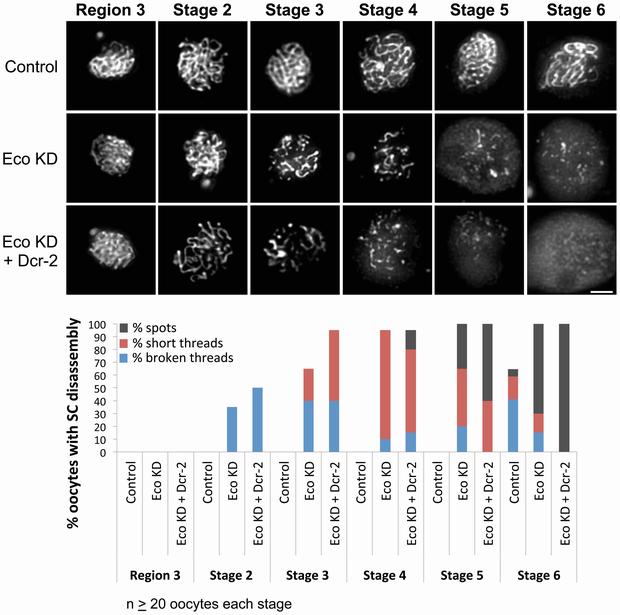
Researchers have discovered a pathway that may improve understanding of molecular mistakes that cause older women to have babies with Down syndrome.

As women age, so do their eggs and during a woman's 30s, the chance that she will conceive a Down syndrome fetus increases dramatically. Most such pregnancies arise from mistakes in a process called meiosis, a specialized cell division that creates gametes, or sex cells (sperm and eggs). Mistakes in meiosis can lead to gametes with the wrong number of chromosomes, which can cause Down syndrome.

Concerns about kidney transplantation are very high among kidney failure patients, particularly older adults and women, but why?

There are thousands of patients with kidney failure who lack access to kidney transplantation, and disparities persist in terms of race, age, sex, and other patient characteristics.  That gets a lot of attention but what gets less mention is those disparities are in large part self-created.

To improve access, it's important to understand the sources of the disparities. Are patients unaware of transplantation and clinicians don't explain it, clinicians don't give referrals, or are patient concerns causing them to avoid transplantation despite appropriate referrals?


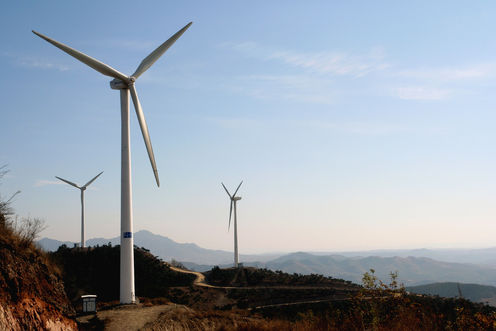
The Tangshanpeng Wind Farm in China. Credit: Flickr/Land Rover Our Planet, CC BY-SA

By John Mathews and Hao Tan, University of Newcastle


Health systems aren't sexy. Credit: Truthout.org, CC BY-NC-SA

By Sophie Harman, Queen Mary, University of London

Researchers have revealed an unusual biochemical connection: ft (Fat) genes interact directly with mitochondria in cells.

Mitochondria are the primary sources of energy production within our cells and there are some 200 pathologies linked to mitochondrial dysfunction. 

Researchers have used sound to communicate with an artificial atom, demonstrating phenomena in quantum physics using sound rather than light.

The interaction between atoms and light has been studied extensively but making acoustic waves couple to an artificial atom is a newer endeavor. An artificial atom is an example of such a quantum electrical circuit. Just like a regular atom, it can be charged up with energy which it subsequently emits in the form of a particle. This is usually a particle of light, but the atom in the Chalmers experiment is instead designed to both emit and absorb energy in the form of sound.

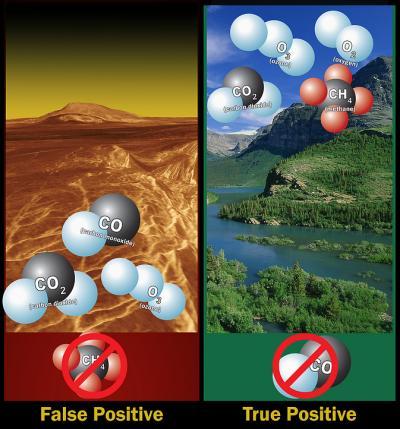
Astronomers searching the atmospheres of alien planets for gases that might be produced by life, such as oxygen, ozone, or methane, may be missing the mark - because those gases can be produced non-biologically.

Methane is a carbon atom bound to four hydrogen atoms. On Earth, much of it is produced biologically - burping cows are a classic example - but it can also be made inorganically; for example, volcanoes at the bottom of the ocean can release the gas after it is produced by reactions of rocks with seawater.

