













Positive results from its final preclinical toxicology study of SYN-004 have led Synthetic Biologics to get ready for clinical trials of the anti-infective, second-generation product candidate for Clostridium difficile (C. difficile).

Synthetic Biologics is in the final stages of preparing its SYN-004 IND application for submission to the FDA, with the expectation of initiating Phase Ia and Ib clinical trials in the fourth quarter of 2014, and a Phase II efficacy study in the first half of 2015.


Dora grows up. Credit: Lisa West Photography, CC BY-NC-ND

By Bruce Fuller, University of California, Berkeley


The Orion Nebula. Image credit: NASA http://bit.ly/1rTTyeC

By: Marcus Woo, Inside Science

(Inside Science) -- Interstellar space can be a dusty place, filled with tiny flecks no bigger than a bacterial cell.

But now astronomers have detected particles as big as pebbles, possibly a previously unknown type of dust that may kick-start the production of planets. The presence of these big particles may also suggest that star formation is more efficient than previously thought.


Ideally lollipops, cookies, sugar-sweetened drinks, potato chips and processed meats will never appear in your shopping cart.  

Want to stack the nutrition odds in your favor? The key is good food so here are five things to never let into your shopping trolley: candies, cookies, sugar-sweetened drinks, potato chips and processed meats.

Known as discretionary foods, all five are high in either added sugars, saturated fat or salt. Discretionary foods provide calories but not many nutrients.

By Karin Heineman, Inside Science 

(Inside Science TV) – From powering homes, to cars to phones, people across the world use vast amounts of energy. And that consumption is only growing.

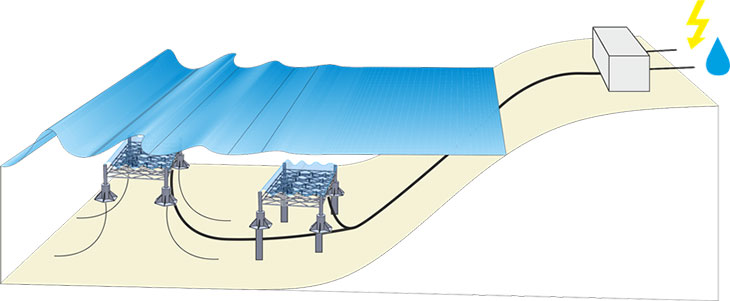
As energy needs increase, scientists are constantly on the hunt for new ways to meet the demand. A group of mechanical engineers may have found a new source: the ocean.

“Wave energy has the potential in the U.S. to power 50 million homes," said Marcus Lehmann, a mechanical engineer at the University of California, Berkeley.

So, Lehmann and his team at UC Berkeley have created a device that can capture the power of ocean waves.


Critical mass of editors could help solve the puzzle.Credit: bastique, CC BY-SA

By Mark Graham, University of Oxford


Eyes – windows on the soul?Credit: Ángelo González, CC BY-SA

By Tracy Long-Sutehall, University of Southampton


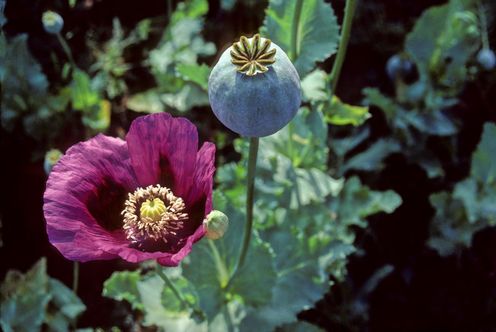
Soon to be grown for ornamental use only.Credit: Mark Nesbitt and Samuel Delwen, CC BY

By Luc Henry, Swiss Federal Institute of Technology in Lausanne

Nearly 1 in 3 young adults ages 19 to 25 years lacked health insurance in 2009 - in most cases, they didn't want to incur the cost but one of the goals of the Affordable Care Act, also known as Obamacare, was to get all young people or their parents paying for coverage so that the people who could not get it could afford to be subsidized.

Thus, an early provision of Obamacare mandated that young people had to pay for health insurance - or insurance companies had to let them stay on their parents' policies until age 26. For a recent paper, Meera Kotagal, M.D., M.P.H., of the University of Washington, Seattle, and colleagues examined coverage, access to care and health care use among 19- to 25-year-olds compared with 26- to 34-year-olds after the Obamacare mandate.


