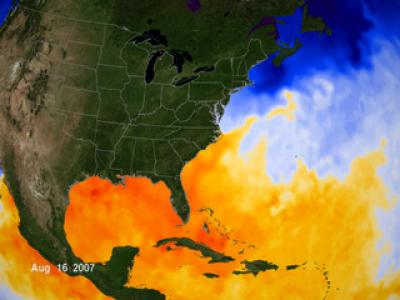




Sea surface temperatures are one of the key ingredients for tropical cyclone formation and they were warming up in the Gulf of Mexico, Caribbean and eastern Atlantic Ocean by the middle of August. As a result, they helped spawn Hurricane Dean in the central Atlantic, and Tropical Storm Erin in the Gulf of Mexico, both during the week of August 13.

By late June, sea surface temperatures in the Gulf of Mexico were all over 80 degrees Fahrenheit. That's one thing that hurricane forecasters watch for because sea surface temperatures of 80 degrees Fahrenheit or warmer are needed to power tropical depressions into tropical storms and grow them into hurricanes.

These areas or warm sea surface waters (80 degrees F or higher) are depicted in yellow, orange, and red.

Yes, the sun has its own magical tune and if you want to hear it, click below. Even more interesting, the earth dances in rhythm.

David Thomson and Louis Lanzerotti, team members of the HISCALE experiment on board Ulysses, together with colleagues Frank Vernon, Marc Lessard and Lindsay Smith have proven that sounds generated deep inside the Sun cause the Earth to shake and vibrate in sympathy. They show that distinct, isolated tones, predicted to be generated by pressure and gravity waves in the Sun, are present in a wide variety of terrestrial systems.

Using statistical analysis they have discovered the same distinct tones emitted by the Sun in seismic data here on Earth.

Researchers have found native gold, silver and platinum salts in the dust of decayed stumps. A ton of their ashes contains 3 kilograms of silver, nearly 200 milligrams of gold and 5 grams of platinum.

These biogeochemical anomalies in complex ore deposit regions were formed by microbes and trees, which act as "gold-diggers" and draw soluble salts out of the soil and then die off, leaving behind the concentrate with “enormous” precious metals content.

The oxidation zone of some ore bodies is very close to the ground surface, within reach of tree roots. That is why, the researchers believe, the soil contains almost as much noble elements as the ore does. For centuries, trees and microorganisms gradually sucked them out of the depth and laid in the soil.

Researchers have determined that 97.9 percent of all white rice is derived from a mutation (a deletion of DNA) in a single gene originating in the Japonica subspecies of rice.

Their report, published in the journal PloS Genetics, suggests that early farmers favored, bred and spread white rice around the world.

The researchers report that this predominant mutation is also found in the Indica subspecies of white rice. They have found a second independent mutation (a single DNA substitution) in the same gene in several Aus varieties of rice in Bangladesh, accounting for the remaining 2.1 percent of white rice varieties. Neither of these two mutations is found in any wild red rice species.

Exploring life in the North Atlantic Ocean at various depths of 800 to 3,500 metres, a team of 31 scientists are returning from a five-week scientific expedition which has surfaced a wealth of new information and insights, stunning images and marine life specimens, with one species thought to be new to science.

Professor Monty Priede, Director of the University’s highly-acclaimed Oceanlab, along with colleague Dr Nicola King, and students Jessica Craig, Claudia Alt and James Hawkins, are part of the science team on board the ship.

Professor Priede said: “It is like surveying a new continent half way between America and Europe. We can recognise the creatures, but familiar ones are absent and unusual ones are common.

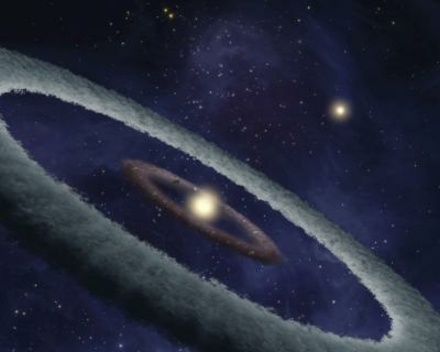
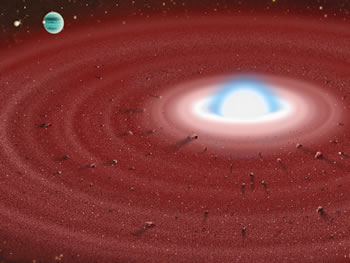
The chemical fingerprint of a burned-out star indicates that Earth-like planets may not be rare in the universe and could give clues to what our solar system will look like when our sun dies and becomes a white dwarf star some five billion years from now.

Astronomers from UCLA report that a white dwarf star known as GD 362, which is surrounded by dusty rings similar to those of Saturn, has been contaminated by a large asteroid that left more than a dozen observable chemical elements in the white dwarf's atmosphere. Such an observation is unprecedented in astronomy.

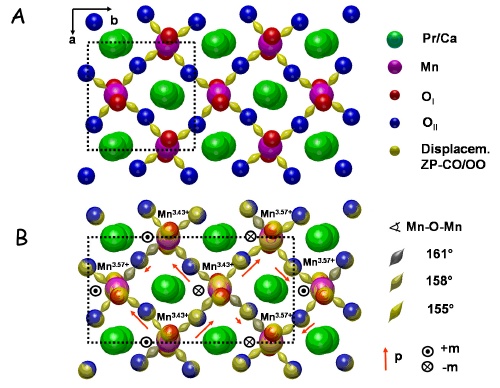
Some materials change their electrical resistance in the presence of an external electromagnetic field. This concept is fundamental to data storage. Understanding large resistance changes, known as colossal magnetoresistance, could lead to new devices with increased data density and reduced power requirements.

"This is an extremely important piece of work with broad potential application in developing the next generation of electronic and data-storage devices," said Brookhaven physicist Yimei Zhu.

The Brookhaven scientists were studying crystalline perovskite manganites that had been doped with extra charge carriers - electrons or "holes" (the absence of electrons) - using various state-of-the-art electron microscopy techniques.

Six American high-school students took the top honors in the 2007 International Linguistics Olympiad in St. Petersburg, Russia earlier this month. This year was the first time a delegation represented the United States at the annual competition. Their victory brings a new focus on computational linguistics.

This year's International Olympiad featured 15 teams representing 9 different countries, including the Netherlands, Russia and Spain. Competitors were given problem sets consisting of sentences in languages most people are not familiar with, including: Tatar; Georgian; a language spoken by indigenous people in Bolivia called Movima; the Papua New Guinean language Ndom; Hawaiian; Turkish; and their English translations.

Are too many people now diagnosed as having depression? Two experts give their views.

Professor Gordon Parker, a psychiatrist from Australia says the current threshold for what is considered to be ‘clinical depression’ is too low. He fears it could lead to a diagnosis of depression becoming less credible.

It is, he says, normal to be depressed and points to his own cohort study which followed 242 teachers. Fifteen years into the study, 79% of respondents had already met the symptom and duration criteria for major, minor or sub-syndromal depression.

The biggest problem for controlling hypertension (high blood pressure) is compliance with treatment, states an editorial in this week’s Lancet.

“Despite very effective and cost-effective treatments, target blood pressure levels are very rarely reached, even in countries where cost of medication is not an issue. Many patients still believe that hypertension is a disease that can be cured, and stop or reduce medication when blood pressure levels fall.”

The risk of becoming hypertensive for a person in a developed country exceeds a “staggering” 90%, and the increasingly common combination and interaction of hypertension with obesity, diabetes and hyperlipidaemia, if left untreated for too long, leads to cardiovascular disease, stroke, renal failure and death.


