A remote galaxy shining with infrared light equal to more than 300,000,000,000,000 suns has been discovered using data from NASA's Wide-field Infrared Survey Explorer (WISE. The galaxy, belongs to a new class of objects nicknamed extremely luminous infrared galaxies, or ELIRGs.
The galaxy, known as WISE J224607.57-052635.0, may have a behemoth black hole at its belly, gorging itself on gas, but is certainly the most luminous discovered to-date.
Supermassive black holes grow by drawing gas and matter into a disk around them. The disk heats up to beyond-sizzling temperatures of millions of degrees, blasting out high-energy, visible, ultraviolet, and X-ray light. The light is blocked by surrounding cocoons of dust. As the dust heats up, it radiates infrared light.
The LHC has finally started to produce 13-TeV proton-proton collisions!
The picture below shows one such collision, as recorded by the CMS experiment today. The blue boxes show the energy recorded in the calorimeter, which measures particle energy by "destroying" them as they interact with the dense layers of matter that this device is made up of; the yellow curves show tracks reconstructed by the ionization deposits of charged particles left in the silicon detector layers of the inner tracker.
A new analysis of Ice Age birds has revealed that many of the birds were larger - despite what is commonly believed, the authors say it reflects the richness and greater productivity of the environment in the Ice Age.
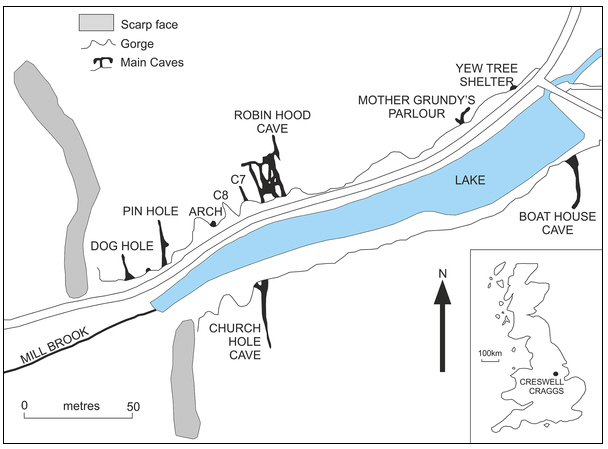
They picture an unusual mix of birds in one space, the Middle Palaeolithic (Marine Oxygen Isotope Stage 3) deposits of Pin Hole, Creswell Crags, Derbyshire in England, and a distinct Neanderthal Dawn Chorus.

Vancouver-based architect
Michael Green was unequivocal at a conference at which I heard him speak a while ago: “We grow trees in British Columbia that are 35 storeys tall, so why do our building codes restrict timber buildings to only five stories?”
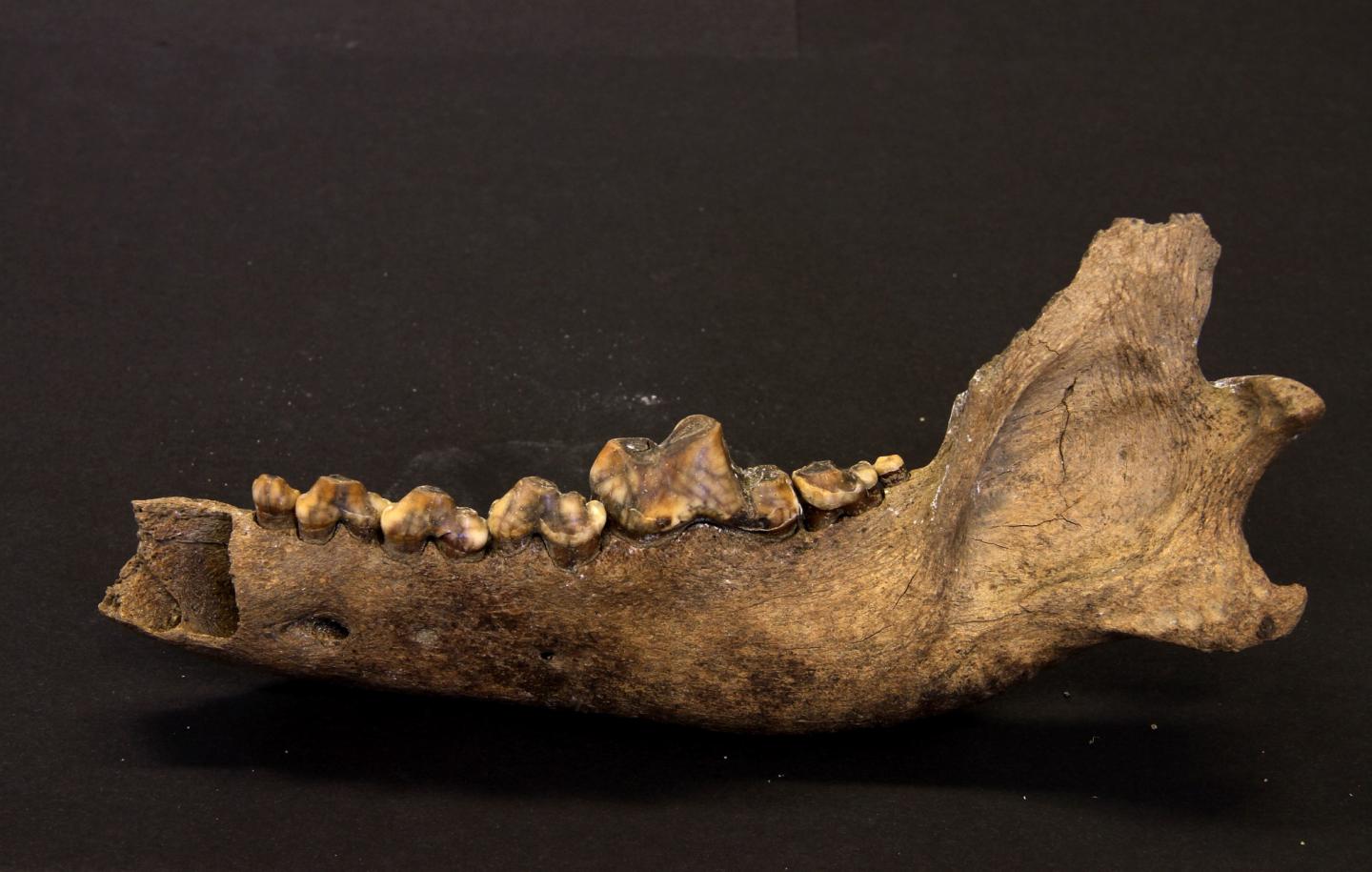
A new genomic analysis of an ancient Taimyr wolf bone reveals that dogs and humans may have been a match far longer than previously believed.
Earlier genome-based estimates have suggested that the ancestors of modern-day dogs diverged from wolves no more than 16,000 years ago, after the last Ice Age, but new 35,000 year-old radiocarbon dating shows the Taimyr wolf represents the most recent common ancestor of modern wolves and dogs.
Measles needs only a two-dose vaccine during childhood for lifelong immunity while the influenza virus mutates constantly and requires a yearly shot to get even a certain percentage of protection.
What explains that? Surface proteins that the measles virus uses to enter cells are ineffective if they suffer any mutation, meaning that any changes to the virus come at a major cost, according to a new paper.
239 representatives from Finnish small and medium-sized businesses responded to new survey by the Lappeenranta University of Technology about external and internal obstacles for productivity improvement experienced by companies. The results of the survey reveal that there have been three shifts in the key obstacles that have restrained the improvement of productivity since 1997:
(1) Obstacles to the improvement of productivity have shifted from internal to external obstacles. It is no longer competition from outside or navigating market forces, it is high wages and ancillary costs, like social security and taxes, legislation, and trade union activities by employees.
Mathematical biologist Dr. Jamie Wood wanted to know how birds collectively negotiate man-made obstacles such as wind turbines which lie in their flight paths and that led to a research project with colleagues in the Departments of Biology and Mathematics at York and scientists at the Animal and Plant Health Agency which found that the social structure of groups of migratory birds may have a significant effect on their vulnerability to avoid collisions with obstacles, particularly wind turbines.
The researchers created a range of computer simulations to explore if social hierarchies are beneficial to navigation, and how collision risk is affected by environmental conditions and the birds’ desire to maintain an efficient direct flight path.
More than 500,000 people in the United States die each year of cancer-related causes and a new study has identified the mechanism behind one of the most common mutations that help cancer cells replicate limitlessly.
Approximately 85 percent of cancer cells obtain their limitless replicative potential through the reactivation of a specific protein called telomerase (TERT). Recent cancer research has shown that highly recurrent mutations in the promoter of the TERT gene are the most common genetic mutations in many cancers, including adult glioblastoma and hepatocellular carcinoma.