




If you ever thought your spouse makes your blood pressure go up, you now have a study to show it.

Sociological and epidemiological papers have long linked stress and negative marital quality to changes in mortality and blood pressure but there has not been much to show how those correlate to married couples over time. Using systolic blood pressure as a gauge, researchers assessed whether an individual’s blood pressure is influenced by their own as well as their partner’s reports of chronic stress and whether there are gender differences in these patterns.

Japan is famous for committing suicide - as many people kill themselves using rope as Americans, with a much larger population, do with guns - but they may have more accurate numbers than western countries, according to a new paper. 

In western countries, suicide or accident is determined by a coroner. When it's a drug overdose versus a suicide is subjective, only guns are sure to be consistently implicated in a suicide, because gun control is part of a control war, where no one is quite sure what to make of drugs.
A new paper links eating disorders in adolescent females with lower levels of educational attainment and personal income in early adulthood. They were also less likely to own a home.
Osteoporosis is a medical condition characterized by bones becoming brittle and fragile. Age-related loss in muscle mass and strength is considered analogous to osteoporosis but this “sarcopenia” is not recognized as a clinical condition even though it is linked to impaired physical function and contribute to disability, falls, and hospitalizations. Lower muscle mass and strength are also associated with lower bone mineral density and greater risk for osteoporotic fractures.

Why isn't sarcopenia more accepted? No valid diagnostic criteria whereas osteoporosis can be diagnosed based on widely accepted clinical standards.

An Australian Government report into the state of the Great Barrier Reef found that its condition in 2014 was "poor and expected to further deteriorate in the future". In the past 40 years, the Reef has lost more than half of its coral cover and there is growing concern about the future impacts of ocean acidification and climate change.

But science could restore the Great Barrier Reef to its former glory through better policies that focus on evidence-based policies, according to paper in Nature Climate Change. But all the stressors on the Reef need to be reduced for it to recover, so nothing is off the hook.

A new study finds that many women diagnosed with breast cancer are concerned about a genetic predisposition for developing other cancers and the chances of a loved one developing cancer.

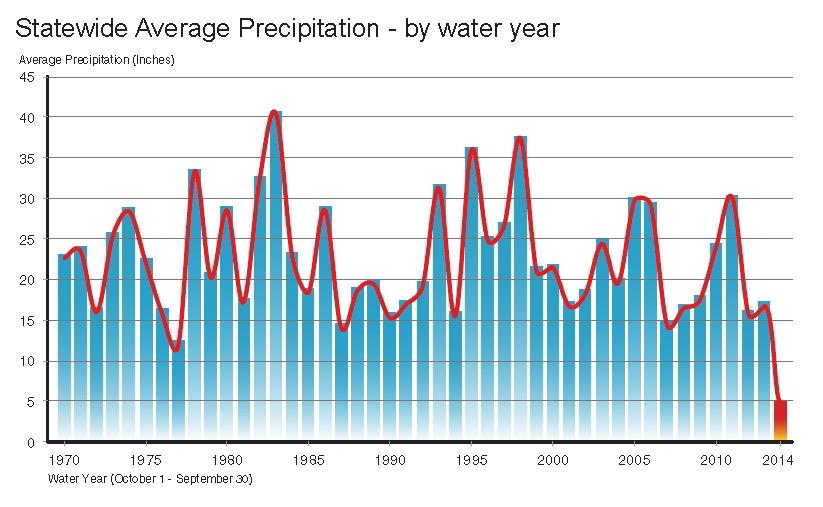
It is raining in California as I write this but most of it will do little good. The rain is going to go to a gutter and the gutter will go to a stream and that will go to an ocean.

Yes, much of the fresh water that California has runs into the Pacific Ocean. You might wonder why the Pacific Ocean needs so much, since 96 percent of Earth's water is already in oceans, but the oceans are not asking for it. Instead, it is due to anti-science policies lobbied for by well-heeled California environmentalists.
Magnetic fields such as those generated by overhead power lines are considered a potential health risk because epidemiological papers correlate them to neurodegenerative disorders such as Alzheimer's disease and amyotrophic lateral sclerosis (ALS).

Like other concepts that catch the attention of a certain segment of the public, such as GMOs causing cancer, vaccines causing autism, or cell phones causing cancer, it relies on a kernel of scientific truth that is extrapolated out to be a broad effect: Our bodies run on our internal electricity and magnetic fields shape how electricity behaves.
Many people have heard of the Golden Ratio, a ratio that is the midpoint between asymmetry and symmetry - when "the whole is to the larger as the larger is to the smaller". In numerical terms, it is 1.618

Methicillin-resistant Staphylococcus aureus (MRSA), an antibiotic-resistant superbug, can cause life-threatening skin, bloodstream and surgical site infections or pneumonia - a new reports finds that cigarette smoke may make things even worse.

"We already know that smoking cigarettes harms human respiratory and immune cells, and now we've shown that, on the flipside, smoke can also stress out invasive bacteria and make them more aggressive," said senior author Laura E. Crotty Alexander, MD, assistant clinical professor of medicine at UC San Diego and staff physician at the Veterans Affairs San Diego Healthcare System.

