

Black Hat Abu Dhabi, running from the November 8th - 11th at Emirates Palace, Abu Dhabi, will discuss some of the major security concerns faced by the IT world - and even demonstrate them live. 

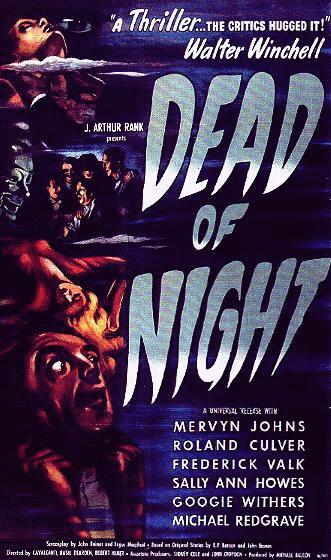
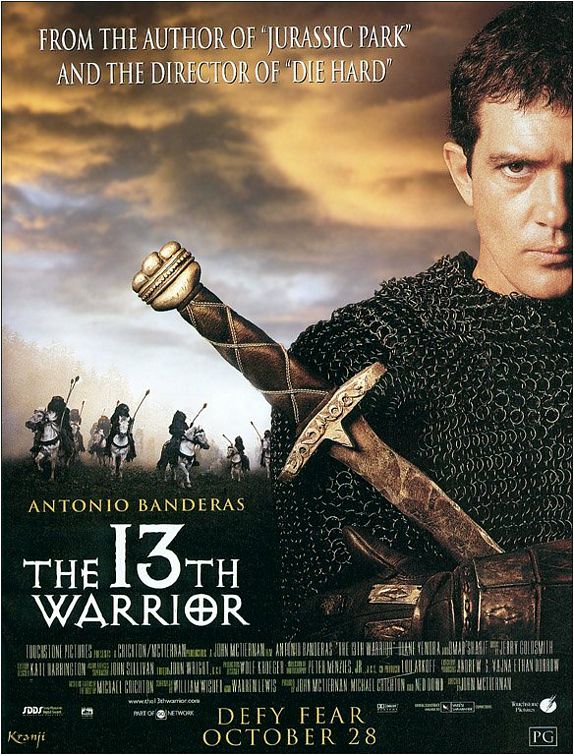
After "Five Million Miles to Earth" and "Dead of Night" we get to something a little more modern in our 5 Days of Halloween Movies.
News from the LHC: the integrated proton-proton luminosity at 7 TeV centre-of-mass energy has generously passed the mark of 40 inverse picobarns yesterday. The CMS experiment alone has integrated over 42 inverse picobarns, as shown in the graph below (the blue curve shows the data collected by CMS, the red one the data produced by the LHC).


Are you traumatized by terror flicks? Maybe more than you know. Scary  movies actually create a light version of post-traumatic stress disorder. This is what causes bad dreams and irrational fears of kids riding Big Wheels in hotel hallways (and, perhaps more rationally, of Jack Nicholson peeking through axe holes into your bathroom). 

And by exploring how people stop these dreams and fears, researchers are learning how we might combat more serious PTSD. For instance, researchers find that talking about a horror movie afterward reduces the occurrence of bad dreams.
1950s horror movies were primarily irradiated monsters but they also contained a bit of a cultural slam - the heroes were often scientists but they were battling other scientists who were often not even evil, just in love with their data.    Science was the problem because it did not concern itself with ethics, was the mentality - it was even more confusing than that good Jedi versus bad Jedi stuff (really, since the 'Dark Side' had more power and was much easier and mostly meant taking orders from some old guy and not much actual evil, why wouldn't anyone choose the so-called Dark Side?) but it lent itself to philosophical discussions.

Dracula orchids tempt flies by masquerading as mushrooms. Goblin spiders lurk unseen in the world's leaf litter. The natural world is often just as haunting as the macabre costumes worn on city streets, as highlighted by two studies published this year by curators in the Division of Invertebrate Zoology at the American Museum of Natural History, David Grimaldi and Norman Platnick.

Biogeochemists say new evidence linking glacial events during the "Snowball Earth" period to the rise of early animals. 

The controversial Snowball Earth hypothesis, which originated in 1964 due to the discovery of glacial deposits near the equator, posits that on several occasions the Earth was covered from pole to pole by a thick sheet of ice lasting for millions of years.   These glaciations, far more severe than the usual Ice Ages, occurred from 750 to 580 million years ago, and in their aftermath, the oceans were rich in phosphorus, a nutrient that controls the abundance of life in the oceans, according to new research.
After watching "Five Million Years To Earth", a terrific mix of science, horror and anthropology, it's no crime to associate British horror cinema with Hammer Films, even though that was not one of the bloody Dracula films which earned them their fame.