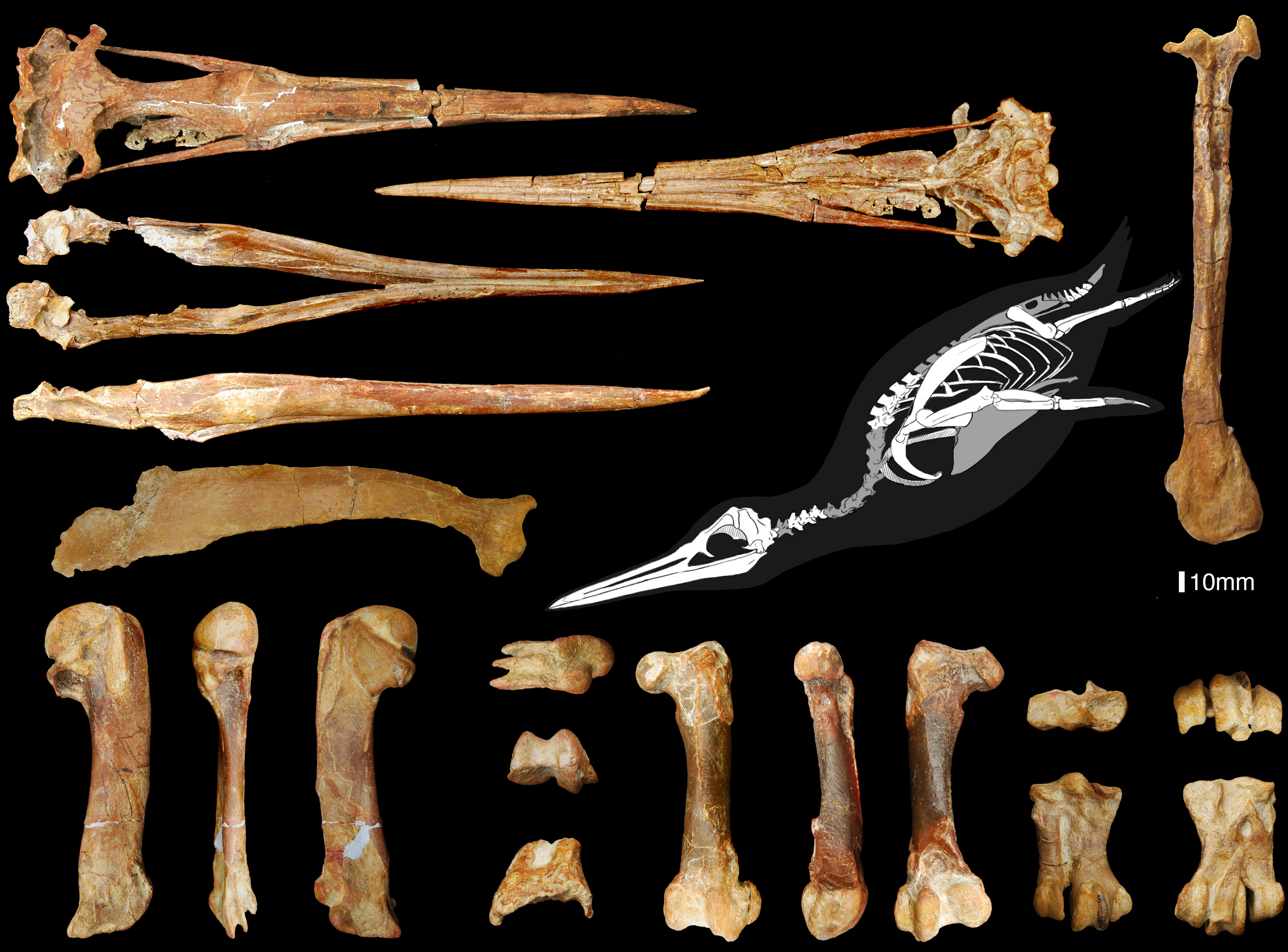
A 36-million-year-old penguin fossil from Peru shows the new giant penguin's feathers were reddish brown and grey, much different from the black tuxedoed look of living penguins - and it had scales. 

The new species, Inkayacu paracasensis, or Water King, was nearly five feet tall - twice the size of an Emperor penguin, the largest penguin today.   The fossil shows the flipper and feather shapes that make penguins such powerful swimmers evolved early, while the color patterning of living penguins is likely a much more recent innovation.
Georges Charpak, a French physicist and 1992 Nobel Prize winner, died yesterday.

Of Polish origin, Charpak gave crucial contributions to experimental physics, in particular for his invention of the multiwire proportional chamber in 1968.

Back then, the signal of passage of charged particles was recorded by bubble chamber images and images triggered by spark chambers - where the charge deposition would create a discharge in a very high electric field.
Proteins are the heavy lifters of cells, doing numerous tasks, but how the shape of a protein determines function remains one of the most important questions in the physics of biology.

Proteins are not the static, Lego-like objects you might see in an x-ray photograph in a textbook, they are made from long chains of amino acids scrunched into various blobs and a protein is always changing to slightly different structural arrangements due to thermal motion of its atoms. Even a modest-sized protein like myoglobin has an unimaginable number of possible arrangements of its atoms and each of these arrangements slightly changes its function.
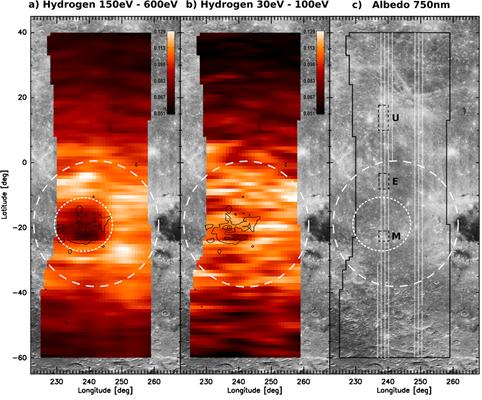
Scientists have discovered a new type of solar wind interaction with airless bodies in our solar system. Magnetized regions called magnetic anomalies, mostly on the far side of the Moon, were found to strongly deflect the solar wind, shielding the Moon’s surface, a discovery which will help us to understand solar wind behavior near the lunar surface and how water may be generated in its upper layer.

