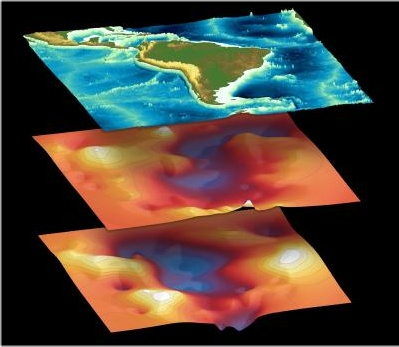



Astronomers have found an enormous hole in the Universe, nearly a billion light-years across, empty of both normal matter such as stars, galaxies and gas, as well as the mysterious, unseen “dark matter.” While earlier studies have shown holes, or voids, in the large-scale structure of the Universe, this new discovery dwarfs them all.

“Not only has no one ever found a void this big, but we never even expected to find one this size,” said Lawrence Rudnick of the University of Minnesota astronomy professor.

The earth sciences rely on highly accurate timing to unravel past causes and effects, and understand the forces driving many events from ice ages to mass extinctions. Other scientific disciplines, such as evolutionary biology and climate science, in turn depend on accurate timing of geological processes to provide a baseline for their investigations.

While significant progress has been made over recent decades, great uncertainties remain that are inhibiting investigations of major past events and formative processes in the earth sciences. In the case of the dinosaur extinction, knowledge of how long the process took would help resolve whether this was caused by a sudden asteroid strike or more gradually following a period of intense volcanic activity for example.

Twenty-two years of dedicated research has finally resulted in success, reports a British team headed by Steven V. Ley at the University of Cambridge. They have created the first synthesis of azadirachtin, a natural compound that stops predatory insects from feeding.

Plants have a variety of defense mechanisms to deter insect attack. One such compound is azadirachtin, which was first isolated from the neem tree (also known as the Indian lilac) in 1968. The name of this natural product is derived from the botanical name of the plant, Azadiracta indica. Azadirachtin is a highly active substance that inhibits the development of the larvae of a broad spectrum of destructive insects but is harmless to mammals and beneficial insects, such as bees and ladybugs.

I did this experiment yesterday. It took the whole day but the results were clear by noon.

At about 7 am I took 4 tablespoons of flaxseed oil (Spectrum Organic). I measured my mental function with a letter-counting test. Here is what happened.

effect of flaxseed oil on reaction time

In this fifth installment of our on-going series of interviews with some of the leading thinkers and scientists on the subject of energy, we interview Martin Hoffert.

Few people have used the theory behind the Shangri-La Diet more successfully than Tim Beneke, an Oakland journalist. I put before and after photos of him — before and after he lost about 100 pounds — on the front page of the proposal for The Shangri-La Diet. He writes:

A recent issue of Nature celebrated Linnaeus’ 300th birthday with a series of editorials, essays and features on the continuing work of taxonomists. One of the more provocative articles discusses the definition of species, including the status of the beloved polar bear, Ursus maritimus.



Hydrogen is an interesting idea for a clean, renewable fuel but storage and refueling issues present challenges. A new and attractive storage medium being developed by Pacific Northwest National Laboratory scientists may provide the “power of pellets” to fuel future transportation needs.

The Department of Energy’s Chemical Hydrogen Storage Center of Excellence is investigating a hydrogen storage medium that holds promise in meeting long-term targets for transportation use. As part of the center, PNNL scientists are using solid ammonia borane, or AB, compressed into small pellets to serve as a hydrogen storage material. Each milliliter of AB weighs about three-quarters of a gram and harbors up to 1.8 liters of hydrogen.

Four-Agents Decoction ( Si Wu Tang) is composed of dry roots of four plants native to China: prepared Radix Rehmanniae praeparata (Soe Dee Huang), Radix Paeoniae Alba (Bai Sau), Radix Angelicae Sinensis (Dang Guay), and Rhizoma Ligustici Chuanxiong (Tsuan Chyong).

This formula is originally listed in the Prescriptions of People’s Welfare Pharmacy (in Chinese) as a remedy for nourishing the blood and has been used as a basic formula in traditional Chinese medicine for treating women’s illnesses since the Song dynasty (twelfth century).

The first comprehensive, nationally representative survey on the prevalence of sexual activity among older Americans is in - and they are having a lot of sex.

Americans ages 57 to 85 are sexually active and view intimacy as an important part of life, despite a high rate of “bothersome” sexual problems, according to a new report in The New England Journal of Medicine.

Stacy Tessler Lindau, M.D., who conducted the study with Linda Waite, Ph.D., and others at the University of Chicago, expects the study to help open a dialogue between older patients and their doctors as older Americans were very receptive to the survey and its questions. This openness suggests that, when asked, many older people want to talk about this part of their lives.


