




Ancient footprints have provided compelling evidence that some dinosaurs were able to swim. The 15m (50ft) trackway was discovered in the Cameros Basin in Spain, which, 125 million years ago, in the Early Cretaceous was a vast lake.

Researchers at the University of Wisconsin-Madison have found that brains of people with clinical depression react very differently than those of healthy people when trying to cope with negative situations.

According to the World Health Organization, clinical depression is one of the leading causes of disability and lost productivity in the world. Understanding the root cause of depression, however, has proved difficult.

"It's normal for people to have negative emotions in certain circumstances," says lead study author Tom Johnstone. "One of the features of major depression is not that people have negative reactions to negative situations, it's that they can't pull themselves out of those negative emotional moods.

Metforin, the most commonly prescribed diabetes drug, kills tumor cells that lack key regulatory gene p53, according to a new study by researchers at the University of Pennsylvania School of Medicinr.

More than half of all human cancers have lost the p53 gene. Yet even in an era of molecularly targeted therapies scientists have had trouble figuring out how to compensate for the absence of a gene. Unlike a genetic mutation that changes the function or activity of a gene, which can be inhibited by a well-tailored drug, loss of a gene leaves nothing for the drug to target.

“This is the first time you can show that tumor growth is impaired by a diabetes drug,” says senior author Craig B.

Life on Saturn's icy moon? Unlikely, say University of Illinois researchers, and a new model they have created shows it is possible for a frigid, stiff Enceladus without a shifting interior (such as plate tectonics on Earth) to develop fractures and ridges, and convey heat at the rate observed by the Cassini spacecraft since 2004, without liquid water.

The Cassini spacecraft revealed a south polar region of Enceladus with an elaborate arrangement of fractures and ridges, heat radiation and geyser-like plumes consisting of ice crystals and gases such as methane, nitrogen and carbon dioxide.

"They all look the same" is a common expression regarding people of other races.

The “cross-race effect” is one of the most well replicated findings in psychological research and is one reason for the disturbingly common occurrence of eye-witness misidentifications.

The causes of the cross-race effect are unclear. Some psychologists argue that inherent segregation means some people don’t have much practice with individuals of other racial groups and are thus less capable of recognizing distinguishing features. Researchers from Miami University have a different idea. They argue this effect arises from our tendency to categorize people into in-groups and out-groups based on social categories like social class, hobbies, and of course, race.

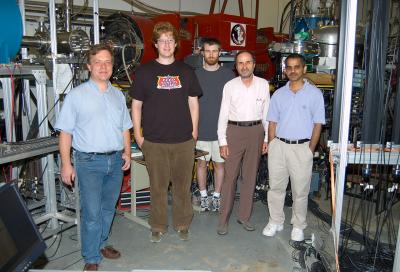
For the past few months, members of the department of physics at Florida State University have begun using a groundbreaking new research facility to conduct experiments that may help provide answers to just such questions.

RESOLUT -- short for "REsonator SOLenoid with Upscale Transmission" -- is the name of the facility, which is located within the John D. Fox Superconducting Accelerator Laboratory on the FSU campus.

In this fourth installment of our on-going series of interviews with some of the leading thinkers and scientists on the subject of energy, we interview William H. Calvin, PhD.

Facing and solving the multiple issues concerning energy is the single most pressing problem that we face as a species. There is a lot of media coverage about energy, alternative energy and global warming, but what has been missing is the knowledge and point of view of scientists, at least in the main stream media. If you have missed the first three interviews, you can see the entire list in my profile.

Portuguese scientists have shown that in bacteria the rate of beneficial mutations – those that increase the capacity of an organism to survive in a particular environment – is much higher than previously thought.

In the case of Escherichia coli, the bacteria studied, it is as much as 1,000 times higher than previously believed. The study also suggests that many more genes mutate during bacteria adaptation to a new environment than previously thought. Both results - a much higher rate of advantageous mutations and a bigger number of genes mutating - have important implications for studies in antibiotic resistance and also how bacteria develop the capacity to attack their host.

Columbia University Medical Center researchers have demonstrated using functional magnetic resonance imaging (fMRI), that brain activity was increased in stroke and traumatic brain injury survivors who underwent Vision Restoration Therapy (VRT), a rehabilitative treatment that helps these patients recover lost vision.

Researchers, led by Randolph S. Marshall, M.D., M.S., associate professor of clinical neurology at Columbia University, examined the fMRIs of six patients aged 35-77 with vision loss on the same side of both eyes (called homonymous hemianopia) caused by stroke or traumatic brain injury.

A paper published in the Royal Society journal Interface on 15th August 2007 highlights recent research that predicts that the range and severity of the plant disease phoma stem canker is increased by global warming.

A research team led by Rothamsted Research has used a weather-based model developed to predict the start and severity of epidemics of phoma stem canker, a disease of oilseed rape and other brassicas that causes losses of $900M worldwide, to investigate the consequences of predicted climate change scenarios.

