





Researchers at UT Southwestern Medical Center have determined how a substance derived from the bark of the South American lapacho tree kills certain kinds of cancer cells, findings that also suggest a novel treatment for the most common type of lung cancer.

The compound, called beta-lapachone, has shown promising anti-cancer properties and is currently being used in a clinical trial to examine its effectiveness against pancreatic cancer in humans. Until now, however, researchers didn’t know the mechanism of how the compound killed cancer cells.

For more than 100 years, scientists have known that humans carry a rich ecosystem within their intestines. An astonishing number and variety of microbes, including as many as 400 species of bacteria, help humans digest food, mitigate disease, regulate fat storage, and even promote the formation of blood vessels.

By applying sophisticated genetic analysis to samples of a year’s worth baby poop, Howard Hughes Medical Institute researchers have now developed a detailed picture of how these bacteria come and go in the intestinal tract during a child’s first year of life.

Dr. Zahi Hawass, Secretary General of the Supreme Council of Antiquities in Egypt, sent out this announcement:

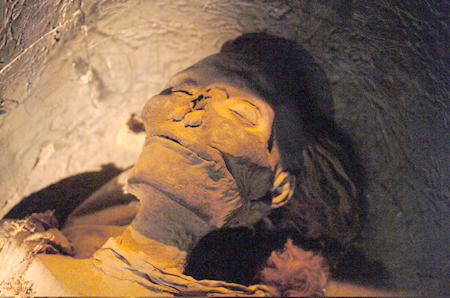
On Wednesday (27/6/2007) at 11:00 a.m Culture Minster Farouk Housni and Dr. Zahi Hawass Secretary General of the Supreme Council of Antiquities (SCA) will hold an International Conference at the Egyptian Museum in Tarir in Room 43 to announce the Identification of Hatshepsut's mummy .

Please come to attend the event at 10:00 am. at the Egyptian Museum in order to fix cameras and TV crews.

This is being called the most important discovery in the Valley of the Kings since King Tutankhamun.

Researchers at the University of Pennsylvania have demonstrated that gene therapy used to restore retinal activity to the blind also restores function to the brain’s visual center, a critical component of seeing.

The multi-institutional study led by Geoffrey K. Aguirre, assistant professor of neurology in Penn's School of Medicine, shows that gene therapy can improve retinal, visual-pathway and visual-cortex responses in animals born blind and has the potential to do the same in humans.

“The retina of the eye captures light, but the brain is where vision is experienced,” Aguirre said. “The traditional view is that blindness in infancy permanently alters the structure and function of the brain, leaving it unable to process visual information if sight is restored.

Researchers at the Picower Institute for Learning and Memory at MIT have, for the first time, reversed symptoms of mental retardation and autism in mice.

The mice were genetically manipulated to model Fragile X Syndrome (FXS), the leading inherited cause of mental retardation and the most common genetic cause of autism. The condition, tied to a mutated X chromosome gene called fragile X mental retardation 1 (FMR1) gene, causes mild learning disabilities to severe autism.

According to the Centers for Disease Control, FXS affects one in 4,000 males and one in 6,000 females of all races and ethnic groups. The prevalence of autism ranges from one in 500 to one in 166 children. There is no effective treatment for FXS and other types of autism.

Researchers at the University of Pennsylvania say that practicing even small doses of daily meditation may improve focus and performance.

Meditation, according to Penn neuroscientist Amishi Jha and Michael Baime, director of Penn's Stress Management Program, is an active and effortful process that literally changes the way the brain works. Their study is the first to examine how meditation may modify the three subcomponents of attention, including the ability to prioritize and manage tasks and goals, the ability to voluntarily focus on specific information and the ability to stay alert to the environment.

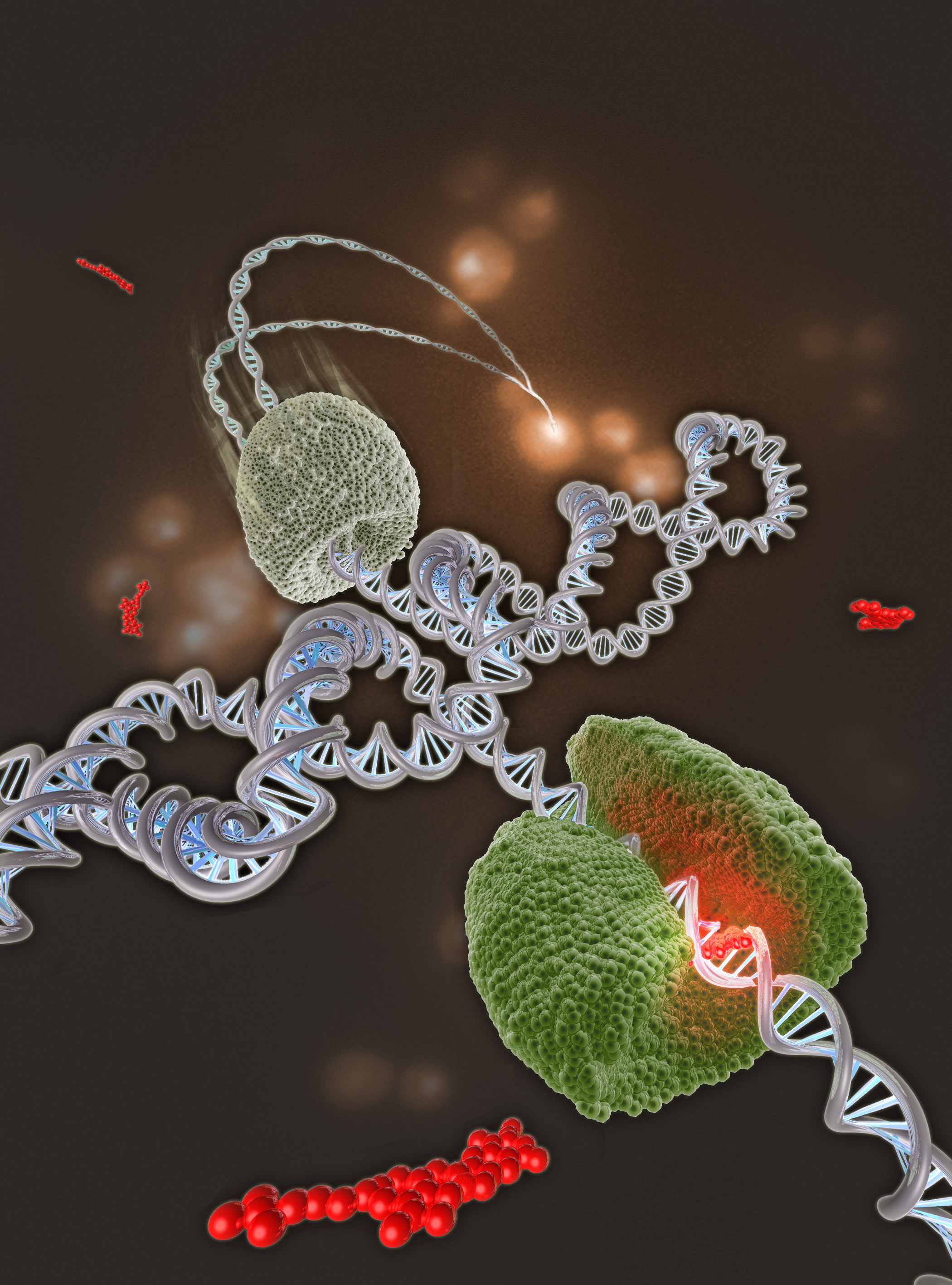
Topotecan, a cancer inhibitor, interacts with an important protein (TopoIB), causing a (cancer) cell to malfunction. The TopoIB protein is responsible for the removal of loops from DNA, which arise amongst other things during cell division.

The TopoIB protein binds to the DNA molecule, clamps around it and cuts one of the two DNA strands, after which it allows it to unwind and finally joins the broken ends together.

Until now it has been supposed that topotecan only causes the TopoIB protein to reside longer than normal on the DNA molecule, disturbing the cell division and damaging the (cancer) cell. But the researchers at the University of Delft have now discovered that adding topotecan also dramatically impedes the unwinding and that DNA loops accumulate as a result.

Dental enamel is the thin, outer layer of hard tissue that helps maintain the tooth's structure and shape while protecting it from decay.

While eating fruit is important part of a balanced diet, how you eat it may be ruining your teeth, says David Bartlett, BDS, PhD. Frequently consuming foods with a low pH (potential of hydrogen) value, such as fresh fruit, pickles, yogurt, honey, fruit juices and raisins can lead to irreversible dental erosion.

Eventually, because of repeated exposure to acid, the tooth’s enamel will lose its shape and color and as the damage progresses; the underlying dentin, (which is the tissue that makes up the core of each tooth), becomes exposed causing the teeth to look yellow.

New Test Determines if Osteoporosis Treatment Drug May Cause Jawbone to Die.

Breast cancer patients, individuals at risk for osteoporosis, and individuals undergoing certain types of bone cancer therapies often take drugs that contain bisphosphonates. Bisphosphonates may place patients at risk for developing osteonecrosis of the jaws, which is irreversible damage in which the jaw bone rots away.

The future of biolectronics - being able to diagnose diseases, detect poisons and monitor health instantly - may still seem far away, but it may be closer than you think.

Researchers understand what biochemical reactors they need to monitor and they know which microelectronics they would need to use. They have just been unable to combine them because measuring the ions in receptors within cell membranes destroyed the cells being measured.

A team at the Max Planck Institute say they have solved the problem and describe the coupling of a receptor to a silicon chip by means of a cell–transistor interface. True bioelectronics at its most basic level.

