





Researchers at UCSD have patented a strategy for developing a human vaccine to prevent against Human Cytomegalovirus (hCMV) infection and disease.

CMV, a type of herpes virus, is the leading viral cause of birth defects and a serious problem in patients with compromised immune systems. The body’s natural immunity doesn’t protect against infection by the virus, estimated to be present in 50 to 75 percent of all adults.

“Until now, scientists haven’t been able to develop a vaccine to protect against CMV,” said Deborah H. Spector, Ph.D., UCSD Professor of Cellular and Molecular Medicine and faculty member of the Skaggs School of Pharmacy and Pharmaceutical Sciences.

Misstatements and ignorance claiming that families "cause" eating disorders is like blaming parents for diabetes or asthma or cancer says an international group of eating disorders researchers.

Recent damaging statements by fashion model Gisele Bundchen stating that unsupportive families cause anorexia nervosa only perpetuate misconceptions and further stigmatize eating disorders.

Sarah Everts from Chemical and Engineering News has just published an article about chemistry activities in Second Life. Drexel Island got a mention:

My avatar was then deposited at a place in Second Life called Orientation Island. As I walked my avatar into a geodesic information dome, I happened to notice the "Fly" button. Intrigued, I wasted no time pressing it—and I shot up into the air, hitting the ceiling of the information dome like a clumsy goth-bird.


On  Friday, June 15, 2007, a 1957 Plymouth Belvedere was lifted out of its’ underground vault near Tulsa Oklahoma.  It had been buried on June 15, 1957 to both commemorate the 50th anniversary of Oklahoma becoming a state, and to serve as a time capsule for the  100th anniversary in 2007.  This led me to immediately think about what might be put into the ground today that would be unearthed in 2057.

Rich Apodaca wrote about using his InChIMatic service to track molecules in UsefulChem. Because we use InChIs in blog posts and HTML pages generated automatically from the molecules blog, doing an InChI search in Google is a pretty good way to find molecules of interest to UsefulChem.

CERN Director General Robert Aymar announced that the Large Hadron Collider (LHC) will start up in May 2008 despite the fact that a low-energy run originally scheduled for this year has been dropped due to delays, coupled with the failure in March of a pressure test in one of the machine’s components.

In that instance, a magnet assembly known as the inner triplet, provided to CERN as part of the contribution of the US to the LHC project, failed a pressure test. A repair has been identified and is currently being implemented.

The LHC is a scientific instrument of unprecedented complexity, and at 27 kilometers in circumference, is the world’s largest superconducting installation.

Researchers at the University of Pennsylvania School of Medicine have identified proteins in the rod and cones of the eye that could lead to the discovery of the genetic causes of a host of inherited eye diseases. The investigators hope to gain a clearer understanding of what goes wrong at the most basic level in these diseases that cause blindness and other disorders.

Specifically, they have identified and measured the types and amounts of proteins in the light-sensing parts of the eye’s retina. These light-sensitive structures, called photoreceptor sensory cilia, enable the rod and cone cells of the retina to detect light.

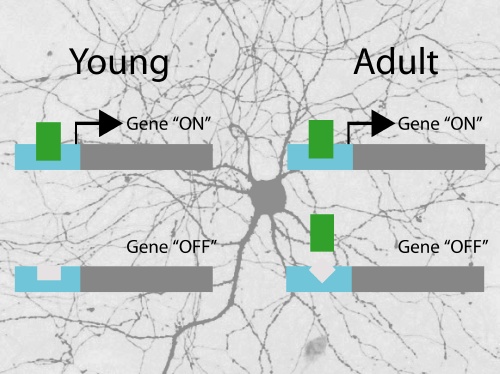
Our brain consists of billions of nerve cells enabling to learn, remember and reason. Every time we think and experience, touch, smell or fear, millions of neurons in our brain becomes active.

These nerve cells communicate with each other by chemical and electrical impulses to compute incoming sensory information and integrate it via distinct brain regions.

A bee’s favorite color can help it to find more food from the flowers in their environment, according to new research from Queen Mary, University of London.

Dr Nigel Raine and Professor Lars Chittka from Queen Mary’s School of Biological and Chemical Sciences studied nine bumblebee (Bombus terrestris) colonies from southern Germany, and found that the colonies which favored purple blooms were more successful foragers.

Dr Raine explains: “In the area we studied, violet flowers produced the most nectar - far more than the next most rewarding flower color (blue).

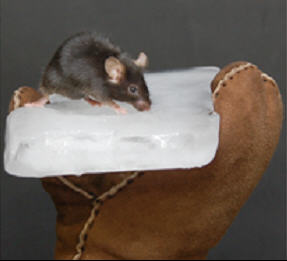
Freeing knotted shoelaces with fingers that are frozen stiff is extremely difficult and can even be painful. The reason that sensitivity and dexterity are poor is that both nerves and muscles perform their tasks reluctantly when they are cold.

Nevertheless ice-cold fingers ache and do so all the more in response to the lightest of knocks or squeezing. As unpleasant as this is, it serves as protection against frost lesion. The question of how pain can still be registered despite the otherwise hampered function during cooling has recently been explained.

They have demonstrated that the endings of nerves normally involved in signaling pain are equipped with a frost tolerant igniter of nerve impulses.

