
Untitled Document

This is one of the questions I get asked most often since I started to cover the topic of asteroid impacts. Will humans will become extinct within a decade, or within a century? And can this happen through natural disasters? For instance if you watch the movies you may think there's a chance of a giant asteroid impact which will make us extinct. But what's the real situation? 

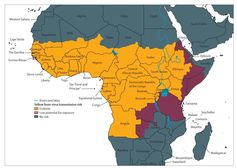
The World Health Organisation has declared the yellow fever outbreak in Angola a grade 2 emergency.This means that it can have moderate public health consequences. This requires an emergency support team run from the organizations regional office providing support. Health and medicine editor Candice Bailey spoke to Jacqueline Weyer, a senior medical scientist from the National Institute for Communicable Diseases in South Africa, to understand the latest outbreak.

How serious is the outbreak in Angola? When last did this happen?

Nearly 14 percent of veterans reported suicidal thinking at one or both phases of a two-year Veterans Affairs (VA) study.

The study, now online, is slated for publication in the June 2016 issue of the Journal of Affective Disorders.

The finding is based on a nationally representative sample of more than 2,000 U.S. veterans who were surveyed twice as part of the National Health and Resilience in Veterans Study, led by Dr. Robert Pietrzak of the Clinical Neurosciences Division of VA's National Center for PTSD. The first wave was conducted in 2011, the second in 2013.

BURLINGTON, VT - Smoking during pregnancy is the leading preventable cause of poor pregnancy outcomes. Studies further indicate that in-utero smoke exposure contributes to respiratory and cardiac illnesses later in life.

The good news is that the prevalence of smoking during pregnancy has decreased. The bad news is that economically disadvantaged pregnant women continue to smoke at much higher rates than affluent women.

Quebec City, March 5, 2016--A study published in the April edition of Health Affairs reveals that one-sided comments posted on online news articles may influence readers' opinions about health-related topics. This raises questions about how health social media should be moderated, especially considering the potentially polarized nature of these forums.

The salivary gland secretes saliva that helps us chew and swallow the food we eat while the pancreas secretes digestive juices that enable our bodies to break down the fat, protein, and carbohydrates in the food.

Secretions like these are important in countless activities that keep our bodies running day and night. A new study uncovers a previously mysterious process that makes these secretions possible - and it involves calcium, which is sure to set off a new supplement fad among the Dr. Oz, Mark Hyman, Joe Mercola sect.  

Popular culture may suggest we live in an era where men and women have achieved sexual equality. But new research finds that, when it comes to oral sex, disparities persist - and young men and women tend to gloss over these gender inequalities.

The study, conducted in England by University of the Pacific sociologist Ruth Lewis and Cicely Marston of the London School of Hygiene and Tropical Medicine, appears online in the Journal of Sex Research.

The researchers interviewed 71 men and women ages 16 to 18, and conducted follow-up interviews a year later. The study focused on accounts of oral sex between men and women, rather than same-sex partners.

On March 29, Nature Genetics published a research article entitled "Genetic lineage tracing identifies endocardial origin of liver vasculature", from Prof. ZHOU Bin's lab at the Institute for Nutritional Sciences (INS), Shanghai Institutes for Biological Sciences, CAS.

Taking advantage of genetic lineage tracing and tissue specific gene knockout technology, researchers found that part of the liver vasculature is derived from the endocardium in the developing heart. During this process, endocardial VEGF/VEGFR2 signaling plays an important role in liver angiogenesis and organogenesis.

My book "Anomaly! - Collider Physics and the Quest for New Phenomena at Fermilab" is in production at World Scientific, with an expected publication date somewhere in August or September. I have explained what this work is about in previous posts, but maybe what I can do here is to just paste here the few lines of description that have been put together for the back cover:

Working with human breast cancer cells, a team of scientists from Ann & Robert H. Lurie Children's Hospital of Chicago have successfully turned off a misbehaving protein that fuels the growth of a particularly aggressive, drug-resistant form of the disease known as triple-negative breast cancer.

In a set of lab experiments, the team managed to neutralize the protein, called Nodal, a growth factor already known for its role in early embryonic development.

A description of the work is published in the March 23 issue of the journal Cell Cycle.

