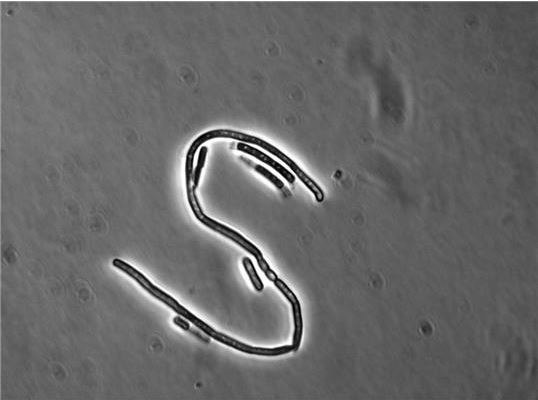




The bacterium Bacillus cereus had so far been considered to be exclusively endospore-forming. In response to harsh conditions, the bacteria form protective endospores enabling them to remain dormant for extended periods, then they reactivate to become fully functioning bacteria when conditions are favorable again.
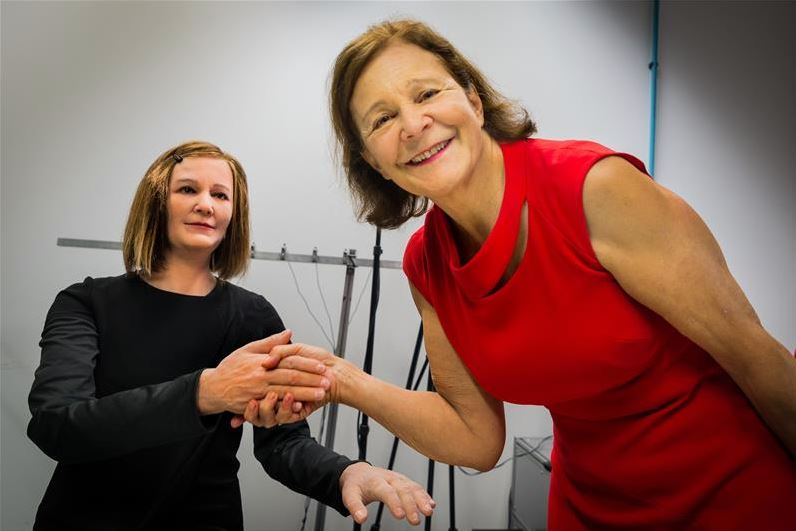
Nadine, a friendly human-like robot at Nanyang Technological University in Singapore will greet you back and shake your hand. Unlike conventional robots, the inventors say Nadine has her own personality, mood and emotions, and the next time you meet her, she will remember your name and your previous conversation with her.

She looks almost like a human being, with soft skin and flowing brunette hair. She smiles when greeting you, looks at you in the eye when talking, and can also shake hands with you. She can be happy or sad, depending on the conversation. Nadine is the doppelganger of its creator, Prof Nadia Thalmann, powered by intelligent software similar to Apple’s Siri or Microsoft’s Cortana. 
In the spirit of year end top 10 lists, but not restricting myself to 2015, I offer the following as the best 10 books ever written on the topic of obesity and/or weight loss.

1. Good Calories, Bad Calories, by Gary Taubes

Researchers say that the actions of individual farmers should be considered when studying and modelling strategies of pest control.

Research published in PLOS Computational Biology presents a model to understand the actions of humans and the dynamics of pest populations. The authors demonstrate this by using the example of the European corn borer, a moth whose larval phase is a major pest of maize.

Using game theory the researchers found that the farmers' perceptions of profit and loss, alongside communication networks between individuals, affects pest populations. A farmer's decision on whether to control a pest is usually based on the perceived threat of the pest and the guidance of commercial advisors.

DALLAS - Dec. 31, 2015 - Using a new gene-editing technique, a team of scientists from UT Southwestern Medical Center stopped progression of Duchenne muscular dystrophy (DMD) in young mice.

If efficiently and safely scaled up in DMD patients, this technique could lead to one of the first successful genome editing-based treatments for this fatal disease, researchers said.

Chestnut Hill, Mass. (Jan. 1, 2016) - By employing a third reactant, researchers at Boston College have developed a new type of 'cross coupling' chemical reaction, building on a Nobel Prize-winning technique that is one of the most sophisticated tools available to research chemists, the team reports in the journal Science.

Transition metal catalyzed cross-coupling reactions were the subject of the 2010 Nobel Prize in chemistry. A key component of that novel approach -- known as Suzuki-Miyaura coupling -- connects two types of reactants, including one electron donor and one electron acceptor.

In choosing the top articles of any year, there are always a few knobs to turn. A top article traffic-wise, for example, could be one from a prior year, since we have articles with millions of readers, and since we carry some press release stuff it could be one of those, and one person may have two.

And since Science 2.0 is all member-driven, no employees or corporate or government overlord, the people who might pick the candidates would most likely be the most active, and therefore one of the candidates. So instead we take it out of anyone's hands and just went by number of readers (not number of pageviews, since a controversial article can generate a lot more of those). And only one per author. And only 5 since, really, no one is reading 10 articles on a list.

PORTLAND, Ore. - The out-of-hospital birth setting in Oregon was associated with a higher risk of perinatal death, while the in-hospital birth setting was associated with a higher risk for cesarean delivery and other obstetric interventions (e.g., induction or augmentation of labor), according a study published today in the New England Journal of Medicine by researchers at Oregon Health & Science University.

I almost feel badly for continuing to pick on Chipotle. The company has been supernaturally inept this year. They can do nothing right. They may not even be able to make gravity work anymore.
Yet, they are so smug, and transparently phony that it is difficult to refrain from kicking them when they are down, as in "keep down"—something their patrons are having trouble doing with their lunch.

It is ironic that most of their problems began when they hopped on the phony anti-GMO express. I guess it seemed like a good corporate maneuver at the time, but I think they picked the wrong train:


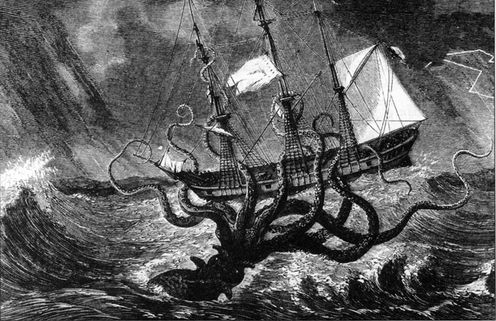
The Kraken is perhaps the largest monster ever imagined by mankind. In Nordic folklore, it was said to haunt the seas from Norway through Iceland and all the way to Greenland.

The Kraken had a knack for harassing ships and many pseudoscientific reports (including official naval ones) said it would attack vessels with its strong arms. If this strategy failed, the beast would start swimming in circles around the ship, creating a fierce maelstrom to drag the vessel down.

