





The brains of people with epilepsy appear to react to music differently from the brains of those who do not have the disorder, a finding that could lead to new therapies to prevent seizures, according to research presented at the American Psychological Association's 123rd Annual Convention.

"We believe that music could potentially be used as an intervention to help people with epilepsy," said Christine Charyton, PhD, adjunct assistant professor and visiting assistant professor of neurology at The Ohio State University Wexner Medical Center, who presented the research.

It’s never been easy for readers to know what to believe in academic research. The entire history of science publishing has been riddled with controversy and debate from its very beginning when Hobbes and Boyle, scientists at the Royal Society in London, argued over the scientific method itself.

Even a cursory glance at academic publishing since then shows articles contradicting each others’ findings, papers subsequently shown to contain half truths (even in the serious matter of clinical trials) and yet more that are simply fabricated. Shaky and controversial results have been a part of science since it began to be documented.

Researchers say they have developed a method that could make a nasal spray flu vaccine effective for those under two and over 49 - two groups for which the vaccine is not approved.

By studying the weakened flu virus that is the basis for the nasal spray vaccine in cells from human nasal and sinus cavities, the researchers say they have determined that the virus can be weakened (for young children) or strengthened (in older people) enough to create an appropriate immune response in people of all ages.

Documents dating back to the 16th Century provide a unique insight into one of Darwin's landmark studies, according to new research.

Researchers have identified a new vitamin B3 pathway that regulates liver metabolism. The discovery provides an opportunity to pursue the development of novel drug therapies to address obesity, type 2 diabetes and related metabolic diseases. 

The new findings show that a small molecule called N1-methylnicotinamide prevents metabolic complications caused by a high-fat diet.

Polariscope

Polariscope

Aug 10 2015 | comment(s)

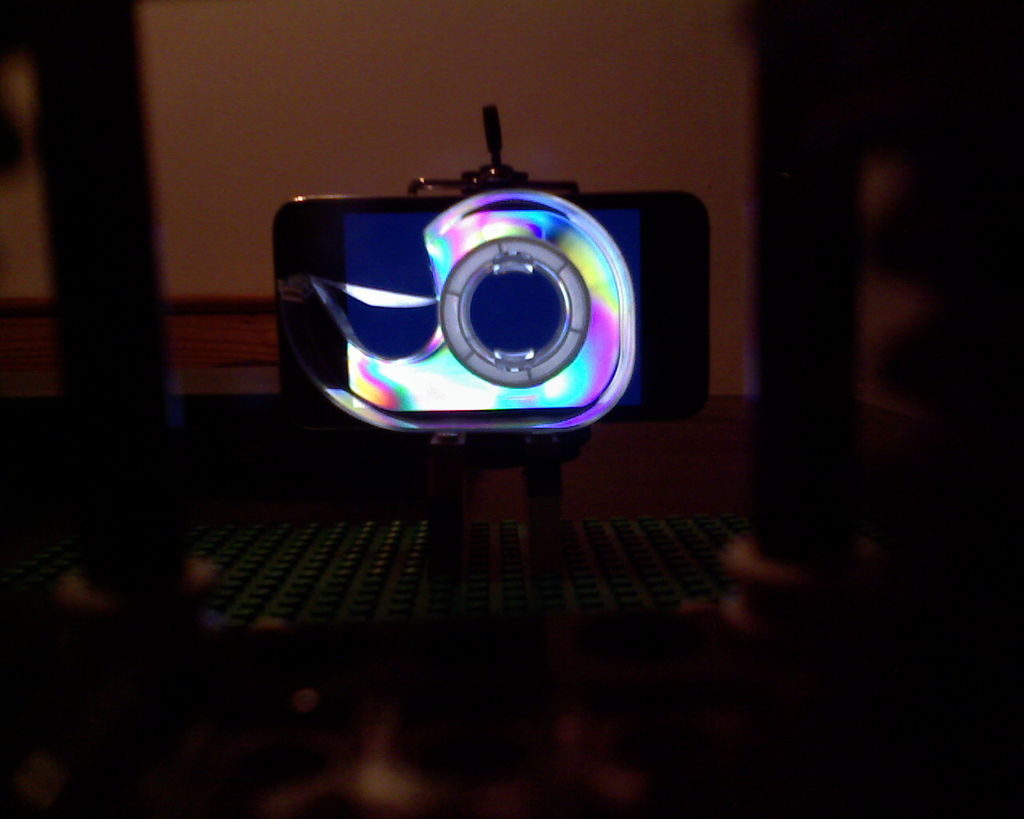
I decided to build a polariscope for my Lego optics lab.

On occasion you might need a mechanism to rotate filters such as a polarized filter and a polariscope is a simple and fun way to view the rainbow colors in clear plastic objects such as flatware, tape dispensers, etc.

Most people, when they think about exploring the galaxy, think about sending out human colonies. It's natural to think we would explore it just as we do the Earth, it's the only way we know. To send machines instead of humans, especially machines that can replicate, may seem frightening. But - I'd argue, humans colonies are by far the most scary way we could explore the galaxy. It might well be a case of "look out galaxy (and Earth), the monsters are coming" :). 

So what can we do? What is a responsible way to explore our galaxy, with current understanding of science, biology, and society,  and could this explain why our galaxy is not filled right to the brim already with extra terrestrials?

By Brian Owens, Inside Science -- Wearable fitness monitors are all the rage among humans right now, but they are also spreading among farm animals. Researchers hope the devices can help keep herds of beef cows healthy.

Karin Orsel, a veterinary epidemiologist at the University of Calgary in Canada is testing how accelerometers – the same devices inside fitness monitors that measure a person's activity level – can be used to detect disease in beef cattle before it becomes obvious to ranchers.

August 10, 1915. The Gallipoli sun beats down on the back of a Turkish sharpshooter. He is patient and used to the discomfort.

He wipes the sweat from his eyes and peers back down the sight of his rifle, sweeping back and forth across the enemy lines.

He’s hoping to spot a target worth taking a shot at as each muzzle flash risks giving his position away.

His sight settles on the shoulder pip of a second lieutenant. The target bends down out of sight, then reappears, now with a phone at his ear.

He stands still as he sends his dispatch. It’s an easy shot for the sniper. He squeezes the trigger and yet another young man dies.

Rabbits have long been considered immune to prion disease, but recently scientists have shown that they can--under certain circumstances--get transmissible spongiform encephalopathy (or TSE, the scientific term for the fatal brain disease caused by prions). Two studies address what makes rabbits hard to infect with prions and how their resistance can be overcome.


