
The Institute of Laser Engineering (ILE), Osaka University, has succeeded to reinforce the Petawatt [3] laser "LFEX" to deliver up to 2,000 trillion watts in the duration of one trillionth of one second (this corresponds to 1000 times the integrated electric power consumed in the world). By using this high-power laser, it is now possible to generate all of the high-energy quantum beams (electrons, ions, gamma ray, neutron, positron).

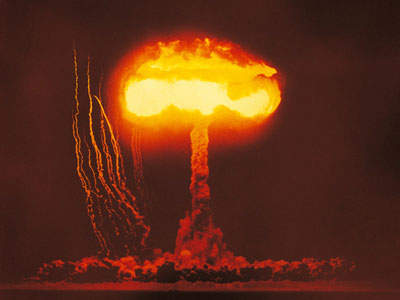
70 years ago saw the world's only wartime use of nuclear weapons, when the USA dropped the devastating weapons on Hiroshima and Nagasaki, leading directly to the end of World War II. 

Just a little moderate to vigorous physical activity-below the recommended amount-every week still seems to curb the risk of death among the over 60s, suggests a recent analysis.

Mild hypothermia in deceased organ donors significantly reduces delayed graft function in kidney transplant recipients when compared to normal body temperature, according to UC San Francisco researchers and collaborators, a finding that could lead to an increase in the availability of kidneys for transplant.

By passively cooling deceased organ donor body temperature by approximately two degrees from normal body temperature, researchers saw an overall nearly 40 percent increase in the successful function of donated kidneys after surgery. In particular, kidneys especially at risk of poor post-surgical functional were protected.

Our nation's veterans continue to suffer emotional and psychological effects of war--some for decades. And while there has been greater attention directed recently toward post-traumatic stress disorder (PTSD), and more veterans are seeking help, current psychotherapy treatments are less than optimal, according to a new narrative review.

A new patient sits across from me in the exam room, confused and frustrated at her lack of progress trying to lose weight for the last 30 years. 200 pounds too heavy, diagnosed with type 2 diabetes, high cholesterol, hypertension, sleep apnea, infertility and osteoarthritis. She needs knee replacements, but is too heavy to be approved for the surgery.

By:  Karin Heineman, Inside Science TV – Viruses: they’re too tiny for us to see, yet they’re lurking everywhere.  And guess what? They spread really fast through an office environment.

“Most people don’t realize they easily spread by your hands,” said University of Arizona microbiologist Charles Gerba. Most people think that viruses spread by inhaling sick people’s coughs or sneezes, but “it’s really when those droplets settle out and you touch that surface” that tiny viruses spread, he said. People unknowingly bring their virus-covered fingers to their noses, mouths, or eyes, kicking off infection.

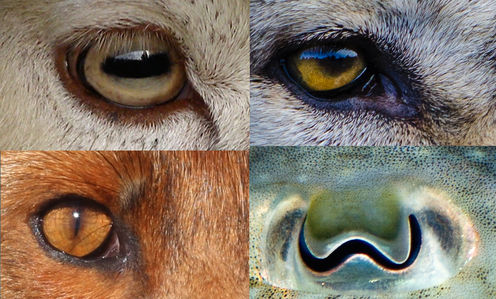
Wolves and foxes are closely related and share many of the same characteristics.

But look at their eyes – where wolves have rounded pupils like humans, foxes instead have a thin vertical line.

But it isn’t just canines –across the animal kingdom, pupils come in all shapes and sizes. So why the differences?

It’s a question that has long interested scientists working on vision and optics. In a new study published in the journal Science Advances, colleagues from Durham, Berkeley and I explain why these pupil shapes have developed.

So, I get in a pissy mood once in a while. Before you judge, you try taking the Times Square-Grand Central Station shuttle every day. See what kind of mood you end up in:

Then I read something so infuriatingly stupid in the Huffington Post — which is of questionable value even on a good day — that my already-sour disposition headed even further south.

Democrats (myself included) enjoy ridiculing Republicans who deny the scientific consensus behind climate change. But we then deny the inconvenient truth behind our own preferred climate policies: they will have regressive impacts on the poor and middle class.

The Energy Information Agency (EIA) projected in May that President Obama’s new Clean Power Plan (CPP) will lead to retail electricity prices 3%-7% higher for the nation as a whole in 2020-25, before falling to “near-baseline” levels in 2030. Yet speaking in the White House on August 3, the president denied the CPP would “cost you more money.”