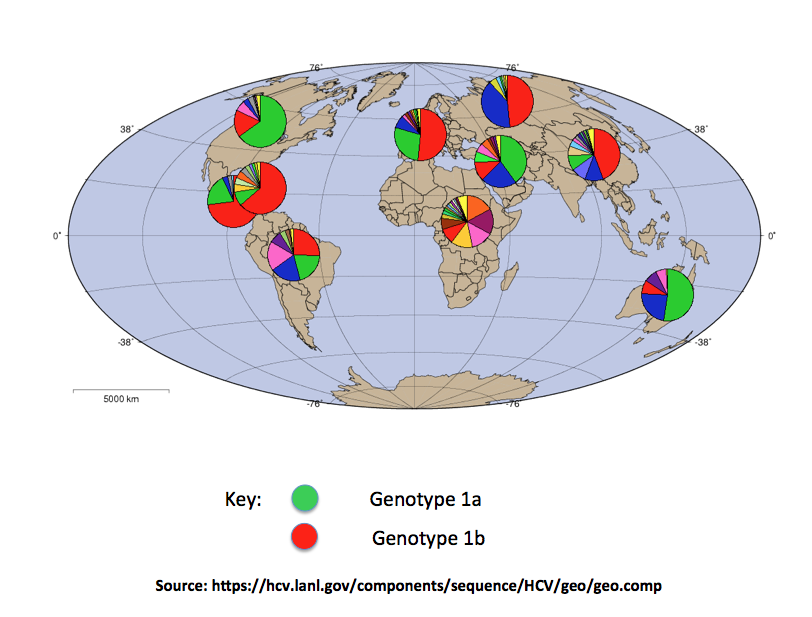




In the July 24th New York Times, there is a featured article about a new, thorny issue—what to do about the millions of Americans who are infected with the hepatitis C virus (HCV). 
This article is a perfect example of the law of unintended consequences. Until recently, there was exactly one treatment for hepatitis C infection, and it was terrible: Interferon (IFN), an immune booster and ribavirin (RBV), a non-specific antiviral which operates by an unknown mechanism. The IFN-RBV therapy is deeply flawed for two main reasons. 
On the heels of a rather poorly constructed International Agency for Research on Cancer (IARC) analysis of organophosphate insecticides and pesticides a short while ago and a bizarre claim by the activist-funded group Moms Across America last year, the public is concerned about popular products like glyphosate. Mainstream journalism is no help, science is complex and when the $100 million Natural Resources Defense Council (famous for the Alar on apples manufactured scare) unleashes its public relations team on politically sympathetic journalists, claims are going to be repeated without much skepticism.

A group of academics have channeled their inner Bernie Sanders and written a wonderfully naïve op-ed about how to lower drug prices: Destroy the industry that made America the world leader in biotechnology.

It's simple. Let government control drug prices and then corporations will just do what they always do, but it will be a lot cheaper. It is so simplistic it could have been written by Paul Krugman in the New York Times. It is also in defiance of how science, creativity and medical advancement works, and would lead to a mass exodus of science jobs from America.

There is so much over enthusiastic hype about this planet today, I thought could do with a bit of more sober reporting of the results, interesting though they are. Much of that speculation derives from just one phrase in the press release I think, where they say:  "Today, and thousands of discoveries later, astronomers are on the cusp of finding something people have dreamed about for thousands of years -- another Earth." The idea of what that means by "another Earth" for astronomers who know the capabilities of Kepler, is rather different from what most of the general public would think of when you say "another Earth".

Galaxies in a cluster roughly 300 million light years from Earth could contain as much as 100 times more dark matter than visible matter, according to an Australian study. The research used computer simulations to study galaxies that have fallen into the Coma Cluster, one of the largest structures in the Universe in which thousands of galaxies are bound together by gravity.

"It found the galaxies could have fallen into the cluster as early as seven billion years ago, which, if our current theories of galaxies evolution are correct, suggests they must have lots of dark matter protecting the visible matter from being ripped apart by the cluster."

Is your favorite grocery store making you fat? According to new findings, a Grocer Retailer Scorecard may be an effective, healthy shopping tool that benefits both grocers and shoppers. "Grocers can benefit from encouraging healthy shopping practices because they can sell more perishable items like fruits and vegetables rather than tossing them in the dumpster after a few days," says lead researcher Brian Wansink, PhD, director of the Food and Brand Lab at Cornell University.

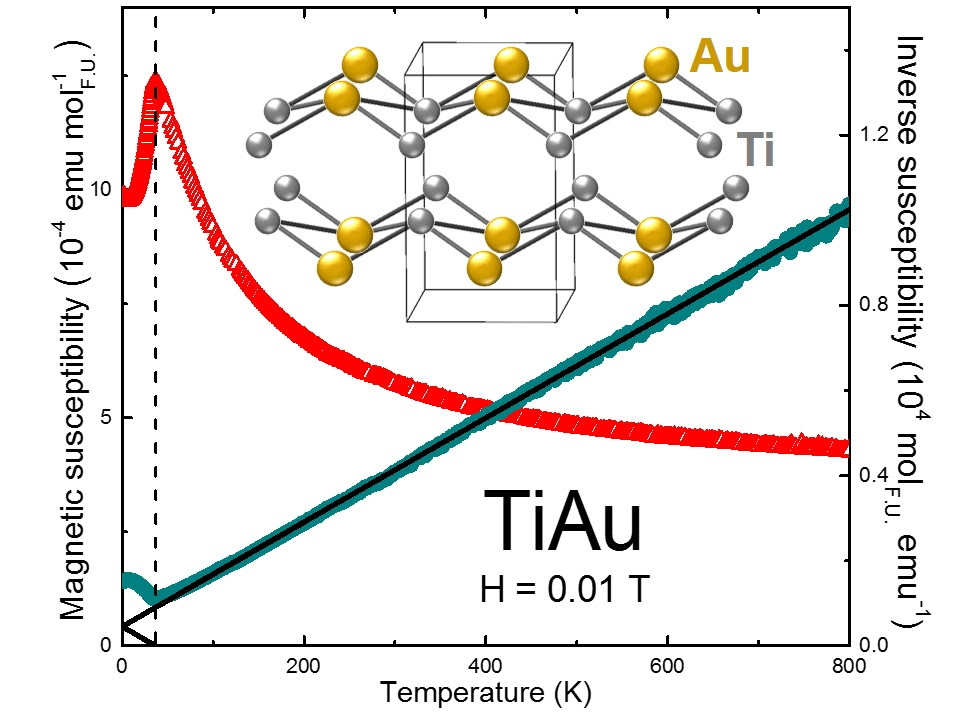
Titanium and gold are usually not magnetic and cannot be magnets – unless you combine them just so. Scientists at Rice University did so and discovered what is a first of its kind: an itinerant antiferromagnetic metal -- TiAu -- made from nonmagnetic constituent elements.

The research by the lab of Rice physicist Emilia Morosan has already been cited as a textbook example of how magnetism arises in metals. While the uses for this particular magnet have yet to be determined, the Rice discovery could enhance the scientific understanding of magnetism. This is not the kind of magnet one would stick to a refrigerator. Magnetic order only appears in TiAu when the metal is cooled to 36 kelvins, about minus 395 degrees Fahrenheit.

PHidiots

PHidiots

Jul 23 2015 | comment(s)

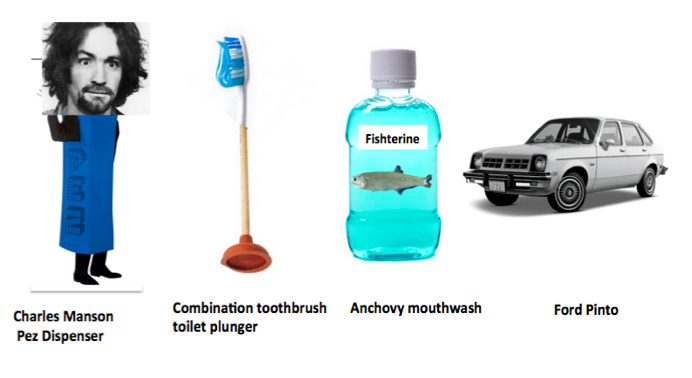
And I thought *these* were bad products:

Challenging the idea that addiction is hardwired in the brain, a new study suggests that even a short time spent in a stimulating learning environment can rewire the brain’s reward system and buffer it against drug dependence.

Scientists tracked cocaine cravings in more than 70 adult male mice and found that those rodents whose daily drill included exploration, learning and finding hidden tasty morsels were less likely than their enrichment-deprived counterparts to seek solace in a chamber where they had been given cocaine.

A new paper says that Chinese grandparents tend to indulge, overfeed and protect grandchildren in their care from physical chores, thus increasing their risk of obesity. The underlying motive for the action of grandparents may be affection for their treasured grandchild and stems from their personal experiences, misunderstanding and poor recognition of the adverse health effects of childhood obesity.

