

In 2011–2012, the most recent years for which finalized data were available, public health officials from 32 states and Puerto Rico reported 90 recreational water–associated outbreaks to CDC's Waterborne Disease and Outbreak Surveillance System (WBDOSS) via the National Outbreak Reporting System (NORS).

Before there were cells on Earth, simple, tiny catalysts most likely evolved the ability to speed up and synchronize the chemical reactions necessary for life to rise from the primordial soup. But what those catalysts were, how they appeared at the same time, and how they evolved into the two modern superfamilies of enzymes that translate our genetic code have not been understood.

Scientists have provided what they say is the first direct experimental evidence for how primordial proteins developed the ability to accelerate the central chemical reaction necessary to synthesize proteins and thus allow life to arise not long after Earth was created.

As I wrote in California Government Is The Big Water Management Problem, we can't make it rain but we could at least stop letting bizarre environmental lobbying get a super vote for how to mitigate the issue. While farmers and the public face mandatory cutbacks, anti-science beliefs about what is most important means that no matter how bad things get, we will have to force water for millions of people to be flushed into the Pacific Ocean.
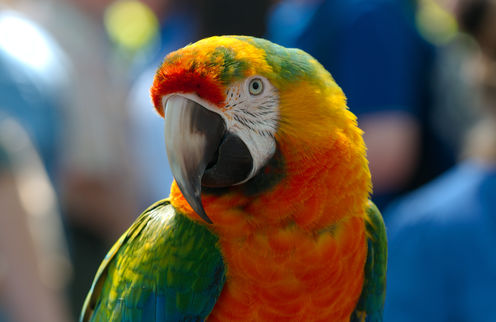
Many animals – including seals, dolphins and bats – are able to communicate vocally.

However, parrots are among a select few that can spontaneously imitate members of another species.

A study has now pinpointed the region in the brain that may be allowing this to happen – the region that is also involved in controlling movement. The finding could perhaps also explain the fact that parrots, just like humans, can talk and dance.

To predict how a seasonal influenza epidemic will spread across the United States, one should focus more on the mobility of people than on their geographic proximity, a new study suggests. Their results mark the first time genetic patterns for the spread of flu have been detected at the scale of the continental United States.

"We found that the spread of a flu epidemic is somewhat predictable by looking at transportation data, especially ground commuter networks and H1N1," says Brooke Bozick, who led the study as a graduate student in Emory's Population Biology, Ecology and Evolution program. "Finding these kinds of patterns is the first step in being able to develop targeted surveillance and control strategies."

Researchers have found physical differences in the brains of people who respond emotionally to others' feelings, compared to those who respond more rationally.

The work led by Robert Eres from the Monash University School of Psychological Sciences, pinpointed correlations between grey matter density and cognitive and affective empathy. The study looked at whether people who have more brain cells in certain areas of the brain are better at different types of empathy.

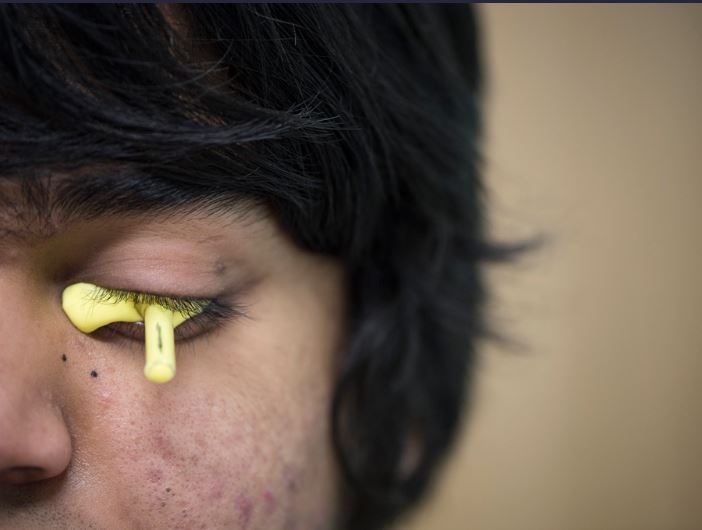
A  small, highly skilled team at Moorfields Eye Hospital transform the lives of people who have lost their eyes to accidents and disease. Each year, they work with their clients to create around 1,400 customized, detailed prosthetics, many of which replace eyes.

Modern prosthetic eyes are far removed from the old misconceptions about ‘glass eyes’, combining modern materials, craftsmanship and artistry in an entirely unique way. In this film, ocularist David Carpenter talks us through the entire process of how a single prosthetic eye is made.


CC-BY: Ben Gilbert/Wellcome Images
Starfish that reproduce through cloning avoid aging to a greater extent than those that propagate through sexual reproduction, say researchers who investigated the telomere lengths and population genetics of Coscinasterias tenuispina. The telomeres are located at the ends of the chromosomes, and affect the lifespan and health of an individual.
A new Internet tool that will allow any investigator, physician or patient to analyze genes according to their evolutionary profile and find associated genes. It combines genomics and informatics to enables the rapid, cost-free identification of genes responsible for diseases, by inputting results from genetic mapping studies concerning suspected genes, and identifying connections to known genes with association to diseases.

The twin revolutions of genomics and informatics are changing the face of biomedical research. Every day all over the world, millions of genetic sequences — from disease-related genes to complete genomes of plants, animals, bacteria and viruses — are resolved, identified and dissected. 

Imagine a classroom where children are unable to wait their turn or stay focused on their work. They are easily distracted, cannot remember basic instructions or hold enough information in their head to solve problems – skills teachers rely on in order to teach successfully.

These behavioral issues are all examples of problems that can arise from attachment issues – based on the relationship between children and their main caregiver.