
If an extraterrestrial race - or indeed later civilization on the Earth looks at the relics of our space explorations - one thing they might notice is our fondness for placing flags and pennants in space. All the space faring nations have signed the Outer Space Treaty. So these are not claims of territory (forbidden by the treaty) but rather, celebrations of national pride and accomplishment.

The return of diphtheria in Spain after nearly three decades highlights the challenges posed by infectious diseases that had been mostly eliminated from Europe.



Falling vaccination rates, complex population movements, and the disappearance of international health practices perceived as redundant, all contribute to the emergence and spread of infectious diseases that were thought forgotten.

At the same time, such public health crises throw light on the delicate relationship between state and citizens, and competing concepts of responsibility for health.

A variety of factors including questions about risk and reluctance to offend patients limits clinician willingness to prescribe a potentially life-saving medication that counteracts the effects of an opioid overdose, according to a Kaiser Permanente Colorado study published today in the Journal of General Internal Medicine.

The number of fatal overdoses from opioid medications has quadrupled in the U.S. since 1999. According to the Centers for Disease Control and Prevention (CDC), each day 44 people die of prescription painkiller overdoses. In the event of an overdose, opioids depress respiration until breathing stops. The drug naloxone reverses these effects on the body and can be life-saving.

The park is almost open. Two decades on and Jurassic Park has morphed into Jurassic World, the one and only dinosaur theme park.

Science has apparently evolved too: the genetically-engineered dinosaurs are to take a secondary role to a new star of the show, a genetically-engineered hybrid, worryingly named Indominus Rex.

Undoubtedly, chaos will ensue.

Researchers have discovered that a rabbit virus can deliver a one-two punch, killing some kinds of cancer cells while eliminating a common and dangerous complication of bone marrow transplants. For patients with blood cancers such as leukemia and multiple myeloma, a bone marrow transplant can be both curative and perilous. It replenishes marrow lost to disease or chemotherapy but raises the risk that newly transplanted white blood cells will attack the recipient's body.

Now researchers say the myxoma virus, found in rabbits, can do double duty, quelling the unwanted side effects of a bone marrow transplant and destroying cancer cells.

New research has revealed that parasitic 'vampire' plants that attach onto and derive nutrients from another living plant may benefit the abundance and diversity of surrounding vegetation and animal life.

By altering the densities of the hemiparasite (a parasitic plant that also photosynthesises) Rhinanthus minor, in the Castle Hill National Nature Reserve in Sussex, ecologists from the Universities of York, Sussex and Lincoln were able to assess the impacts of the 'vampire' plants on the biodiversity of a species-rich semi-natural grassland. The scientists compared the plant and invertebrate communities in areas where R. minor was removed, left at natural densities, or increased in abundance.

Dengue is a virus spread via the Aedes aegypti mosquito that infects as many as 100 million people annually in more than 100 tropical countries worldwide.

It causes fevers, extreme headaches, and muscle and joint pains. In a few extreme cases, leakage of blood plasma through the walls of small blood vessels into the body cavity occurs, resulting in bleeding.

This is known as dengue hemorrhagic fever.

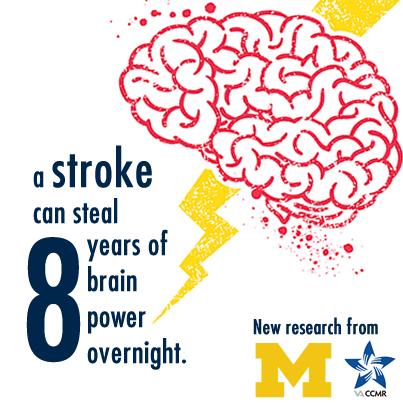
Having a stroke ages a person's brain function by almost eight years, new research finds - robbing them of memory and thinking speed as measured on cognitive tests.

In both black and white patients, having had a stroke meant that their score on a 27-item test of memory and thinking speed had dropped as much as it would have if they had aged 7.9 years overnight. For the study, data from more than 4,900 black and white seniors over the age of 65 was analyzed by a team from the University of Michigan U-M Medical School and School of Public Health and the VA Center for Clinical Management Research. 

Credit: University of Michigan

A study in mice reveals that hormones that dictate a female's attraction towards males do so in part by controlling her sense of smell. 

The investigators analyzed female mice at various stages of the ovulation cycle and found that when a female is not ready for reproduction, her hormones (specifically progesterone) block her ability to sense the smell of male pheromones.

These hormones diminish during ovulation, eventually allowing a female mouse to smell a potential partner. When ovulation ends, the cycle repeats, and she is again rendered "odor-blind" to males.

Scientists have found that a drug candidate with anticancer potential can be activated by one of the body's natural responses to cellular stress.

Once activated, the agent can kill prostate cancer cells.

The study highlights the potential of the natural compound called leinamycin E1 (LNM) for development as a "prodrug," a medication converted through a metabolic process in the body to become an active therapy.