



If you go by stories of epigenetics and the microbiome, we are on the verge of curing all disease. There hasn't been this much hype since human embryonic stem cells and the human genome project were going to cure all ailments in 2000.
But behind the hype there is some science, it is just figuring out what is epigenetics, what is genetics and then what is instead epidemiological matching of correlation and causation that is the struggle.
In some patients, the chronic inflammatory skin diseases psoriasis and eczema are so similar that dermatologists have had to examine tissue samples but a team of researchers at the Helmholtz Zentrum München and the Technical University of Munich (TUM) have now analyzed the molecular processes that occur in both diseases and discovered crucial differences.
This has enabled them to develop a diagnostic procedure which in practice enables psoriasis and eczema to be reliably differentiated from one another on the basis of only two genes.
In America, where categorization becomes easy because there are two main political parties, it is well-known that right-wing people donate more to charity. This makes sense; people who believe in smaller government should be willing to help their fellow man rather than relying on government to tax and redistribute wealth. Yet right-wing people also espouse individual initiative, so why donate more to charity when recipients have not earned it?
A new paper in the Journal of Consumer Research explains this seeming inconsistency and suggests that moral identity decreases donations when recipients are deemed to be responsible for their plight.
People can be conditioned to feel less pain when they hear a neutral sound, new research from the University of Luxembourg has found. This lends weight to the idea that we can learn to use mind-over-matter to beat pain.
Scientists have known for many years that on-going pain in one part of the body is reduced when a new pain is inflicted to another part of the body. This pain blocking is a physiological reaction by the nervous system to help the body deal with a potentially more relevant novel threat.
Marketing is something of a game; retailers want you to spend the most money, but not none at all, and cash flow is important, so sometimes they have sales, even at a loss to get you in the door in the belief that you will spend more money. But is that the optimal strategy for a retailer?
A new paper in the Journal of Consumer Research says consumers instead choose retailers they believe offer the lowest prices the majority of the time.
To simulate 100 weekly purchases from a retail store, participants were asked to purchase products from one of two competing retailers 100 different times. Participants were given a monetary incentive to minimize their total spending and were instructed to base their selections strictly on price.
Excavations at an archaeological site at Kathu in the Northern Cape province of South Africa,
one of the richest early prehistoric archaeological sites in South Africa, have produced tens of thousands of Earlier Stone Age artifacts, including hand axes and other tools.
It is situated between the Kuruman Hills to the east and the Langberge mountains to the west and estimated to be between 700,000 and one million years old.
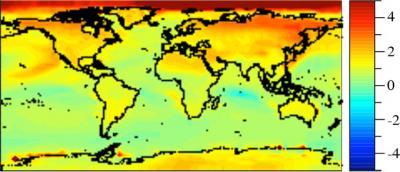
A new study has found that more than 75 percent of the water loss in the drought-stricken Colorado River Basin since late 2004 came from underground resources., which means the extent of groundwater loss may pose a greater threat to the water supply of the western United States than previously thought.
This study is the first to quantify the amount that groundwater contributes to the water needs of western states. According to the U.S. Bureau of Reclamation, the federal water management agency, the basin has been suffering from prolonged, severe drought since 2000 and has experienced the driest 14-year period in the last hundred years.
It isn't the tumor that kills up to a third of cancer patients, according to a new study, it's the indirect effects triggered by a process that is heavily studied not to fight cancer, but to fight obesity: the conversion of white fat tissue into brown fat tissue.
Cachexia, also called wasting syndrome, is the name for extreme thinness and weakness due to atrophy. In their paper, researchers argue that if it is possible to reduce the transformation of fat tissue, the symptoms of cachexia will improve, although they do not completely disappear. The authors demonstrate this by blocking mediators of inflammation, a process linked to cachexia, specifically, to the expression of the pro-inflammatory cytokine IL-6.
A new study has unlocked the potential to create new materials using nanosized ‘building blocks’, by using a laser technique to examine in rich detail the structure and internal atomic motion of a small cluster containing an acetylene molecule and a single helium atom, C2H2−He complex .
The technique excited single clusters and generated rotational wavepackets, which are composed of multiple waves illustrating the individual motion of atoms. The team were able to track these wavepackets in real time up to one nanosecond over many rotations.
The European Society for Medical Oncology (ESMO) has expressed concern that the proposed EU General Data Protection Regulation could make cancer research impossible and add a significant burden to both doctors and cancer patients.
The proposed wording of the regulation stipulates 'explicit and specific patient consent', meaning that researchers would have to approach patients every single time research is planned in order to consult their data or use tissue samples stored for research purposes.

