


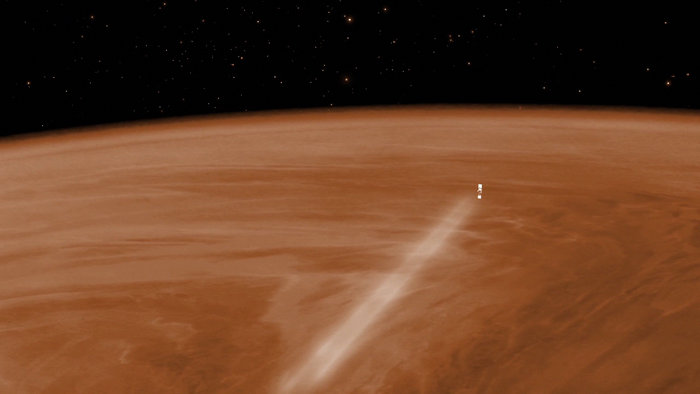





Where does the solar system end and interstellar space begin? There are no 'Now Leaving...' signs so it's somewhat subjective. If you think the argument over Pluto was confusing, you'll be intrigued that the argument over the solar system takes that to a whole new level.

Two years ago, it was announced that wherever the boundary of the solar system was, Voyager 1 had passed it, traveling further from Earth than any other manmade object. But some scientists insist it is still within the heliosphere – the region of space dominated by the Sun and its wind of energetic particles – and has not yet reached the 'space between the stars'. 

Highly purified crystals that split light with uncanny precision are key parts of high-powered lenses, specialized optics and, potentially, computers that manipulate light instead of electricity. Producing these crystals often involves etching them with a precise beam of electrons and can be difficult and expensive.

Researchers at Princeton and Columbia universities have proposed a new method that could allow scientists to customize and grow these specialized materials, known as photonic crystals, with relative ease. 

The rapid rise in valley fever cases in the arid southwest has become a serious health concern, as human habitation has pushed further into desert areas where the soil spores are widespread. Currently, Valley Fever affects an estimated 150,000 people a year, with most cases occurring in Arizona, California, Nevada, New Mexico and Utah.

The disease has no cure at present and is tricky to diagnose because it is similar to community-acquired pneumonias.

How would a child respond to this question? Would his or her list be full of relatives, animals from movies and books, or perhaps neighborhood pets? Would the poppies blooming on the front steps make the list or the oak tree towering over the backyard?

How might the animals children name compare to those named by children raised in a different cultural or language background or in a community that offers more direct contact with the natural world?

Astrocytes, the cells that make the background of the brain and support neurons, might be behind mental disorders such as depression and schizophrenia, according to new research by a Portuguese team from the ICVS at the University of Minho.  The study, in this month Molecular Psychiatry, shows how a simple reduction of astrocytes in the prefrontal cortex (which is linked to cognition) can kill its neurons and lead to the cognitive deficits that characterise several mental diseases.

Magnetic random access memory (MRAM) is intriguing because of demand for fast, low-cost, nonvolatile, low-consumption, secure memory devices.

MRAM relies on manipulating the magnetization of materials for data storage rather than electronic charges, boasts all of these advantages as an emerging technology, but so far it hasn't been able to match flash memory in terms of storage density.

In June of 2013, an exceptional binary containing a rapidly spinning neutron star underwent a dramatic change in behavior never before observed - the pulsar radio beacon vanished and the system brightened fivefold in gamma rays, the most powerful form of light.

A binary consists of two stars orbiting around their common center of mass. This system, known as AY Sextantis, is located about 4,400 light-years away in the constellation Sextans. It pairs a 1.7-millisecond pulsar named PSR J1023+0038 -- J1023 for short -- with a star containing about one-fifth the mass of the sun. The stars complete an orbit in only 4.8 hours, which places them so close together that the pulsar will gradually evaporate its companion.

There is a lot of concern about food waste and it may be due to leftovers that never get used but it probably isn't the bulk of Americans - 92 percent of people eat everything. Obviously that can be bad for people in other ways if people put a lot on their plate.

"If you put it on your plate, it's going into your stomach," says Cornell University Professor of Marketing Brian Wansink Ph.D.

A new paper finds that asthmatics who believe that an odor is potentially have increased airway inflammation for at least 24 hours following exposure, which highlights the role that expectations and psychology can play in health-related outcomes.

Asthma is a chronic inflammatory disorder of the lungs. According to the National Institutes of Health, over 25 million Americans have the disease, which can interfere with quality of life. The airways of asthmatics are sensitive to 'triggers' that further inflame and constrict the airways, making it difficult to breathe. There are many different types of triggers, including pollen, dust, irritating chemicals, and allergens. Strong emotions and stress also can act to trigger asthma symptoms.

In Jeju, a place emerging as a world-famous vacation spot with natural tourism resources, a recent study revealed a volcanic eruption occurred on the island. The Korea Institute of Geoscience and Mineral Resources (KIGAM) indicated that there are the traces that indicated that a recent volcanic eruption was evident 5,000 years ago.

That is the first time to actually find out the date when lava spewed out of a volcano 5,000 years ago in the inland part of the island as well as the one the whole peninsula.

