




People who are deaf and those with hearing differ in brain anatomy, no surprise in that.

But studies of individuals who are deaf and use American Sign Language (ASL) from birth aren't telling the whole science story. 95 percent of the deaf population in America is born to hearing parents and use English or another spoken language as their first language, usually through lip-reading.

Since both language and audition are housed in nearby locations in the brain, understanding which differences are attributed to hearing and which to language is critical in understanding the mechanisms by which experience shapes the brain. 

All organisms, from mammals to fungi, have daily cycles controlled by a tightly regulated internal clock called the circadian clock.

The circadian clock is influenced by exposure to light and dictates the wake-sleep cycle. At the cellular level, the clock is controlled by a complex network of genes and proteins that switch each other on and off based on cues from their environment and most genes involved in the regulation of the circadian clock have been characterized, but a key component was missing in mammals. 

In a new study, a team performed a genome-wide chromatin immunoprecipitation analysis for genes that were the target of BMAL1, a core clock component that binds to many other clock genes, regulating their transcription. 

Young adults who used marijuana recreationally show significant abnormalities in two key brain regions that are important in emotion and motivation, according to a study in the Journal of Neuroscience.

The authors document how casual use of marijuana is related to major brain changes and showed the degree of brain abnormalities in these regions is directly related to the number of joints a person smoked per week. The more joints a person smoked, the more abnormal the shape, volume and density of the brain regions.

Home can sometimes literally be in the kitchen.

A Puerto Rican community - in Connecticut of all places - creates cuisine authentic it has caught the attention of scientists.

Like immigrants throughout history who ventured forth with their favorite plants in tow, the Puerto Ricans of Hartford maintain cuisine as an important component of their identity. But this strong relationship to food has had a profound impact on human health by reshaping environmental biodiversity, influencing the diets of neighbors, and preserving elements of culture, according to botanists David W. Taylor and Gregory J. Anderson.

Without knowing it, organisms search for the next “winning” strategy in evolution. Mutation plays a key role in the evolution of new, and sometimes successful, traits. It's a lot like rock-paper-scissors - roshambo.(1)
A study by has determined that, on average nationally, minorities are exposed to 38 percent higher levels of nitrogen dioxide (NO2) outdoor air pollution compared to white people.

Nitrogen dioxide comes from sources like vehicle exhaust and power plants. Breathing NO2 is linked to asthma symptoms and heart disease. The Environmental Protection Agency has listed it as one of the seven key air pollutants it monitors. The researchers studied NO2 levels in urban areas across the country and compared specific areas within the cities based on populations defined in the U.S. Census as “nonwhite” or “white.”
Since the Blood Moon - whatever that is, it sounds Biblical - was last night, and it spells the beginning of our doom, according to a guy trying to sell some books, it's time to start prepping for the days of ultimate holy war. That means no more Southern blots and particle colliders, it's back to basics.

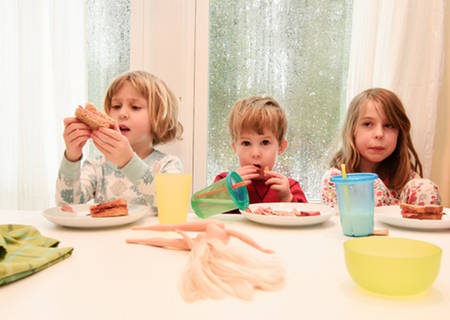
In preparation, this weekend the kids and I decided to see what kind of life we could make for ourselves while the Four Horsemen duke it out with the Holy Ghost in what would arguably be the best D&D game ever.
Cardiovascular disease often causes the heart to work harder than usual, a condition that triggers the chronic buildup of cardiac pressure and the onset of heart failure.
Researchers have used an electrical current to orchestrate the flow of a group of cells, an achievement that could establish the basis for more controlled forms of tissue engineering and for potential applications such as "smart bandages" that use electrical stimulation to help heal wounds.

In the experiments, the researchers used single layers of epithelial cells, the type of cells that bind together to form robust sheathes in skin, kidneys, cornea and other organs. They found that by applying an electric current of about five volts per centimeter, they could encourage cells to migrate along the direct current field. 
Kids know it is wrong to steal stuff - they also seem to know it's wrong to steal an idea. They just discover it a little later.

University of Washington psychologist Kristina Olson and colleagues discovered that preschoolers often don't view a copycat negatively but by the age of 5 or 6, they do. It holds true even across cultures that typically view intellectual property rights in different ways, like in Germany where they violate international trademarks and hold a Science 2.0 conference and, worse, charge people to attend.

