





DURHAM, N.C. -- Childhood obesity comes with an estimated price tag of $19,000 per child when comparing lifetime medical costs to those of a normal weight child, according to an analysis led by researchers at the Duke Global Health Institute and Duke-NUS Graduate Medical School in Singapore. When multiplied by the number of obese 10-year-olds in the United States, lifetime medical costs for this age alone reach roughly $14 billion.

An alternative estimate, which takes into account the possibility of normal weight children gaining weight in adulthood, reduces the cost to $12,900 per obese child. The findings appear online April 7, 2014, in the journal Pediatrics.

Endurance sport does not only change the condition and fitness of muscles but also simultaneously improves the neuronal connections to the muscle fibers based on a muscle-induced feedback. This link has been discovered by a research group at the Biozentrum of the University of Basel. The group was also able to induce the same effect through raising the protein concentration of PGC1α in the muscle. Their findings, which are also interesting in regard to muscle and nerve disorders such as muscle wasting and ALS, have been published in the current issue of the journal Nature Communications.

The dose makes the poison, it is often said. And that can be the case even with beneficial products like Acetaminophen.

Acetaminophen is a commonly used pain reliever that is available in over-the-counter products (Tylenol®) and prescription medications, where it is combined with opioid analgesics (i.e., fixed-dose combination products).  For example, acetaminophen in combination with the opioid hydrocodone (Vicodin® and its generic formulations) was the most prescribed medication in the U.S. each year from 2007 through 2011, according to a report by the IMS Institute of Healthcare Informatics.1 

Evidence collected over a period of 16 years by NASA's Rossi X-ray Timing Explorer, a satellite in low-earth orbit equipped with instruments that measured variations in X-ray sources, has led to a paper in the Monthly Notices of the Royal Astronomical Society showing huge clouds of gas orbiting supermassive black holes at the centers of galaxies.

Picture a single cloud large enough to span the solar system from the sun to beyond Pluto's orbit. Now imagine many such clouds orbiting in a vast ring at the heart of a distant galaxy, occasionally dimming the X-ray light produced by the galaxy's monster black hole.
When you have been around as long as Harvard, and your library contains 15 million books, you are bound to have a few that are bound in human flesh.

Wait, what?

Yes, an interesting article by Samuel Jacobs in The Crimson from 2006 got resurrected recently. It detailed what librarians would rather not become an object of morbid fascination - that some of their books are bound in human skin. Odd, right? 

Arid areas are among the biggest (non-ocean) ecosystems we have and it turns out they take up higher levels of carbon as levels of carbon dioxide increase in the atmosphere.

The findings give scientists a better idea of the earth's "carbon budget" — how much carbon remains in the atmosphere as CO2 and is a concern for global warming and how much actually gets stored in the land or ocean in other carbon-containing forms.

Lindsay says that around 50 distinct signal burst characteristics were used in the amino acid identifications, but that most of the discriminatory power is achieved with 10 or fewer signal traits.

Remarkably, recognition tunneling not only pinpointed amino acids with high reliability from single complex burst signals, but managed to distinguish a post-translationally modified protein (sarcosine) from its unmodified precursor (glycine) and also to discriminate between mirror-image molecules knows as enantiomers and so-called isobaric molecules, which differ in peptide sequence but exhibit identical masses.

Pathway to the $1000 dollar proteome?

The transfer, via a viral vector, of a normal copy of the gene deficient in patients, allowed to fully and very rapidly cure the heart disease in mice. These findings are published in Nature Medicine on 6 April, 2014.

If I look back at the first times I discussed the important graph of the top quark versus W boson mass, nine years ago, I am amazed at observing how much progress we have made since then. The top quark mass in 2005 was known with 2-3 GeV precision, the W boson mass with 35 MeV precision, and we did not know where the Higgs boson was, or if there was one.
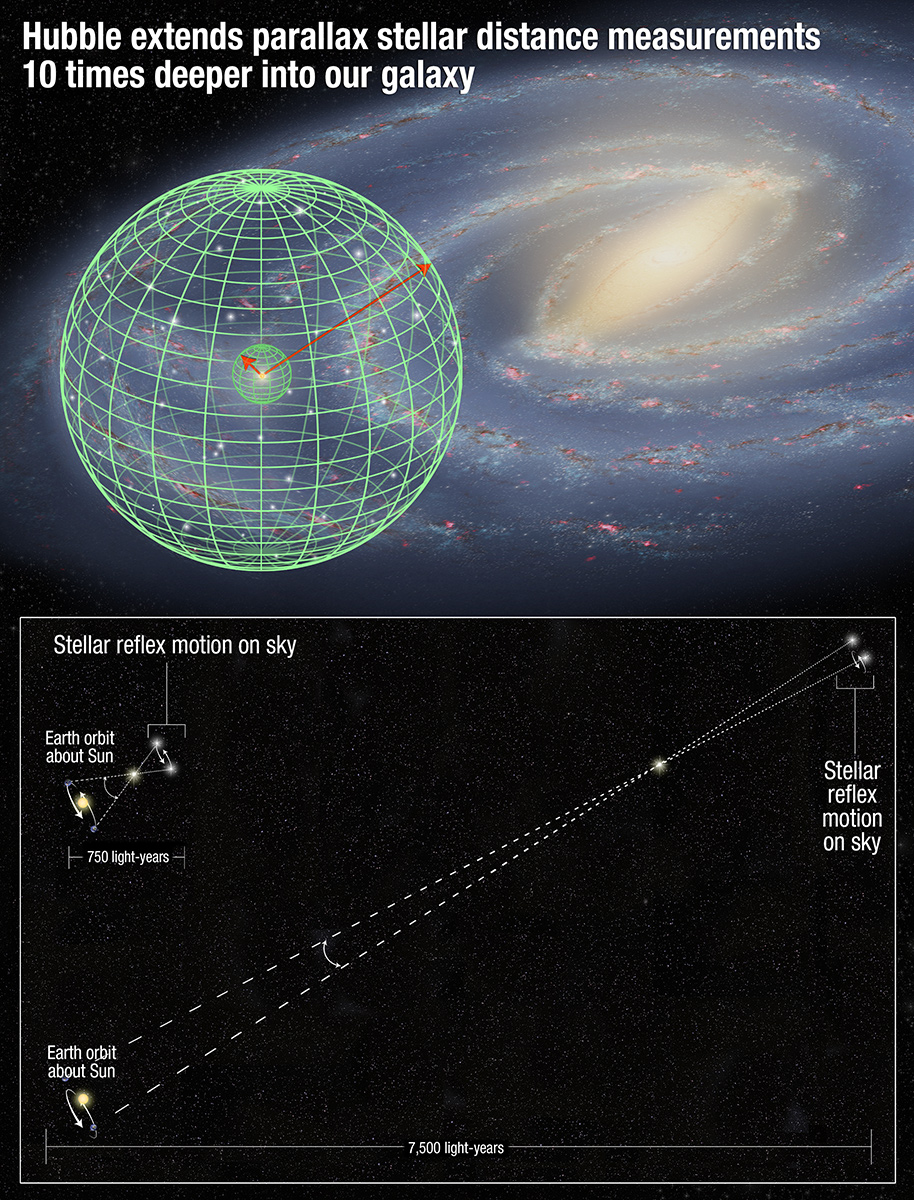
The universe is big - really big. Just our Milky Way galaxy alone is about 300 billion stars, with planets whizzing around them and clouds of gas and dust floating in between.

Then there is our orbiting companion, the Andromeda Galaxy and a small group of galaxies in our Local Group, which is about 3 million light years across.

What is in the vast unknown remains a mystery but a recent paper shed light on our immediate neighborhood - bright galaxies within 35-million light years of the Earth.

