


Andalusian researchers, led by the University of Granada, have discovered a curious characteristic of the members of the human lineage, classed as the genus Homo: they are the only primates where, throughout their 2.5-million year history, the size of their teeth has decreased alongside the increase in their brain size.

The key to this phenomenon, which scientists call "evolutionary paradox", could be in how Homo's diet has evolved. Digestion starts first in the mouth and, so, teeth are essential in breaking food down into smaller pieces. Therefore, the normal scenario would be that, if the brain grows in size, and, hence, the body's metabolic needs, so should teeth.

The centimeter-sized fragments and smaller particles that make up the regolith — the layer of loose, unconsolidated rock and dust — of small asteroids is formed by temperature cycling that breaks down rock in a process called thermal fatigue, according to a paper in Nature.

Like everything else in science and medicine, there is modern controversy about circumcision. In the United States the rate of circumcision is around 81%.

A paper in Mayo Clinic Proceedings finds that the benefits of infant male circumcision to health exceed the risks by over 100 to 1. Brian Morris, Professor Emeritus in the School of Medical Sciences at the University of Sydney and his colleagues in Florida and Minnesota found that over their lifetime half of uncircumcised males will contract an adverse medical condition caused by their foreskin. The findings add considerable weight to the latest American Academy of Pediatrics policy that supports education and access for infant male circumcision.


Population-based studies have consistently shown that our diet has an influence on health - a diet rich in fruits and vegetables is recommended.

But some people go overboard and just eat meat. Or just eat vegetables. Evidence for health benefits of exclusive diets is scant. Vegetarians are considered healthier, they are wealthier, they are more liberal, they drink less alcohol and they smoke less - but those are a lot of variables in health that don't necessarily result from being a vegetarian.

Although Neanderthals are extinct but fragments of their genomes persist in modern humans.

 These shared regions are unevenly distributed across the genome and some regions are particularly enriched with Neanderthal variants. An international team of researchers led by Philipp Khaitovich of the Max Planck Institute for Evolutionary Anthropology in Leipzig, Germany, and the CAS-MPG Partner Institute for Computational Biology in Shanghai, China, have found that DNA sequences shared between modern humans and Neanderthals are specifically enriched in genes involved in the metabolic breakdown of lipids.

New research reveals that consuming two or more cups of coffee each day reduces the risk of death from liver cirrhosis by 66%, specifically cirrhosis caused by non-viral hepatitis. Findings in Hepatology, a journal published by Wiley on behalf of the American Association for the Study of Liver Diseases, show that tea, fruit juice, and soft drink consumption are not linked to cirrhosis mortality risk. As with previous studies heavy alcohol use was found to increase risk of death from cirrhosis.

A Northwestern Medicine study reports the timing, intensity and duration of light exposure during the day is linked to your weight -- the first time this has been shown, though take population correlations with a grain of sunshine.

People who had most of their daily exposure to even moderately bright light in the morning had a significantly lower body mass index (BMI) than those who had most of their light exposure later in the day, the study found. BMI is a ratio calculated from a person's weight and height. 

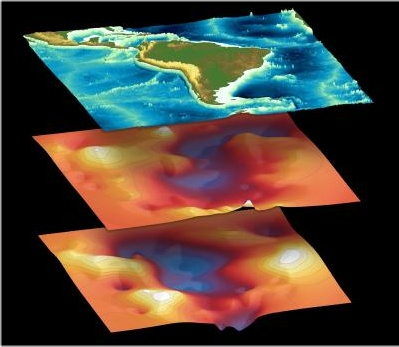
The repeated cycles of plate tectonics throughout history that led to collision, assembly and disruption of large supercontinents have produced modern continents that are collages of bits and pieces of each other.

Figuring out the origin and make-up of continental crust formed and modified by these tectonic events is a vital to understanding Earth's geology and is important for many applied fields, such as oil, gas, and gold exploration. In many cases, the rocks involved in these collision and pull-apart episodes are still buried deep beneath the Earth's surface, so geologists must use geophysical measurements to study these features. 

A new study led by Lance Lesack, a Simon Fraser University geographer and Faculty of Environment professor, has discovered unexpected climate-driven changes in the mighty Mackenzie River's ice breakup. This discovery may help resolve the complex puzzle underlying why Arctic ice is disappearing more rapidly than expected.

Lesack is the lead author on Local spring warming drives earlier river-ice breakup in a large Arctic delta. Published recently in Geophysical Research Letters, the study has co-authors at Wilfrid Laurier University, the University of Alberta and Memorial University.

Body odor can convey a lot of personal information, according to new research from the Monell Chemical Senses Center and the U.S. Department of Agriculture (USDA) which reveals that immunization can trigger a distinct change in body odor. This is the first demonstration of a bodily odor change due to immune activation. 

In the study, 'biosensor' mice were trained to discriminate between urine odors from mice vaccinated against either the rabies virus (RV) or the West Nile virus (WNV). All training and testing trials were conducted using a Y-maze with odors randomly assigned to each arm of the "Y."

