As if you need another reason for parental guilt, a new article in Bioscience Hypotheses speculates that our feelings could impact our reproduction and affect our children.
Dr Alberto Halabe Bucay of Research Center Halabe and Darwich, Mexico, suggests that a wide range of chemicals that our brain generates when we are in different moods could affect 'germ cells' (eggs and sperm), the cells that ultimately produce the next generation. Such natural chemicals could affect the way that specific genes are expressed in the germ cells, and hence how a child develops.
The dual launch of the far-infrared space telescope Herschel and cosmic background mapper Planck on an Ariane 5 rocket from Europe's Spaceport in French Guiana is the beginning of two of the most ambitious missions ever attempted to unveil the secrets of the darkest, coldest and oldest parts of the Universe.
Herschel has the largest mirror ever launched into space and will examine a little known part of the electromagnetic spectrum to learn more about the birth of stars and galaxies as well as dust clouds and planet-forming discs around stars - and will look for water, a key component of life similar to ours.
Monkeys playing a game similar to "Let's Make A Deal" have revealed that their brains register missed opportunities and learn from their mistakes.
The researchers watched individual neurons in a region of the brain called the anterior cingulate cortex (ACC) that monitors the consequences of actions and mediates resulting changes in behavior. The monkeys were making choices that resulted in different amounts of juice as a reward.
Their task was like the TV show "Let's Make a Deal" with the experimenters offering monkeys choices from an array of hidden rewards. During each trial, the monkeys chose from one of eight identical white squares arranged in a circle. A color beneath the white square was revealed and the monkey received the corresponding reward.
The Origins of the Reductionist Program
"How can the events in space and time which take place within the spatialboundary of a living organism be accounted for by physics and chemistry?" Erwin Schrodinger - What is Life - 1944
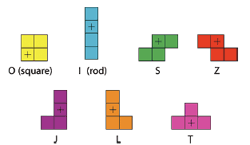
Tetris stole hundreds of hours of our lives. It’s about time it starts giving back. Researchers at the Washington University of St. Louis have built a computer simulation that uses a modified Tetris game to explore self-assembly. Their take on the classic puzzle game confirms what Tetris junkies have always known: The T-shaped tetromino is insanely versatile, and the L and Z tetrominoes just can’t get along.
Recently I had the opportunity to ask Paul Ewald, one of the nation's leading evolutionary biologists, about a subject near and dear to his heart: the evolution of a bug, specifically swine flu. As usual, Ewald, a professor of biology at the University of Louisville, was lucid, cogent and memorable.
In his 2002 book, Plague Time: The New Germ Theory of Disease, Ewald set the bio-med community on its head by arguing that most chronic disease is caused by sub-acute levels of pathogenic origin, rather than genes.
Monday afternoon the space shuttle Atlantis blasted off into the Florida sky carrying with it the hopes and dreams of astronomers like me and people around the world. Seven NASA astronauts have set out to repair the aging Hubble Space Telescope and upgrade it with new instruments.
The launch was picture-perfect from our vantage point at Space View Park in Titusville, Florida. This may be the second shuttle launch I have seen in person, but it is the first I am old enough to remember. (photo courtesy of David Radburn-Smith)
To study small RNA, snippets of RNA that act as switches to regulate gene expression in single-celled creatures, you need lab-cultured microorganisms but a new method of obtaining marine microbe samples while preserving the microbes' natural gene expression has shown the presence of many varieties of small RNAs.
The discovery of its presence in a natural setting may make it possible finally to learn on a broad scale how microbial communities living at different ocean depths and regions respond to environmental stimuli.
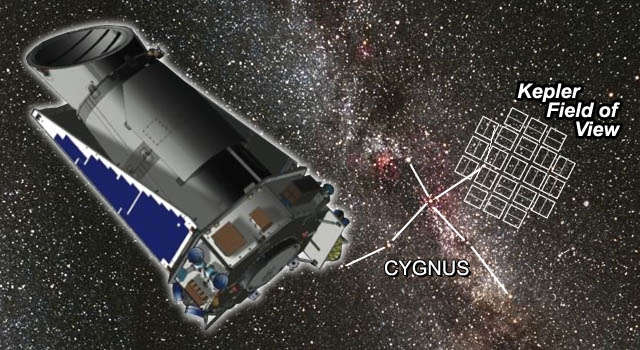
NASA's Kepler spacecraft has begun its search for other Earth-like worlds. The mission, which launched from Cape Canaveral, Fla., on March 6, will spend the next three-and-a-half years staring at more than 100,000 stars for telltale signs of planets. Kepler has the unique ability to find planets as small as Earth that orbit sun-like stars at distances where temperatures are right for possible lakes and oceans.
A bowl of whole-grain cereal is as good as a sports drink for recovery after exercise. Research published in BioMed Central’s open access Journal of the International Society of Sports Nutrition has shown that the readily available and relatively inexpensive breakfast food is as effective as popular, carbohydrate-based ‘sports drinks’.