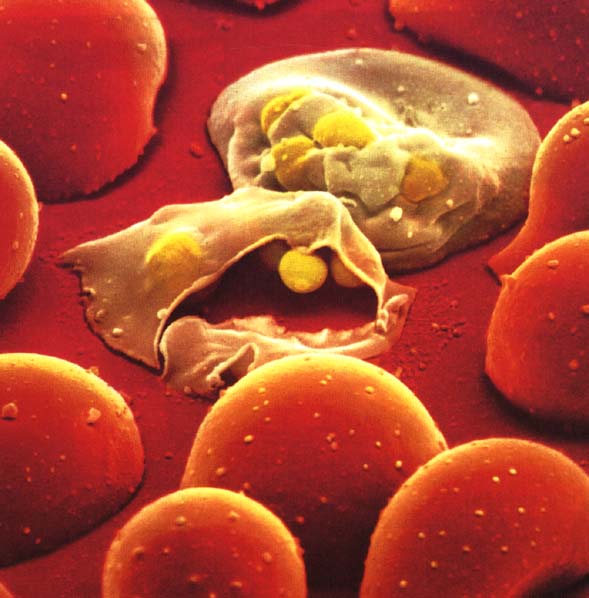
The death toll due to malaria outbreaks has reached over million lives every year with an additional 300-500 million people suffering illness from serious malaria infections. The growing pandemic and high mortality rate has caused renewed and fervent interest in creating an effective vaccine treatment for the prevention of malaria.
This interest has sparked physicians, scientists and pharmaceutical companies alike to race for the most cost-effective, efficient and overall viable vaccine against malaria.
There are currently multiple vaccines in various stages of trial and with various ranges of efficacy.
Acupuncture can help people with chronic low back pain feel less bothered by their symptoms and function better in their daily activities, according to the largest randomized trial of its kind, published in the May 11, 2009 Archives of Internal Medicine. But the SPINE (Stimulating Points to Investigate Needling Efficacy) trial raises questions about how the ancient practice actually works.
Aggressive, vengeful behavior of individuals in some South American groups has been considered the means for men to obtain more wives and more children, but an international team of anthropologists working in Ecuador among the Waorani show that sometimes the macho guy does not do better.
The Waorani are rainforest manioc horticulturalists and foragers. When the first peaceful contact occurred in 1958, they numbered about 500 people living in an area the size of New Jersey between the Napo and Curaray rivers in the Amazon basin east of the Andes. Their abundant resources often attracted outsiders, who were promptly killed if found.
When it comes to immunity, men may not have been dealt an equal hand. The latest study by Dr. Maya Saleh, of the Research Institute of the McGill University Health Centre and McGill University, shows that women have a more powerful immune system than men. In fact, the production of estrogen by females could have a beneficial effect on the innate inflammatory response against bacterial pathogens. The results were published today in the Proceedings of the National Academy of Sciences.
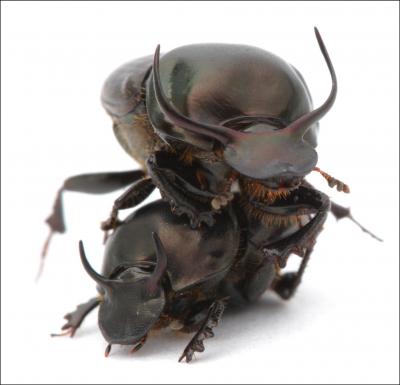
Can fundamental genes acquire new functions? A new study in the Proceedings of the National Academy of Sciences by Indiana University Bloomington biologist Armin Moczek and research associate Debra Rose reports that two ancient genes were "co-opted" to help build a new trait in beetles -- the fancy antlers that give horned beetles their name. The genes, Distal-less and homothorax, touch most aspects of insect larval development, and have therefore been considered off-limits to the evolution of new traits.
Wood or concrete for a cleaner environment?
Wood seems like the obvious answer because it is natural, biodegradeable and renewable but in the railway industry it isn't so simple. Railroads around the world face environmental decisions as they replace millions of deteriorating cross ties, also known as railway sleepers - the rectangular objects used as a base for railroad tracks.
A new report concludes that emissions of carbon dioxide, one of the main greenhouse gases contributing to global warming, from production of concrete sleepers are up to six times less than emissions associated with timber sleepers. The study is scheduled for the June 1 issue of Environmental Science&Technology.
Increased competition and the global economic crisis have cast clouds upon the Western European solar energy market. Falling polysilicon and solar module prices have the potential to cement China's role as a solar manufacturing hub.
Tunable fluidic micro lenses can focus and direct light at will to count cells, evaluate molecules or create on-chip optical tweezers, according to a team of Penn State engineers. They may also provide imaging in medical devices, eliminating the necessity and discomfort of moving the tip of a probe.
Conventional, fixed focal length lenses can focus light at only one distance. The entire lens must move to focus on an object or to change the direction of the light. Attempts at conventional tunable lenses have not been successful for lenses on the chip. Fluidic lenses, however, can change their focal length or direction in less than a second while remaining in the same place and can be fabricated on the chip during manufacture.
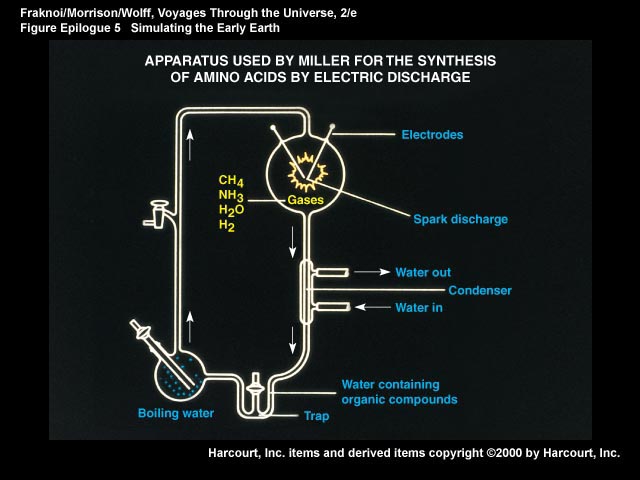
For life to begin, there had to be a source of organic compounds in the prebiotic environment. We now think that some of the compounds were delivered to the Earth on comets, meteorites and dust particles, but others were synthesized in the atmosphere, hydrosphere and in volcanic conditions.
How do we know? This question brings up the important topic of prebiotic simulations. In a simulation, we make a set of assumptions about local conditions on the early Earth, then reproduce those conditions in the laboratory and run experiments to see what happens.
Imagine a time when the entire universe froze - according to a new model for dark energy, that is essentially what happened about 11.5 billion years ago, when the universe was a quarter of the size it is today.
A cosmological phase transition, similar to freezing, is one of the distinctive aspects of this latest effort to account for dark energy; a mysterious, unseen negative force that some cosmologists say makes up more than 70 percent of all the energy and matter in the universe and is pushing the universe apart at an ever-faster rate.