


Plant lovers love peat moss, it is the major component of potting mix and popular in greenhouses and gardens, but the 'back to nature' movement has caused it to be depleted faster than it can re-form, and it contributes to the release of carbon dioxide into the atmosphere. 

Science may have the solution. Similar to charcoal, biochar is produced through a process called pyrolysis, or heating to high temperatures in the absence of oxygen. And like charcoal, it can be derived from virtually any organic substance. To save the peat moss, we have to burn some other stuff. But even then burning is better for emissions than runaway peat moss exploitation by the organic community.
Untitled Document

So Elon Musk's Tesla roadster is now in an orbit that takes it right out to the asteroid belt not far from Ceres. And what a thrilling launch it was with the two boosters landing so perfectly choreographed. It was nearly flawless. Only one minor hiccup, that the core booster missed the barge and crashed into the water, probably at around 300 mph, scattering the barge with shrapnel. They will surely fix that too with future launches.

If any of you haven't seen it yet, here is the launch video archived by SpaceX.

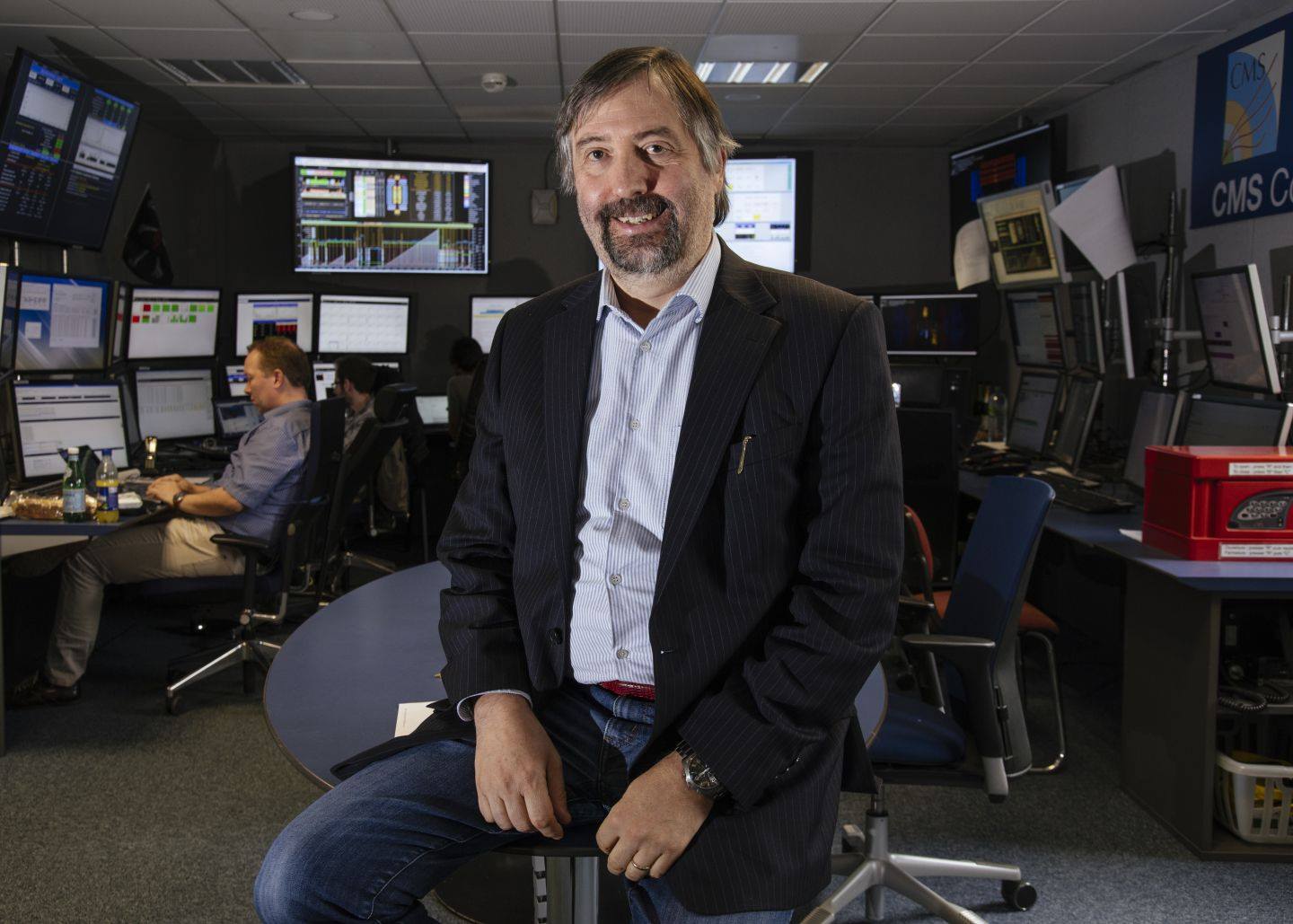
Great news for the CMS experiment - and for Italy, and for my institution, Padova, where I coordinate accelerator-based physics research for INFN. Professor Roberto Carlin, a longtime member of the CMS experiment, where he has taken many important roles in the construction and operations of the experiment, and recently was deputy spokesperson, has now been elected spokesperson. This consolidates a "rule" which sees Italian physicists at the lead of the experiment every other term, after Tonelli (2010-12) and Camporesi (2014-16). 


Though unusually ethically suspect supplement merchants have been marketing kratom, an analgesic made from the leaves of a tropical tree native to Southeast Asia, to treat opioid withdrawal symptoms, significant safety concerns exist.

And it turns out kratom itself is an opioid, finds an FDA study. 
Some shameless self-promotion is in order today, as my review titled "Hadron Collider Searches for Diboson Resonances", meant for publication on the prestigious journal "Progress in Particle and Nuclear Physics", has been made available on the Cornell Arxiv.
My review covers quite extensively the topic, as it is not constrained in length as other reviews usually are. At 76 pages, and with 500 references, it aims to be the main reference on this type of physics for the next five years or so - at least, this is the stipulation with PPNP. Whether I managed to make it such, it is something to be judged by others.

The plan of the work is as follows:
The field of particle physics is populated with believers and skeptics. The believers will try to convince you that new physics is about to be discovered, or that is anyway at close reach. The skeptics will on the other hand look at the mass of confirmations of the current theory -the Standard Model- and claim that any speculation about the existence of discoverable new phenomena has no basis.

This has been running in numerous sensationalist press stories and other outlets with less careful journalists. It’s all based on a story in Undark by a journalist promoting their new book. And it is full of nonsense, utter codswallop. Here is the original story:

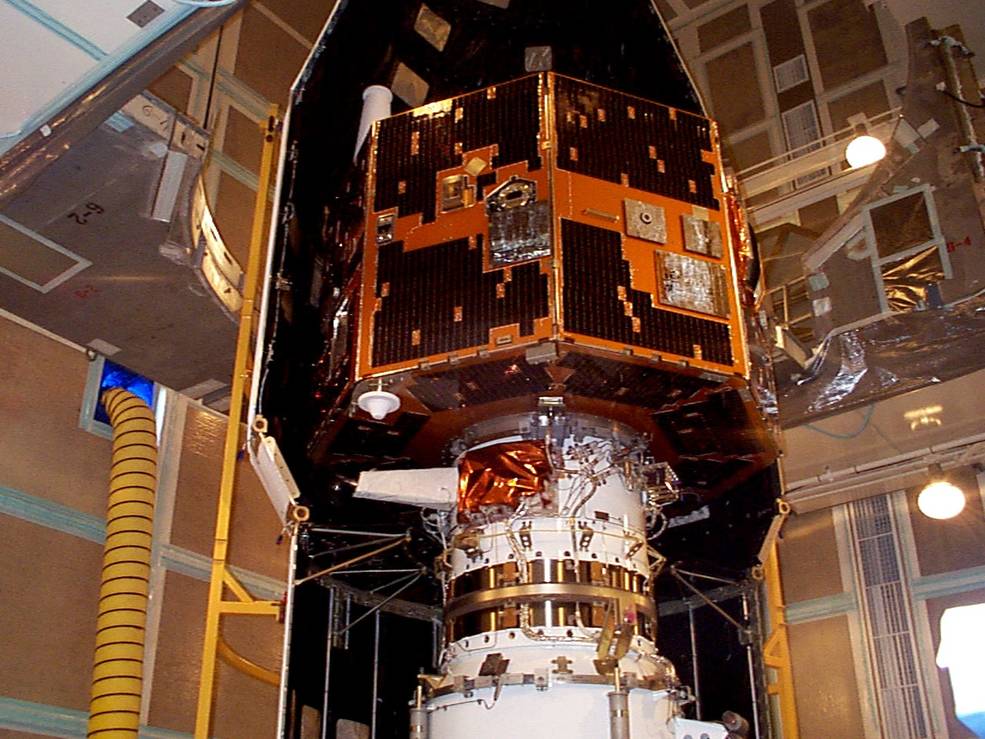
The Imager for Magnetopause-to-Aurora Global Exploration (IMAGE) project was launched in 2000 to create the first comprehensive images of atmospheric plasma in our magnetosphere, a kind of cosmic demilitarized zone with plasmas of both solar and terrestrial origin. It was still functioning in 2002 when it completed its initial go but then failed to make contact again on a routine pass by the Earth in 2005. 

And NASA lost track of it. Like all NASA missions, they can never say failure so even though it only did one thing they declared it worth the $150 million. 

Stonyfield Farm, an organic corporation started by Samuel Kaymen in 1983, really rocketed to prominence when its then president, Gary Hirshberg, discovered a way to increase his market share with not much marketing cost at all: where most companies marketed by saying all the benefits and improvements they have, Hirshberg began marketing what it did not have. And that missing thing was science.

Stereotype threat is a sociological invention which seeks to rationalized why some people don't perform as well as others. In biology, for example, if a group of women didn't fare well on tests sociologists argue that if there were not enough women in the classroom, women felt like they were representing women in biology and if they didn't do well, all women would look bad. And that pressure caused them to not do well.

Outside the social justice world, in the realm of data, there is one area where women are not being told by the social sciences they are too intimidated to compete: chess. There, it's game on.


