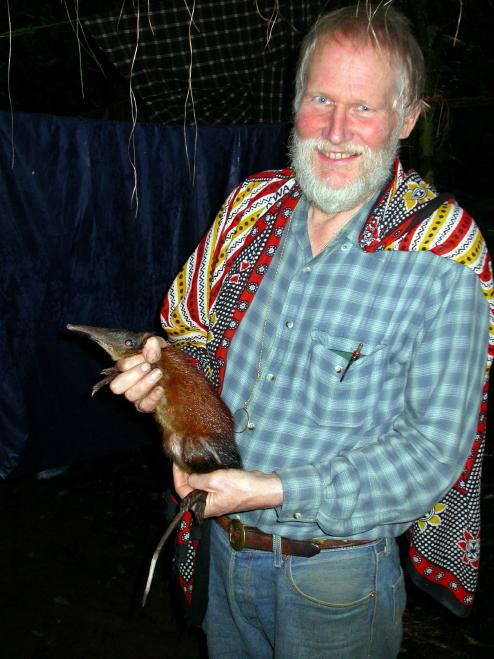





Although there is unquestionably much left to be discovered about life on Earth, charismatic animals like mammals are usually well documented, and it is rare to find a new species today—especially from a group as intriguing as the elephant-shrews, monogamous mammals found only in Africa with a colorful history of misunderstood ancestry.

Like shrews, these small, furry mammals eat mostly insects. Early scientists named them elephant-shrews not because they thought the animals were related to elephants but because of their long, flexible snouts. Ironically, recent molecular research has shown that they are actually more closely related to elephants than to shrews.

Monster.com is the perfect example of a company that spent its entire marketing budget on a Super Bowl ad and launched a success story. Is that the exception?

No, it turns out that Super Bowl advertisements do work, but not in the way you might expect. They don't often launch small companies into the Pro Bowl of the business world. Rather, a good Super Bowl ad means people assume the advertising works, anticipate more revenue, and push up the stock price of the company - without actually increasing sales.

Researchers in the University at Buffalo School of Management and Cornell University examined 529 commercials that aired during 17 Super Bowls from 1989-2005, and found that investors favored stocks of firms that aired likeable Super Bowl commercials.

Boosted by physical and mental exercise, neural stem cells continue to sprout new neurons throughout life, but the exact function of these newcomers has been the topic of much debate. Removing a genetic master switch that maintains neural stem cells in their proliferative state finally gave researchers at the Salk Institute for Biological Studies some definitive answers.

Without adult neurogenesis — literally the “birth of neurons” —genetically engineered mice turned into “slow learners” that had trouble navigating a water maze and remembering the location of a submerged platform, the Salk investigators report in the Jan. 30 Advance Online Edition of Nature. The findings suggest that, one day, researchers might be able to stimulate neurogenesis with orally active drugs to influence memory function, the researchers say.

COLUMBIA, Maryland, January 30 /PRNewswire/ --

- Award of Infrastructure Products and Services Intended to Encourage nnovative Networks Based on Sound Business Principles

- Visit Tecore Networks at Mobile World Congress, Stand 8C78

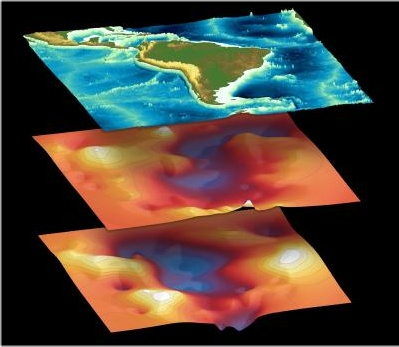
Earthquakes occurring at the edges of tectonic plates can trigger events at a distance and much later in time, according to a team of researchers reporting in Nature. These doublet earthquakes may hold an underestimated hazard, but may also shed light on earthquake dynamics.

"The last great outer rise earthquakes that occurred were in the 1930s and 1970s," said Charles J. Ammon, associate professor of geoscience, Penn State. "We did not then have the equipment to record the details of those events."

The outer rise is the region seaward of the deep-sea trench that marks the top of the plate boundary

February’s issue of Pediatrics offers a study saying there is reason to rethink blaming the spike in autism diagnoses on thimerosal, a mercury-containing preservative routinely used in several childhood vaccines until the late ‘90s.

The research from the University of Rochester suggests that infants’ bodies expel the thimerosal mercury much faster than originally thought – thereby leaving little chance for a progressive build up of the toxic metal.

Some parents and pediatricians believe that the series of thimerosal-containing shots many infants received in the 1990s, when the average number of vaccines kids received increased sharply, had put them at risk for developmental disorders.

A study in Social Science Quarterly says that religious women are less likely to have abortions than secular women - not because they're more pro-life, but because they're less likely to get pregnant before marriage.

“Religious influences on attitudes are much more powerful than religious influences on behavior,” the authors note. “While religion is the main reason for differences in abortion attitudes, religion is a relatively minor reason for differences in abortion behavior.”

Based on the rapid evaporation of solvent from simple “inks,” University of Illinois researchers have demonstrated a process for fabrication of complex, three-dimensional nanoscale structures and shown the ability to grow individual nanowires of unlimited length.

The process has been used to fabricate freestanding nanofibers, stacked arrays of nanofibers and continuously wound spools of nanowires. Potential applications include electronic interconnects, biocompatible scaffolds and nanofluidic networks.

“The process is like drawing with a fountain pen – the ink comes out and quickly dries or ‘solidifies,’ ” said Min-Feng Yu, a professor of mechanical science and engineering, and an affiliate of the Beckman Institute. “But, unlike drawing with a fountain pen, we can draw objects in three dimensions.”

Studies have shown that children do not accurately use landmarks to orient themselves until about the age of six but those studies were done in an artificial environment. A new study taking place in a natural environment disputes that finding and says even children as young as three use 'reorientation.'

Reorientation is using things around us to regain our bearings.

Dr Alastair Smith from the Department of Experimental Psychology and colleagues from his department and the Department of Computer Science at the University of Bristol have tested the ability of children aged between three and seven to orient themselves in the great outdoors.

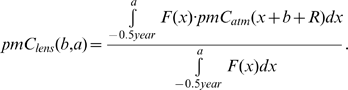
Researchers at the University of Copenhagen and Aarhus have shown they are able to use the radiocarbon dating method to study special proteins in the lens of the eye - they use a nuclear accelerator to determine the amount of Carbon-14 in as little as one milligram of lens tissue and thereby calculate the year of birth.

This will enable forensic scientists to establish the birth date of an unidentified body and could also eventually be used in cancer research.

The lens of the eye is made up of transparent proteins called crystallins. These are packed so tightly together and in such a particular way, that they behave like crystals, allowing light to pass through the lens of the eye so that we can see.

