Alternative Title:
“Inevitable ‘Society of Walls’ versus the True Legacy of Donald Trump: Dear Donald, please reform Academia!”
Confusion and misinformation are so intense in our time that even my readers, though at the right end of the IQ Bell curve, ask: How could deeply and widely knowledgeable scientists support Donald Trump in spite of his mentioning autism when criticizing vaccination procedures and doubting the “global warming consensus”?
Two days ago, before returning from Israel, my fiancee Kalliopi and I had a very nice dinner in a kosher restaurant near Rehovot in the company of Eilam Gross, Zohar Komargodski, and Zohar's wife Olga.
The name of Eilam should be familiar to regulars of this blog as he wrote a couple of guest posts here, in similar occasions (in the first case it was a few before the Higgs discovery was announced, when the signal was intriguing but not yet decisive; and in the second case it was about the 750 GeV resonance, which unfortunately did not concretize into a discovery). As for Zohar, he is a brilliant theorist working in applications of quantum field theory. He is young but already won several awards, among them the prestigious New Horizons in Physics prize.
Chemicals found in the blood, biomarkers, can be combined to produce patterns that signify how well a person is aging and his or risk for future aging-related diseases, according to a new study.
I thought it would be good to let you readers of this column know that in case you wish to order the book "Anomaly! Collider Physics and the Quest for New Phenomena at Fermilab" (or any other title published by World Scientific, for that matter) you have 10 more days to benefit of a 35% discount off the cover price. Just
visit the World Scientific site of the book and use the discount code
WS16XMAS35).
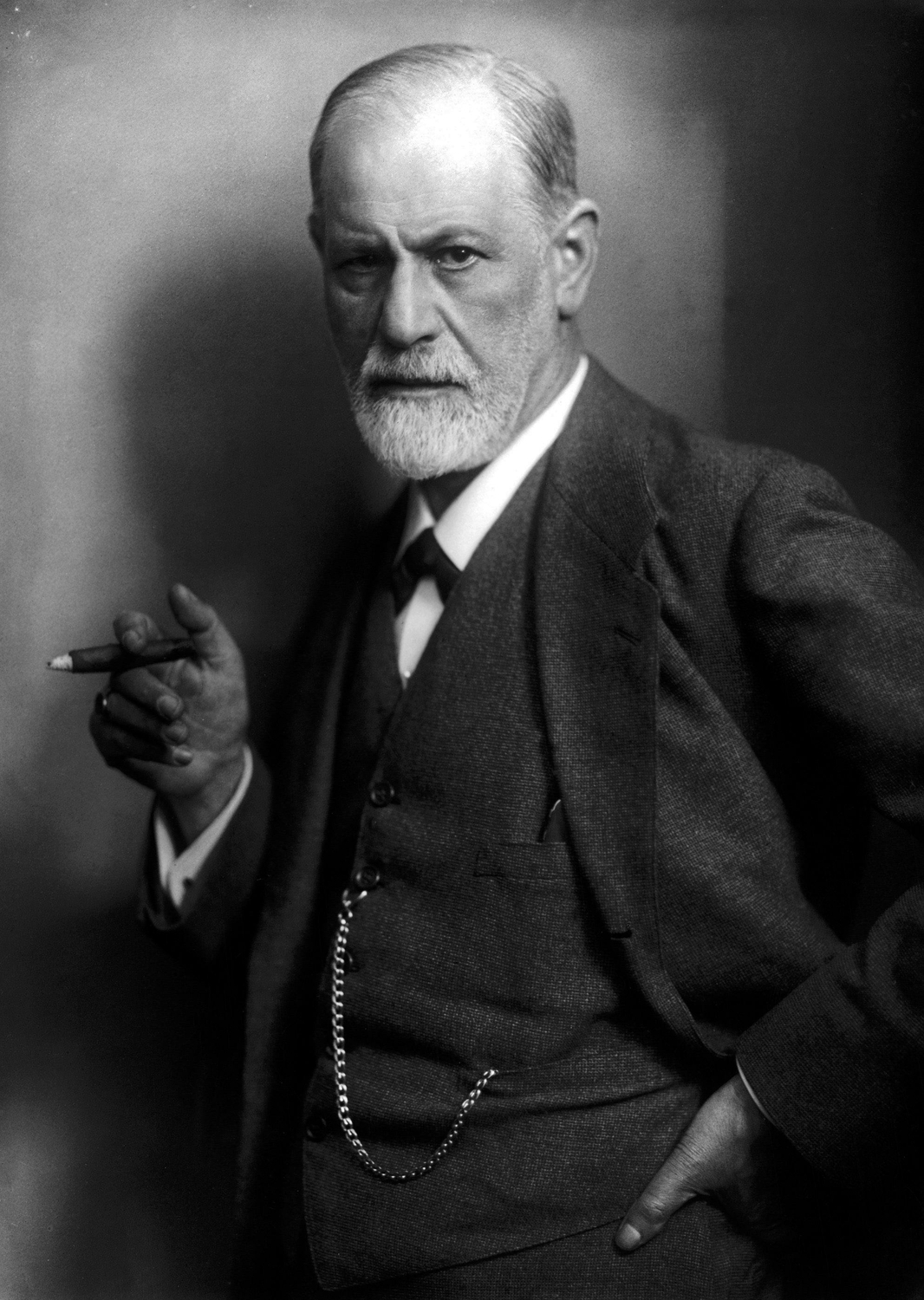
To be science, there must be a theoretical foundation. What does psychology lack? A theoretical foundation. In fact, the only true theoretical foundation of psychology is widely derided by psychologists and psychiatrists alike, yet much of the world can only name one person in the field - and that person is Dr. Sigmund Freud, the father of psychoanalysis.
Though opiods are getting all of the government attention, and the substitute fentanyl all of the attention in media, they are not the only substances putting people at risk. Kratom has gotten some media attention, but among users, psilocybin-containing 'magic mushrooms' are a bigger worry, with more than 10 percent in
a recent survey believing their worst 'bad trip' had put themselves or others in harm's way, and a substantial majority called their most distressing episode one of the top 10 biggest challenges of their lives.
I am spending a week in Israel to visit three physics institutes for colloquia and seminars: the Tel Aviv University (where I gave a colloquium yesterday), the Haifa Technion (where I am giving a seminar today), and the Weizmann institute in Rehovot (where I'll speak next Wednesday).
One-third of science is not published in the common language of science, English, and that prevents uptake of the results and citations for the researchers, according to a new analysis.
Language barriers mean science missed at international level and practitioners struggling to access new knowledge, because all major scientific journals publish in English. What science needs is true globalization,
but the authors at Cambridge instead argue for more fragmentation, a warmed over version of cultural relativism. They even posit that funding bodies need to encourage translations as part of their 'outreach' evaluation criteria, funding the long tail of communication rather than science itself.
Today I am actually quite proud of my research institute, the "Istituto Nazionale di Fisica Nucleare, INFN, which leads Italian research in fundamental physics. In fact a selection to hire 73 new researchers with permanent positions has reached its successful conclusion. Rather than giving you my personal opinions (very positive!) I think it is better to let speak the INFN president Fernando Ferroni, and the numbers themselves.
During the past few months I have been giving seminars and colloquia in several institutes around Europe and the US. The topic was more or less always the same, i.e. the discovery criterion used in fundamental physics to decide whether to claim for the observation of a new phenomenon. We set this at 5-sigma -that's, e.g., how the Higgs boson has been discovered in 2012. This is an arbitrary choice, and there is a lot to learn from a study of the history of how the criterion became an established practice, and from the statistical issues it entails.
Here is a list of the past events:
- Oslo University, October 26
- LIP Lisbon, October 27
- SLAC laboratory, November 8
- Northwestern University, November 11
- Royal Holloway University London, November 30