LEUVEN, Belgium, September 19 /PRNewswire/ -- ThromboGenics NV (Euronext Brussels: THR), a biotechnology company focused on innovative treatments for eye disease and cancer announces today its promotion to the Belgian Midcap index (Bel Mid Index or BELMID). After a quarterly review of Belgian indices by Euronext Brussels, ThromboGenics will enter the Bel Mid Index from October 1, 2008.

PFAFFHAUSEN, Switzerland, September 19 /PRNewswire/ -- With their launch of the ArchivistaBox 2008/IX, Archivista, a Swiss open source software company, has released the only open source text recognition software worldwide that can create searchable PDF files.

The majority of current text recognition or OCR (optical character recognition) programs run only on Windows systems and can be purchased for prices from around 100 Euro upwards. When, however, thousands or millions of pages are to be processed, then expensive volume licenses, that are based on a price per scanned page, are required.

INNSBRUCK, Austria, September 19 /PRNewswire/ -- Thirty seven medical experts in psychiatry from across the world have called on the medical community to take urgent action to optimize services for people with a diagnosis of severe mental illness such as schizophrenia or bipolar disorder(i).

Professor W. Wolfgang Fleischhacker, principal author of Comorbid Somatic Illnesses in Patients with Severe Mental Disorders: Clinical, Policy, and Research Challenges which was published in the Journal of Clinical Psychiatry, together with leading physicians, confirmed that compared to the general public there were serious inequalities in the physical health of patients with severe mental illness and a shorter life expectancy, due primarily to cardiovascular disease.

New research from Stanford University scientists suggests that type 1 diabetes, an autoimmune disease that develops in children and young adults, may not be due to bad genes but rather to good genes behaving badly.

Because type 1 diabetes typically runs in families, scientists have looked for inborn genetic errors or gene variants passed on from generation to generation. Although this search has failed to find a single type 1 diabetes gene, many candidate type 1 diabetes susceptibility genes have been identified. These susceptibility genes, located in a region known as the major histocompatibility complex (MHC), help the body distinguish its own cells and tissues from those that are foreign.

A Bonn-based company is launching a virtual TV studio accessible to everyone via http://make.tv. The new service will be presented for the first time at photokina in Cologne on 23rd September, at Booth B054 in Hall 9, and they say it will revolutionize live TV.

Making an appearance at both the world's biggest imaging exhibition and on the internet, after a year in development, http://make.tv is being introduced as a new 'virtual' TV studio for the production of their own live transmissions, without having to invest in traditional TV transmission technology.

The virtual studio is controlled from a computer, is easy to use and requires no installation, since it works through an internet browser. As a result, it is possible to basically transmit for free from anywhere in the world.

Controlling weight may as simple as finding immature, or “baby,” fat cells that lurk in the walls of the blood vessels that nourish fatty tissue, waiting for excess calories to help them grow into the adult monsters that pack on extra pounds.

In addition, say researchers at UT Southwestern Medical Center, their mice studies may lead to using these immature cells for such clinical treatments as filling in a woman’s breast after a lumpectomy.

Researchers have believed such cells were located near blood vessels but they didn’t know exactly where. Discovering their existence, their identity and their lair may direct future research to find ways to stop these cells from creating undesired fat.

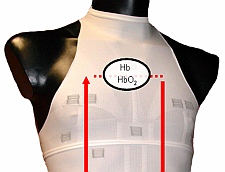
Smart fabrics and intelligent textiles – material that incorporates cunning molecules or clever electronics – is thriving and European research efforts are tackling some of the sector’s toughest challenges. 

Clothes that monitor your heart, measure the chemical composition of your body fluids or keep track of you and your local environment promise to revolutionise healthcare and emergency response, but they present tough research challenges, too.

A study in northern China indicates that genetically modified cotton, altered to express the insecticide Bt, not only reduces pest populations among those crops, but also reduces pests among other nearby crops that have not been modified with Bt. These findings could offer promising new ideas for controlling pests and maximizing crop yields in the future.

Bt is an insecticide derived from the spores and toxic crystals of the bacteria Bacillus thuringiensis, and has been sold commercially since 1960. It is considered non-toxic to humans, animals, fish, plants, micro-organisms, and most insects. However, it is highly selective and lethal to caterpillars of moths and butterflies. Bt is currently registered and marketed for use as an insecticide in more than 50 countries worldwide. It does not contaminate groundwater because it degrades so rapidly.

Dr. Kong-Ming Wu from the Chinese Academy of Agricultural Sciences in Beijing and colleagues analyzed data from 1997 to 2007 about the agriculture of Bt cotton in six provinces in northern China, covering 38 million hectares of farmland cultivated by 10 million resource-poor farmers. They compared that information with data on pest populations in the region, focusing on the cotton bollworm, a serious pest for Chinese farmers.

Netlog, a European social networking site that also allows almost instant translation into 23 languages, has opened its translation and localization capabilities to third-party developers. They also announced they will give developers access to their "credits economy", offering developers an alternative for advertising revenues.

Netlog joined the OpenSocial initiative three months ago to allow developers to use a common set of programming interfaces on a variety of social sites across the web, also including Orkut, MySpace, Yahoo!, Hi5 and Friendster. OpenSocial makes it easier for developers to build social applications and for websites to add more social features quickly.

Researchers say they have found evidence that supports the idea that the emergence of agriculture in prehistory took much longer than originally thought.

Until recently researchers say the story of the origin of agriculture was one of a relatively sudden appearance of plant cultivation in the Near East around 10,000 years ago, spreading quickly into Europe and dovetailing conveniently with ideas about how quickly language and population genes spread from the Near East to Europe. Initially, genetics appeared to support this idea but now there are questions about the evidence underpinning that model

A team led by Dr Robin Allaby from the University of Warwick's plant research arm, Warwick HRI, have developed a new mathematical model that shows how plant agriculture actually began much earlier than first thought, well before the Younger Dryas (the last "big freeze" with glacial conditions in the higher latitudes of the Northern Hemisphere). It also shows that useful gene types could have actually taken thousands of years to become stable.