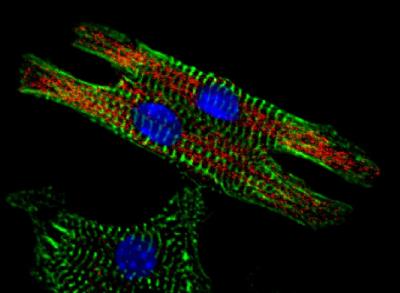









Researchers at Children's Hospital Boston say they have pinpointed a new, previously unrecognized group of stem cells that give rise to cardiomyocytes; heart muscle cells. These stem cells, located in the surface of the heart, or epicardium, advance the hope of being able to regenerate injured heart tissue.

Previously, the Children's team found that a specific stem cell or progenitor, marked by expression of a gene called Nkx2-5, forms many components of the heart: heart muscle cells, vascular smooth muscle cells, and the endothelial cells lining blood vessels in the heart's left-sided chambers. The team at MGH found a related progenitor, marked by expression of the Isl1 gene, that produces these same cell-types in the right-sided heart chambers.

Now, researchers have shown that heart muscle cells can also be derived from a third type of cardiac progenitor, located within the epicardium and identifiable through its expression of a gene called Wt1.

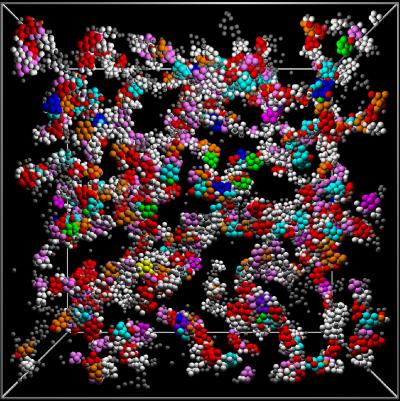
Glass has always been a chemical and physical puzzle. Unlike most solids, glass is actually more like a slow-moving liquid - a 'jammed' state of matter that moves very slowly. Like cars in traffic, atoms in a glass can't reach their destination because the route is blocked by their neighbors, so it never really becomes a solid.

For more than 50 years most scientists have tried to figure out the glass puzzle. Work so far has concentrated on trying to understand the traffic jam, but now Dr Paddy Royall from the University of Bristol, with colleagues in Canberra and Tokyo, has shown that the problem really lies with the destination, not with the traffic jam.

Publishing in Nature Materials, the team has revealed that glass 'fails' to be a solid due to the special atomic structures that form in a glass when it cools (ie, when the atoms arrive at their destination).

The movements in the liquid part of the Earth’s core are changing surprisingly quickly, and this affects the Earth’s magnetic field, according to new research from DTU Space.

The Ørsted satellite’s very precise measurements of the Earth’s magnetic field over the past nine years have made it possible for Nils Olsen, Senior Scientist with DTU Space, and several German scientists, to map surprisingly rapid changes in the movements in the Earth’s core. The results have just been published in the scientific journal Nature Geoscience.

“What is so surprising is that rapid, almost sudden, changes take place in the Earth’s magnetic field. This suggests that similar sudden changes take place in the movement of the liquid metal deep inside the Earth which is the reason for the Earth’s magnetic field,” Nils Olsen explains.

Rett syndrome is a genetic brain development disorder that primarily affects females. It is predominantly caused by a sporadic mutation in the MECP2 gene on the X chromosome.

The syndrome becomes apparent from around six months of age when development stagnates and acquired skills, such as coordination, speech, communication skills and cognitive function deteriorate. Other problems can include, breathing, cardiac function, chewing, swallowing, and digestion. Rett syndrome has often been misdiagnosed as cerebral palsy, and shares some similarities with autism. A blood test, as well as symptoms and clinical history, helps to diagnose the disorder.

The average life expectancy of a girl with Rett syndrome is less than 50 years and she will require maximum assistance with every aspect of daily living.

Researchers at the University of Cincinnati are looking for ways to reduce or prevent heart damage by starting where the problem often begins: in the genes.

Following a heart attack, cells die, causing lasting damage to the heart. Keith Jones, PhD, a researcher in the department of pharmacology and cell biophysics, and colleagues are trying to reduce post-heart attack damage by studying the way cells die in the heart—a process controlled by transcription factors.

Transcription factors are proteins that bind to specific parts of DNA and are part of a system that controls the transfer of genetic information from DNA to RNA and then to protein. Transfer of genetic information also plays a role in controlling the cycle of cells—from cell growth to cell death.

Measles, one of the most common contagious diseases, has been thought to enter the body through the surface of airways and lungs, like many other major viruses. Now, Mayo Clinic researchers and their collaborators say that's not the case, and some medical texts will have to be revised. The findings are reported in The Journal of Clinical Investigation.

The research team generated a measles virus that cannot enter the airway epithelium and showed that it spread in lymphocytes, cells of the immune system, and remained virulent. Researchers also showed, as they predicted in a new model of infection, that the virus could not cross the respiratory epithelium on its way out of the lungs and was not shed from infected monkeys.

Freshly released spermatozoids don't just achieve fertilization, they must undergo some changes for this to occur. Among those are changes due to receptors situated in the plasmatic membrane (the layer covering the cells) and opioid and cannabinoid receptors are two of these.

On coming into contact with these, physiological reactions are generated in the body which are similar to sedation, analgesia and low blood pressure. According to the research undertaken to date, both substances have an influence on the process of fertilization. It is known that the consumption of external opiates (heroin, methadone) reduces the mobility of spermatozoids and that external cannabinoids (hachis) causes changes in the reproductive process.

Ekaitz Agirregoitia Marcos, from the University of the Basque Country, has concluded that there are opioid and cannabinoid receptors in human sperm and that these influence the mobility of spermatozoid and that his new research on this opens the door to more effective treatment of fertility problems.

What makes a pointer point, a sheep dog herd, and a retriever retrieve? Why do Yorkshire terriers live longer than Great Danes? And how can a tiny Chihuahua possibly be related to a Great Dane?

Dogs vary in size, shape, color, coat length and behavior more than any other animal and until now, this variance has largely been unexplained. Now, scientists have developed a method to identify the genetic basis for this diversity that may have far-reaching benefits for dogs and their owners.

In the cover story of Genetics, research reveals locations in a dog's DNA that contain genes that scientists believe contribute to differences in body and skull shape, weight, fur color and length – and possibly even behavior, trainability and longevity.

Is it worse to be fat or just to feel fat?

Quality of life is lower in obese children but it is unknown how much of that correlates to self-evaluation. If adolescents think they are “far too fat,” they forfeit a lot of their quality of life, whatever their actual weight.

If adolescents consider their weight “just right,” their quality of life is the same as if they were of normal weight, even if this is not true.

The results of a new survey say the proportion of German adolescents who think they are overweight has been increasing more rapidly in recent years than the proportion of those who really are overweight. As children have become fatter more of them still feel pressure to be thin even though they are told they should love themselves for who they are.

PARIS, June 21 /PRNewswire/ -- Telnic Limited, the Registry Operator and Sponsoring Organization for the new sponsored top level domain (sTLD) .tel, today announced details for launch at the ICANN meeting in Paris. Sunrise applications from national trademark owners will be accepted on a first-come, first-served basis as of Wednesday, 3rd December 2008.

.tel enables you to store, update and publish all your contact information, web links and keywords directly on the internet under your own unique domain name. Simple, fast and accessible from any device, .tel provides a new internet standard to take full control over how and where people reach you. The .tel delivers:

