




Cameron Neylon gave a very thoughtful talk at Drexel on Friday about using blogs to capture the science going on in his group then deciding to open his laboratory notebooks to the world. He was refreshingly honest about his progress and motivations. For example, at one point he noted that a gel image was missing on one of the posts. Instead of glossing over it, he pointed out how this just makes transparent how difficult it is to properly maintain a laboratory notebook.

Inheriting two genetic mutations that can individually cause epilepsy might actually be “seizure-protective,” said Baylor College of Medicine researchers the journal Nature Neuroscience.

“In the genetics of the brain, two wrongs can make a right,” said Dr. Jeffrey L. Noebels, professor of neurology, neuroscience and molecular and human genetics at BCM. “We believe these findings have great significance to clinicians as we move toward relying upon genes to predict neurological disease.”

In addition, the finding might point the way to new ways of treating epilepsy using gene-directed therapy.

“If you have a potassium channel defect, then a drug blocking certain calcium channels might also benefit you,” said Noebels.

Recessive dystrophic epidermolysis bullosa (RDEB)is a disease where children lack a protein that anchors skin to the body, resulting in fragile skin that tears off with little movement or friction. They suffer painful wounds and must be bandaged at all times to protect their skin from further damage and infection.

University of Minnesota Children’s Hospital, Fairview physicians have performed the first bone marrow and cord blood transplant to treat RDEB.

The 18-month-old boy who was transplanted has the most severe form of RDEB, which also causes skin to slough off on the inside of the body, affecting the mouth, esophagus, and gastrointestinal tract. EB is genetic and severe forms are always fatal.

An age-related decline in heart function is a risk factor for heart disease in the elderly. While many factors contribute to a progressive age-related decline in heart function, alterations in the types of fuels the heart uses to produce energy also play important roles.

Jason Dyck and his research team at the University of Alberta have been studying the types of fuels used by the heart in young and aged mice. The young healthy heart normally used a balance of fat and sugar to generate energy to allow the heart to beat and pump blood efficiently. However, as the heart ages the ability to use fat as an energy source deteriorates. This compromises heart function in the elderly.

The universe’s clock has neither a start nor finish, yet time is still finite, according to a New Zealand theorist.

To understand that, we need to take a “cyclic” view of time similar to the one held by ancient thinkers like Plato, Aristotle and Leonardo da Vinci, rather than the Christian Calender and Bible-influenced belief in “linear” time so deeply imbedded in modern western thinking.

This theory, which tackles the age-old mystery of the origin of the universe, along with several other problems and paradoxes in cosmology, essentially calls for a new take on our concept of time.

The radar system on ESA’s Mars Express has uncovered new details about some of the most mysterious deposits on Mars: The Medusae Fossae Formation. It has given the first direct measurement of the depth and electrical properties of these materials, providing new clues about their origin.

The Medusae Fossae Formation (MFF) are unique deposits on Mars. They are also an enigma. Found near the equator, along the divide between the highlands and lowlands, they may represent some of the youngest deposits on the surface of the planet. This is inferred from the marked lack of impact craters dotting this terrain, unlike on older terrain. Mars Express has been collecting data from this region using its Mars Advanced Radar for Subsurface and Ionospheric Sounding (MARSIS).

Scientists at the University of Liverpool have discovered that mice rely on a special set of proteins to recognize each other.

Previous studies assumed that another set of genes that influence smell in vertebrates might be used by animals that identify each other through scent. The team found, however, that mice use a highly specialized set of proteins in their urine to recognize different individuals, suggesting that this may also be true of other animals.

Professor Jane Hurst, Director of the Mammalian Behaviour and Evolution research group, explains: “For many years scientists assumed that a particular set of genes, called the major histocompatibility complex (MHC), helped animals to identify individuals within their own species through their scent.

‘Munchausen's syndrome by proxy’ describes women alleged to have fabricated or induced illnesses in children under their care, purportedly to attract attention. Where conclusive evidence of guilt exists the condition's aetiology remains speculative, but when evidence is lacking diagnosis hinges upon denial of wrong-doing, which is conduct also compatible with innocence. Given those criteria, how can investigators find objective evidence of guilt or innocence?

Professor Sean Spence, who has pioneered the use of functional Magnetic Resonance Imaging (fMRI) to detect lies, carried out groundbreaking experiments on a woman who was sentenced to four years in prison for poisoning a child in her care but protested her innocence.

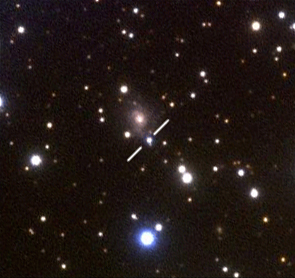
Astronomers at the Harvard-Smithsonian Center for Astrophysics (CfA) have found that a supernova discovered last year was caused by two colliding white dwarf stars. The white dwarfs were siblings orbiting each other. They slowly spiraled inward until they merged, touching off a titanic explosion. CfA observations show the strongest evidence yet of what was, until now, a purely theoretical mechanism for creating a supernova.

"This finding shows that nature may be richer than we suspected, with more than one way to make a white dwarf explode," said Harvard graduate student and first author Malcolm Hicken.

More than 10 million people use Flickr to show pictures of actual 3D locations. Now a group at the University of Washington is doing the reverse – downloading thousands of photos from Flickr and using them to recreate the original scenes.

A presentation in October at the International Conference on Computer Vision showed how photos from online sites such as Flickr can be used to create a virtual 3D model of landmarks, including Notre Dame Cathedral in Paris and the Statue of Liberty in New York City.

Creating 3D reconstructions of individual buildings is a first step in a long-term effort to recreate an entire city using online photographs.

