I receive a lot of inquisitive emails from intelligent laymen, and today I received a nice one that asked, in so many words, “Is natural selection fast enough to explain the complex biology we find in our world?”
My knee-jerk response was to say, “Well, of course natural selection is fast enough, because here we are?” But I didn’t do that.
I also didn’t respond by taking out my Dawkins-certified religion-bludgeoning stick. I’m not partial to that pedagogical approach, and I figure it only got Dawkins uncomfortably familiar with Ms. Garrison of South Park.
Instead, I responded in what I think was a more helpful fashion, and my answer was not what the questioner expected. Here is what I wrote:
*****
While I can appreciate the usefulness of smoking bans, especially as it relates to non-smokers (or even smokers for that matter). I'm not convinced that the science is establishing a sound cause and effect linkage.
There is little doubt that smoking is not a healthy activity, but similarly we should be aware of all forms of air pollution. A recent study suggested that even a relatively brief exposure to second hand smoke could precipitate a heart attack1. Unfortunately, I haven't seen how such a study or determination was made, so it is impossible to assess their methodology.
Consider the following quote:
Around three and a half years ago, I posted an item in my personal blog about public key infrastructure.[1] In it, I mentioned two certificate authorities from which one could get free certificates for personal use: Thawte and CAcert.
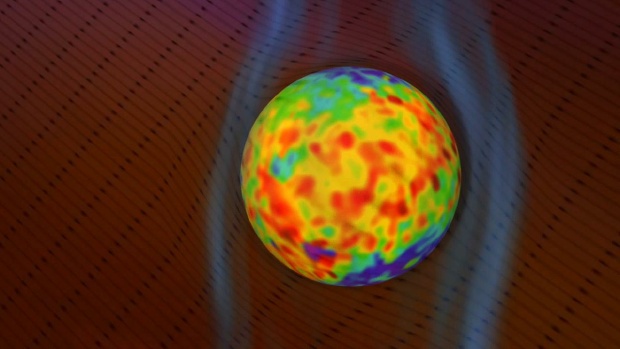
The 'heliosphere', the name given to the region of the sun's influence, may not have the comet-like shape predicted by existing models, say researchers.
As the solar wind flows from the sun, it carves out a bubble in the interstellar medium. Models of the boundary region between the heliosphere and interstellar medium have been based on the assumption that the relative flow of the interstellar medium and its collision with the solar wind dominate the interaction. This would create a foreshortened "nose" in the direction of the solar system's motion, and an elongated "tail" in the opposite direction.
It seems simple enough to answer the question whether something poses a risk or not. The answers can only be "yes", "no", or "we don't know". A "yes" response would then be qualified by the probability or likelihood of risk entailed, as well as the context in which it exists. A "no" should be definitive and not have any exceptions, while a "we don't know" is ambiguous enough to suggest that there is no definite answer, as yet.
A
recent article on the risks of cell phones illustrates one of the reasons why the public tends to be distrustful of many of these findings. It is clear that games are being played and agendas being driven.
In a previous
entry, I discussed Sharon Begley’s Newsweek article titled “Ignoring the Evidence; Why do psychologists reject science?”
It nettled a perennial sore spot for me, which is the culture of Psychology and the role Psychology
plays in the family of sciences. An issue I often wrestle with is the widely held disbelief in the merit of a psychological science. Some of this animosity is of course well earned.
There is a common misconception when assessing computers in suggesting that parallel processing increases speed. This simply isn't true.
Parallel processing is intended to increase throughput by addressing queuing delays that may be experienced by "ready" units of work that are waiting for access to the processor. Each processor is essentially a hardware server for instructions to be processed. In modern computers there are actually multiple points of parallelism and overlap processing, but the primary point is to avoid delays.
If you think choosing a candy bar or a granola bar is totally a matter of free will, think again. A new study published in the Journal of Consumer Research argues that the choices we make to indulge ourselves or exercise self-control depend on how the choices are presented.
University of Miami Assistant professor of marketing Juliano Laran tested subjects to determine how certain words and concepts affected their ability to control themselves when confronted with the choice of healthy or unhealthy food. He found that consumer choices were affected by the actions most recently suggested to them by certain key words.
For many years, so called 'junk RNA' was thought to be nothing more than cellular trash. Recent research, however, has called this view into question as scientists have discovered the importance of some small RNAs that generally contain more than 20 molecular units called nucleotides.
The CDC has released 3.4 million doses of the H1N1,or swine flu,vaccine, which will be distributed throughout the 50 states. More than 251 million doses of the vaccine will be administered to patients throughout flu season.
Although the panic factor surrounding the potential threat of a swine flu pandemic is
high, lethal cases of H1N1 have been relatively low. Out of the almost 30,000 cases of swine flu that have been reported, most cases are mild. As of early September 127 people in the U.S. had died of swine flu. Pat El-Hinnawy, H1N1 Public Affairs Specialist for the FDA, says "So far, [the H1N1 virus] has not shown a very high virulence or a very high mutation rate. For most of the people who get it, it's not a very severe set of symptoms."