Ah, the pleasure of study! I had forgotten the immense intellectual pleasure one may derive by reading a stimulating, informative book. And if half a lifetime has passed from the last time you studied something, and what is left in your brain of it is just Culture, then reading it back again combines the pleasure of the discovery (a rediscovery, in this case) with the one of putting things in perspective, combining the bits of information you recollect with all the knowledge you have acquired since the last time you put the book down.

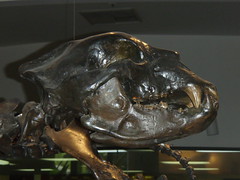
For several years, a European amateur science group was on the trail of dinosaur prints and last spring they made a significant discovery.
The Strangest Man: The Hidden Life of Paul Dirac, Mystic of the Atom, by Graham Farmelo
Basic Books, 2009
When Niels Bohr calls you strange, you know you're in rare company. Niels Bohr, as director of one of the great institutes of theoretical physics, came to know almost every one of the oddballs who populated the early 20th century physics community, and he rated Paul Dirac as "the strangest man" he ever met. Hence the title of Graham Farmelo's excellent new biography of this major physicist.
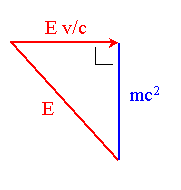
It is easy to marvel at Einstein's relativity theory. It is less easy to really understand relativity. At least so it seems. Understanding relativity requires abilities in predicting with confidence the outcomes of relativistic experiments. For that you need a PhD in physics. Right?
A company called Yellow Diesel B.V. says they have succeeded in producing biodiesel in a continuous fixed-bed micro plant based on heterogeneous catalysis, which provides pure biodiesel plus a cosmetics/food grade glycerol with much lower waste streams.
Their process eliminates all the aqueous waste streams that stem from using the conventional homogeneous acid/base catalyst technology. Combined with integrated process design, they claim the process saves up to 40% of the capital costs and 30% of the operating costs compared to a conventional plant.
Yellow Diesel has produced the biodiesel in its continuous micro plant, and is now scaling up the process to pilot-scale.
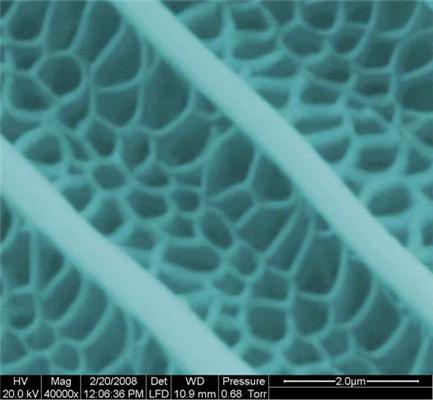
Researchers have developed a technique to replicate biological structures, such as butterfly wings, except on a nano scale and the resulting biomaterial could also be used to make optically active structures, such as optical diffusers for solar panels, they say.
Insects' colors and their iridescence (the ability to change colors depending on the angle) or their ability to appear metallic are determined by tiny nano-sized photonic structures (1 nanometer = 10-9 m) which can be found in their cuticle. Scientists have focused on these biostructures to develop devices with light emitting properties. Their work was presented in the journal Bioinspiration&Biomimetics.
I need most of my body parts. I figure I have my various meaty chunks for good evolutionary reasons, and far be it from me to sell any, no matter how often that creepy guy shows up at my door with a cooler of dry ice offering me money. But if I ever were going to unload one of my body parts, I’d pick the most useless one of all, one that is even more useless than the appendix (although even it has recently been suggested to not be so useless, see
Your appendix and your eyes).
I don't hate computational biology, but I've got my issues with the way the field is often practiced. Most of my complaints boil down to this: if a computational biologist is not contributing to our understanding of biology, and not contributing to fundamental computer science either, then what's the point? What are we learning from the research?
The problem usually crops up when computational biologists don't seem to care whether their computational results correspond with any biological reality. If a computer model or algorithm is able to (more or less) recapitulate existing data, then that's considered sufficient. But then what is your model contributing? We already knew the existing data, and chances are, your model hasn't contributed anything new to computer science.
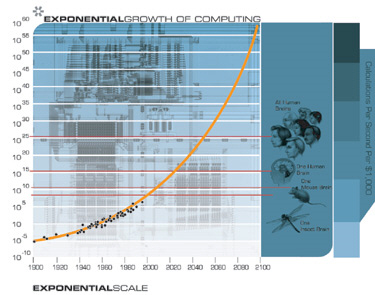
A recent LiveScience article '
Computers Faster Only for 75 More Years' has indicated that new research conducted by two physicists have placed a speed limit on what's attainable regardless of the size of the components.
Moore's Law
1 has often been touted as representing an infinite curve of progress, but this explanation clearly indicates that nothing proceeds indefinitely. In addition, depending on technological developments in computer design and architecture, that limit may actually occur within 20 years according to Scott Aaronson, an assistant professor of electrical engineering and computer science at MIT.