






Sitting up straight in a chair is obviously good for posture but it can also make you unconsciously more confident, say Ohio State University researchers.   

They found that people who were told to sit up straight were more likely to believe thoughts they wrote down while in that posture concerning whether they were qualified for a job while those who were slumped over their desks were less likely to accept written-down feelings about their own qualifications.

The results are an indication that our body posture can affect not only what others think about us, but also how we think about ourselves, said Richard Petty, co-author of the study and professor of psychology at Ohio State.
You would think religious people and atheists don't have a lot in common regarding thinking but they do, says a study by UCLA, Pepperdine and USC neuroscientists.    

It's tough to systematically compare religious faith with ordinary cognition, so calibrate accordingly, but in a neuroimaging study the researchers found that while the human brain responded very differently to religious and nonreligious propositions, the process of believing or disbelieving a statement, whether religious or not, was governed by the same areas in the brain. 
The power of quantum mechanics for data transmission is intriguing because of potential for secure, high speed communications but current storage and transmission of quantum information is far too fragile to have any practical value in the near term.

In classical communications, a bit can represent one of two states - either 0 or 1. But because photons are quantum mechanical objects, they can exist in multiple states at the same time. Photons can also be combined, in a process known as entanglement, to store a bit of quantum information (i.e. a qubit). 
We have all heard the term, "Nutty Professor", which brings to mind the highly intelligent, yet socially inept individual; excelling in the academic world, yet failing miserably in the realm of common sense. Is there an evolutionary explanation for why this phenomenon exists?

Bruce Charlton, Editor-in-Chief of the journal Medical Hypotheses, says "yes". He calls these people 'Clever Sillies' in his article, "Clever Sillies- Why the High IQ Lack Common Sense". He proposes that high IQ is not just a cognitive ability, but also a cognitive disposition. He says,
In previous articles we examine how the brain behaved detrimistically and also how training and indoctrination would affect the information stored. In considering choices an important distinction needs to be made to avoid confusing "choices" with "decisions".  In particular, the point regarding choices is that they are made well before a decision arises.
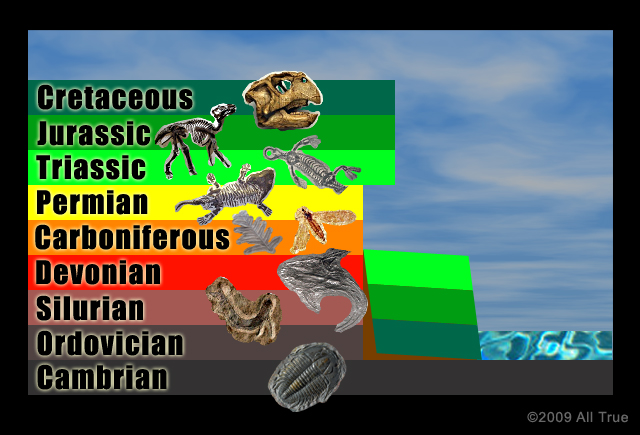
Dating can be a difficult task, a daunting challenge for men and women the world over. It becomes especially difficult when what you're trying to date is extremely ancient.

I'm not talking about romantic dates with seniors though, I don't have many tips there I'm afraid, although good personal hygiene and being a good listener will probably count in your favour.
I was reading Charlie Brooker's excellent column in The Guardian and was disappointed to learn that our educational system, underfunded though it is, seems to have bought into the wave of pseudo-scientific nonsense that is washing over us and is paying good money for something called "Brain Gym".

You can view the official "Brain Gym" website here: http://www.braingym.org.uk/

Even from the first page, it starts looking more than a little suspicious. Look at this quote for example, which surely won't fill you with confidence that the tax money being put into Brain Gym is well spent:

"the UK Educational Kinesiology Trust, makes no claims to understand the neuroscience of Brain Gym®"

Following on from a debate I had some time ago, in relation to alternative medicine (see my "Life Energy" rant) I tried to summarise the materialist view of the universe, to try and explain the reasoning behind my objection to use of the term "life energy".

It was written as a stream of consciousness and not researched or planned, so it is far from rigorous, but I think it works well enough as a rough outline, despite its many flaws. Here it is for your viewing pleasure.... I hope you're sitting comfortably, this is a long one ;-)

An article in this week's edition of Nature adds to the mysteries surrounding 'dark matter'. Should we abandon this enigmatic concept of invisible matter that exerts gravitational attraction but is otherwise undetectable? Could it be that we simply do not understand the long-range behavior of gravity?


Galaxy NGC 4414
Dear Hugh Hefner:

Ever wondered  why you’re rich?   Yes, yes, you’re a savvy businessman who succeeded where thousands have failed.   But there are deeper reasons underlying why your business model works at all. When one digs deeply enough one finds that color – yup, the stuff of rainbows and Crayola – is at the core of your success. Without hue, there’d be no Hugh.

