Neanderthals were stoutly-built and human-like and lived at the same time and in the same areas as some modern humans. But they went extinct.
Anthropologists have tried to solve the mystery of Neanderthal's fate since the first fossils were discovered in the small valley of the river Düssel called Neandertal, about 7 miles east of Düsseldorf in Germany.
Speculation is they they inter-bred with modern humans or failed to compete for food or resources or perhaps were even hunted to extinction by humans.
Stars don't die without being noticed and sometimes the results are pretty spectacular. At the end of its life cycle, a star begins to collapse and throws new material into space, which eventually becomes incorporated into new planets and life.
How evolution can bridge the gap between two discrete physiological states is a question that puzzles biologists and therefore delights critics.
Most evolutionary changes happen in tiny increments; an elephant grows a little larger, a giraffe's neck a little longer and if those tiny changes prove advantageous there is a better chance of passing them to the next generation, which might then add its own mutations until you may end up with a huge pachyderm or the stretched neck of a giraffe.
But when it comes to traits like the number of wings on an insect or limbs on a primate there is no apparent middle ground. How are these sorts of large evolutionary leaps made?
Ever say someone's actions were 'in their genes'? That's not only a simplification, according to a group of University of Iowa scientists, scientists who have debated nature versus nurture for centuries are guilty of 'intellectual laziness.'
They support evolution but not the idea that genes are a one-way path to specific traits and behaviors. Instead, they argue that development involves a complex system in which genes and environmental factors constantly interact.
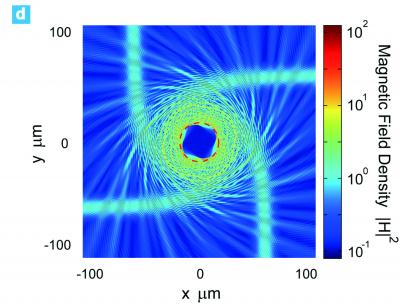
Albert Einstein's theory of general relativity, which describes how the gravity of a massive object like a star can curve space and time, has been successfully used to predict the bending of starlight by the sun, small shifts in the orbit of the planet Mercury and the phenomenon known as
gravitational lensing.
Americans used more solar, nuclear, biomass and wind energy in 2008 than they did in 2007, according to energy flow charts released by the Lawrence Livermore National Laboratory, and less coal and petroleum during the same time frame.
Natural gas consumption and geothermal energy use remained the same.
The estimated U.S. energy use in 2008 equaled 99.2 quadrillion BTUs ("quads"), down from 101.5 quadrillion BTUs in 2007. A BTU, or British Thermal Unit, is a unit of measurement for energy, and is equivalent to about 1.055 kilojoules.
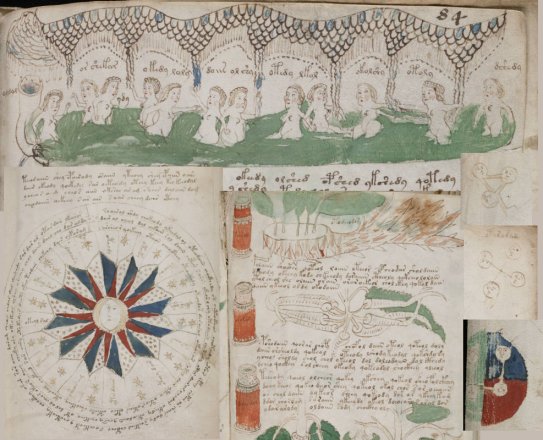
The Voynich Manuscript : An Enigma, Part #3
The Voynich manuscript, Beinebecke Library's MS 408 is a handwritten parchment codex of about 240 pages measuring 225 x 160 mm. The manuscript is in an unreadable script. Most of its pages are illustrated. For nearly 100 years, not one person or group has managed to decode even a single word of it.
According to a recent poll by the National Sleep Foundation, 27 percent of Americans say economic concerns are keeping them awake at night.
But it may not be just stress. According to the poll, 47 percent of the sleepless are very likely to use caffeinated beverages like coffee, tea and sodas during the day to compensate for their sleepiness and the use of artificial stimulants and insomnia are correlated. The majority of people who have difficulty sleeping report using those substances.
“Stress and anxiety can definitely impact sleep,” says Sunil Mathews, M.D., medical director of the Sleep Center at Baylor Medical Center at Irving. “And unfortunately, insomnia can turn into a vicious cycle.”
One of the major obstacles in widespread use hydrogen as a clean energy alternative is hydrogen storage. Solid-state storage, using solid materials such as metals that absorb hydrogen and release it as needed, has safety and practicality advantages over storing hydrogen as a liquid or gas and several materials have been discovered that have met or exceeded the DOE gravimetric and/or volumetric performance targets.
Of those, however, the majority do not have the required thermodynamic and kinetic properties that allow them to release their hydrogen when needed, and be efficiently and economically reloaded with hydrogen when spent.
It seems people still use the intelligence quotient (IQ) test even though minorities in America claim there is cultural bias that invalidates it as a measure of intelligence.
Researchers at the Columbia Center for Children's Environmental Health (CCCEH) at the Mailman School of Public Health have gone even further than cultural bias; they say prenatal exposure to environmental pollutants called polycyclic aromatic hydrocarbons (PAHs) can affect a child's IQ, according to their study of black and hispanic women living in New York City.
PAHs are chemicals released into the air from the burning of coal, diesel, oil and gas, or other organic substances such as tobacco. In urban areas motor vehicles are a major source of PAHs.