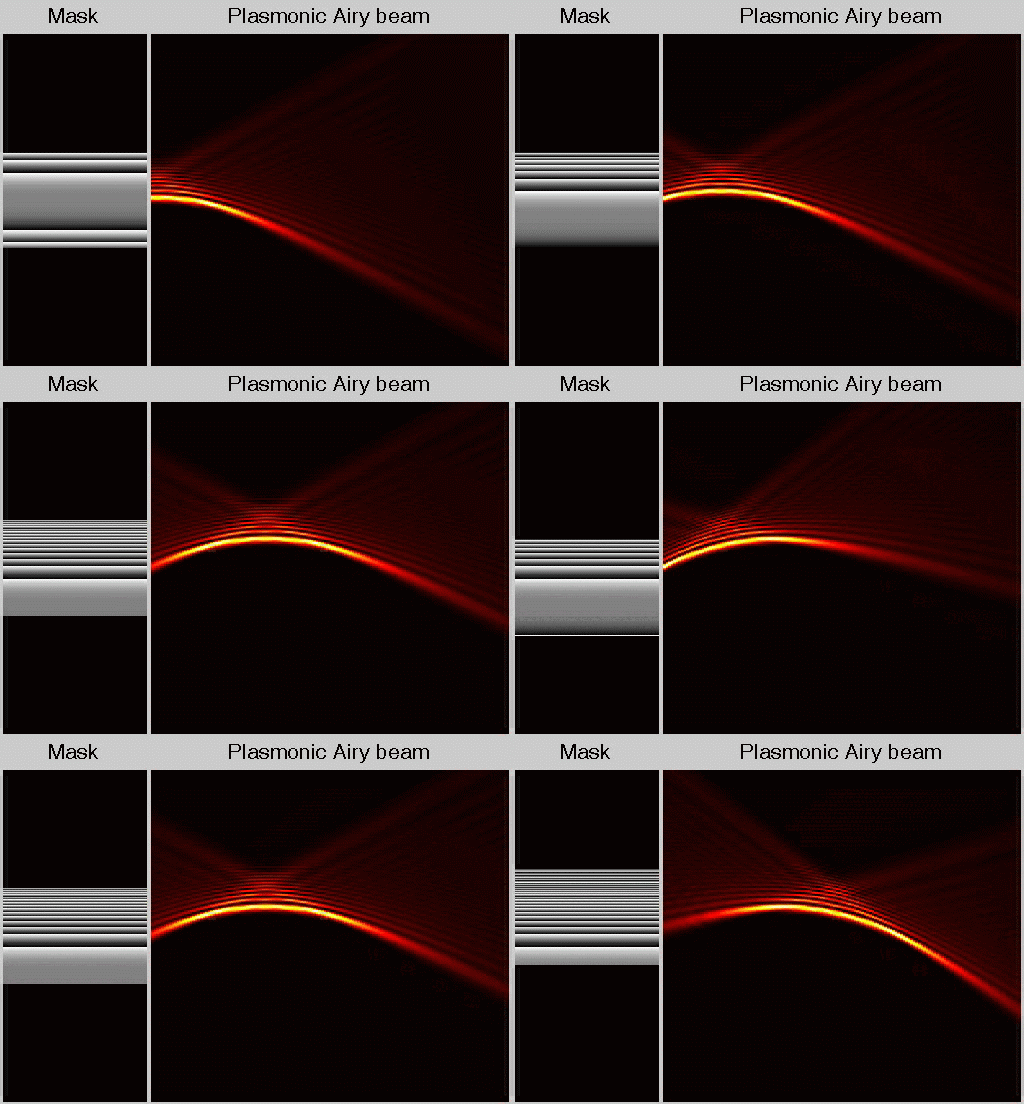




One of the earliest lessons science students learn is that a beam of light travels in a straight line and fan out, or diffract, as they travel. Recently it was discovered that light rays can travel without diffraction in a curved arc in free space. These rays of light were dubbed “Airy beams,” after the English astronomer Sir George Biddell Airy, who studied what appears to be the parabolic trajectory of light in a rainbow.

Now, scientists with the Lawrence Berkeley National Laboratory have demonstrated the first technique that provides dynamic control in real-time of the curved trajectories of Airy beams over metallic surfaces.

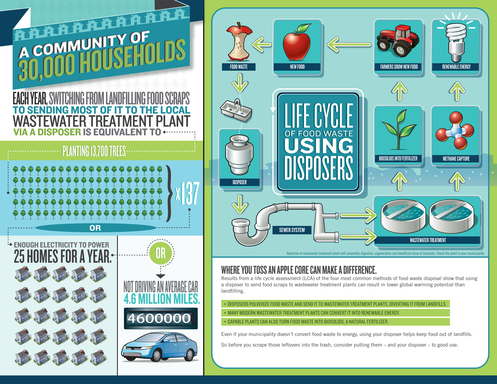
Assuming you don't have the space for a smelly compost heap but want to be as environmentally responsible as possible, what’s the most responsible way to dispose of a banana peel, or any other food waste?

A new study about the impact of various food waste disposal systems says putting it into a garbage disposer results in lower global warming potential than putting it in the trash and sending it to a landfill.

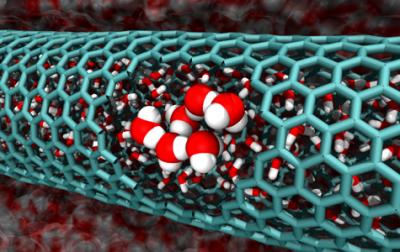
There are rules in making presentations to people - in wine sales, for example, as we outlined in The Science Of Wine And Cheese, you buy on bread and sel on cheese because eating cheese is the way people get the most positive taste.   In science, if the audience wants to be inspired, talk about large motion in space and show Hubble pictures.   If they like the 'physics is soooo weird' kind of science, go small.  There are always strange and unexpected things at the nanoscale, even for the most common materials such as water.

A new cancer therapy has been recently described in the New England Journal of Medicine, and Science Translational Medicine. The therapy is based on the idea that T cells, the frontline fighters of the human immune system are quite good at their job, which is recognizing intruding cells and starting a cascade of events that will eventually lead to their demise. So, engineering these cells to recognize cancer cells could be a good start in the fight against cancer.

This, however proved to be quite difficult.


Our energy dilemma
If you're a fan of "Big Trouble In Little China" (and if you are not, either go rent it and then come back or go read "People" like you should be doing instead of visiting Science 2.0)(1) next to "Chinese people got a lotta Hells"(2) this famous exchange likely sticks in your mind.  As they descend into a metaphorical netherworld on their quest (see: anything by Joseph Campbell or Bulfinch's Mythology, if you are more conservative in your reading) the following exchange takes place:

Jack Burton: That is not water.
Egg Shen: Black blood of the earth.
Jack Burton: Do you mean oil?
Egg Shen: I mean black blood of the earth.
The metabolic profiles of blood serum have revealed significant differences in metabolites between men and women, say scientists at the Helmholtz Zentrum München who have concluded that there is a need for gender-specific therapies. 

If you look at the most politicized aspects of science, it is areas where scientists and science journalists became advocates and stopped being trusted guides for the public. Result: the collapse of science journalism and increased distrust of scientists in those fields.

Paul Ehrlich, the Bing Professor of Population Studies at Stanford, says scientists need to be more political and not less. He summed it up this way: "You often hear people say scientists should not be advocates. I think that is bull."

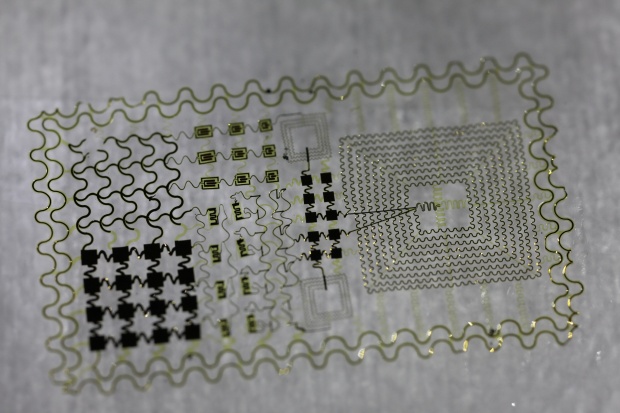
Micro-manufacturing even the "Sons of Anarchy could love - a new type of ultra-thin, self-adhesive electronic 'tattoo' that can effectively measure data about the human heart, brain waves and muscle activity.  No bulky equipment, conductive fluids or glues needed.

The researchers have created what looks like a cool tattoo, but in reality it is an epidermal electronic system (EES). They have incorporated miniature sensors, light-emitting diodes, tiny transmitters and receivers and networks of carefully crafted wire filaments into their initial designs.

Thousands of tons of toxic mercury are released into the environment each year and much of it ends up in sediment where it is converted into toxic methyl mercury, - and then enters the food chain, including in the fish we eat.

 New research in BMC Biotechnology details genetically engineered bacteria which can withstand high levels of mercury and go one step beyond - they can mop up mercury from their surroundings.

