





They allowed European minnows to learn the correct route through a maze to obtain food in the presence or absence of a predatory brown trout. Then a naïve minnow joined the group on later trials either in the presence or absence of the trout.
Suzuki roshi, in his wonderful Zen mind, beginner's mind, talks about the mental approach necessary for the study of Zen. It's an open, naïve attitude, without preconceptions and without habits which limit thought into certain patterns. I think it's the same as that the scientist should employ.
An experiment in which people eat soup from a bottomless bowl? Classic! Or mythological: American Sisyphus. It really happened. It was done by Brian Wansink, a professor of marketing and nutritional science in the Department of Applied Economics and Management at Cornell University, and author of the superb new book Mindless Eating: Why We Eat More Than We Think (which the CBC has called “the Freakonomics of food”). The goal of the bottomless-soup-bowl experiment was to learn about what causes people to stop eating. One group got a normal bowl of tomato soup; the other group got a bowl endlessly and invisibly refilled.
The study led by University of Connecticut Emeritus Sociology Professor James DeFronzo examined male serial killers in the United States from 1970 to 1992 using sociological perspectives long used to understand other crimes.
This artist's illustration shows an extrasolar planet orbiting very close to its host star. The planet designated HD 209458b, is about the size of Jupiter.
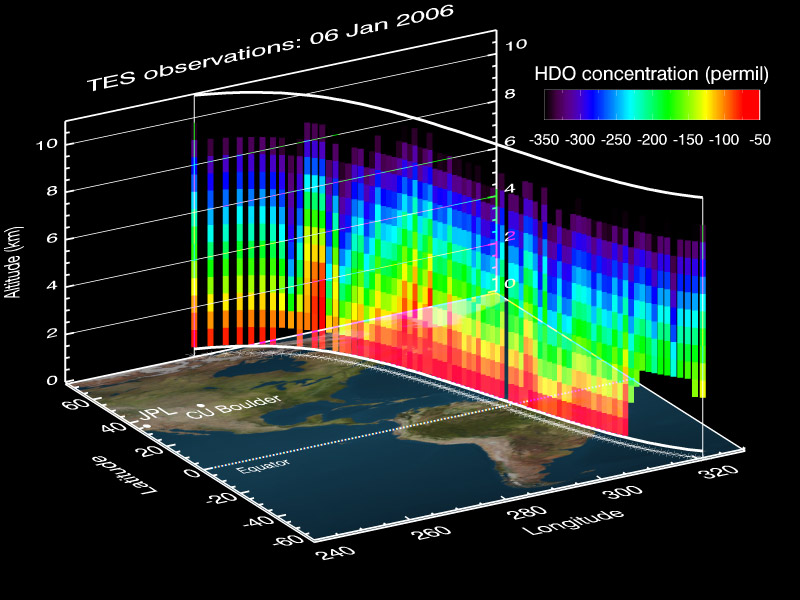
For the first time, NASA scientists have used a shrewd spaceborne detective to track the origin and movement of water vapor throughout Earth's atmosphere. This perspective is vital to improve the understanding of Earth's water cycle and its role in weather and climate.
This view depicts the distribution of "heavy" and "light" water vapor molecules over Earth's tropics.

