

Globular clusters are spherical collections of stars bound to each other by their mutual gravity. They are old, relics of the early years of the Universe, with ages of typically 12-13 billion years, and we know of roughly 150 globular clusters in the Milky Way.

Yet, like many humans, these clusters are still young at heart. Some are aging faster than others and that discovery has led to a way to measure the rate of aging. 

Star clusters form in a short period of time, meaning that all the stars within them tend to have roughly the same age. Because bright, high-mass stars burn up their fuel quite quickly, and globular clusters are very old, there should only be low-mass stars still shining within them.

Josh Miller likes to call himself a conservation paleobiologist, which makes sense when he explains how he uses bones as up-to-last-season information on contemporary animal populations. 

Bones, he says, provide baseline ecological data on animals complementary to aerial counts, adding a historical component to live observation. In his November cover article for the Ecological Society of America's journal Ecology, he assesses elk habitat use in Yellowstone National Park by their bones and antlers, testing his method against several decades of the Park Service's meticulous observations.

One of the small regulatory molecules, named microRNA-125b, is a novel regulator of p53, an important protein that safeguards cells against cancers, Singapore and U.S. scientists report in the March 17, 2009 issue of the journal Genes & Development.

The scientists found that during embryonic development, this microRNA keeps the level of p53 low to avoid excessive cell death.

But, if the DNA is damaged, the microRNA level is reduced to allow an increase in p53, which eliminates damaged cells and thus prevents tumor formation.

The research was conducted with zebrafish.

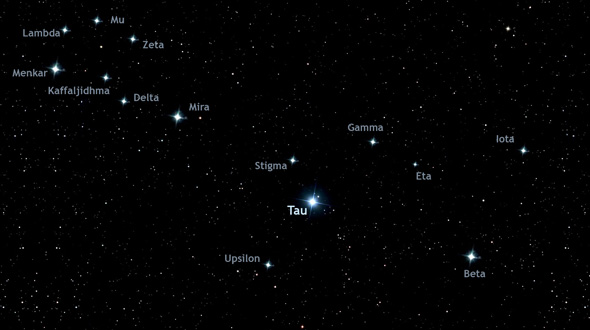
Tau Ceti, one of the closest stars most like our Sun, may have five planets. 

Tau Ceti is just 11.9 light years away and visible to our eyes in the evening sky. It is the closest single star with the same spectral classification as our Sun. Its five planets are estimated to have masses between two and six times the mass of the Earthm making it the lowest-mass planetary system yet detected. One of the planets lies in the habitable zone of the star and has a mass around five times that of Earth, making it the smallest planet found to be orbiting in the habitable zone of a Sun-like star. 

The goal of science is to explain the world according to natural laws - and then sometimes to break those rules.

And there is no greater rule than that people age and die. 

But we mitigate and prevent life-threatening diseases and we have increased life spans in  a quest to find a metaphorical "Fountain of Youth."

Ponce de León thought it might literally be a spring, but biologists are searching a little deeper.  But they may still find it in St. Augustine some day - in the structure and function of cells within the palm.  

Celiac disease, defined as a 'chronic small intestinal immune-mediated enteropathy precipitated by exposure to dietary gluten in genetically predisposed individuals', affects about one percent of the population but occasional 'epidemics' have been noticed along with a seasonal variation in number of cases diagnosed. 

Sweden has noticed an "epidemic" of celiac disease in children below two years of age but since celiac disease is considered multifactorial not much is known about potential risk- or protecting factors. But Swedish researchers now say repeated infections early in life increase the risk for getting it.

When does a business that has carefully positioned itself as more natural and wholesome and healthy and not at all like Big Ag suddenly look a lot like Big Ag?

When the FDA tells them they can only make people sick in their own state. Then the corporate lawyers come out in force.

Organic Pastures, America’s largest raw milk dairy and cause of numerous recalls just in the last year, would like to be able to make children ill across state lines and so they have filed suit against the U.S. Food and Drug Administration to force a change in the current law - which bans sales of raw milk across state lines but otherwise leaves it to states to allow businesses to poison its citizens or not. 

Recently, more than 100 cosmologists, particle physicists and observational astrophysicists at least agreed that dark matter is important. Of course, you are not getting invited to a colloquium on dark matter sponsored by the University of Chicago and the National Academy of Sciences unless you have something positive to say about how close we are to detecting it.  

So where do things stand?

Archaeologist William Mills found a treasure-trove of carved stone pipes in southern Ohio a century ago - buried almost 2,000 years earlier.

The Native American site became famous as Tremper Mound. Mills said the pipes had been carved from local stone and that has been accepted to this day. 

But a new analysis spanning nearly a decade tested the stone pipes and pipestone from quarries across the upper Midwest, and concluded that those who buried the pipes in Tremper Mound got most of their pipestone, and perhaps even the finished, carved pipes, from Illinois.

