
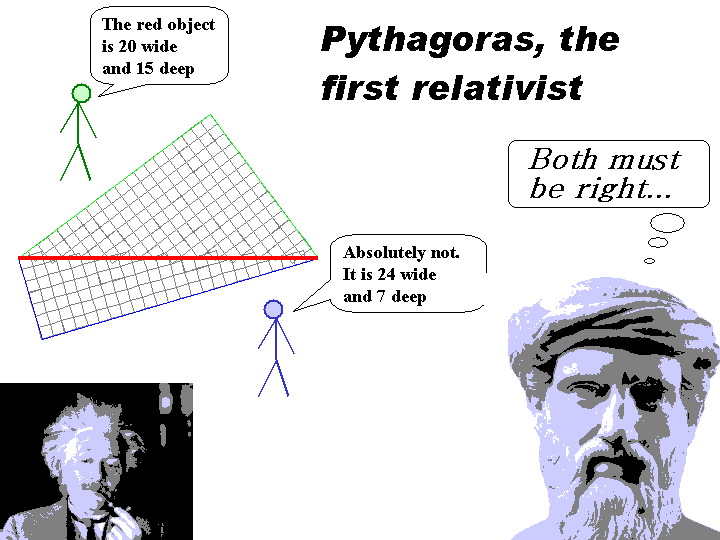
The old discussion about how an airplane, that is many tons of steel, can keep staying supported in mere air, is a perfect example for how discussions way too often polarize into two camps with both sides being wrong. Little headway is possible once any attempt at resolution is portrayed as either a dangerous accommodating that leads onto a slippery slope toward defeat, or worse belonging to the other, the evil side. There are too many such issues, not only in politics or largely yet to be explored scientific fields like climatology. Even in known physics, for instance in special relativity, there are these polarized debates where both sides are wrong. The theories are well known and their domains of applicability are well delimited by both mathematics and experiment.

New findings indicate that weight gain of infants is influenced by not just formula versus breast feeding but also the type of formula the infant is consuming, which the researchers say could have implications related to the infant's risk for the development of obesity, diabetes and other diseases later in life.

Formula-fed babies gain more weight than breast-fed babies but the study set out to determine differences between formula types.   Most infant formulas are cow's milk-based and alternatives include soy-based and protein hydrolysate-based formulas. Protein hydrolysate formulas contain pre-digested proteins and typically are fed to infants who cannot tolerate the intact proteins in other formulas.
In his book "Everything's Relative - And Other Fables From Science And Technology" Tony Rothman writes:

 "[The term] 'special relativity' is probably the greatest misnomer in the history of science"

I wholeheartedly agree. Amongst all scientific terms, the single word 'relativity' stands out as absolute record holder for triggering an astonishing amount of utter nonsense. 
Betting a grand on the existence or not of new physics is cool, but one does not need to be that daring (or to be that daring every other day) to enjoy the game of making predictions for what the fundamental research in experimental particle physics will discover or measure in a future close enough that we can reasonably expect to experience ourselves. So here I am, at the end of this eventful 2010, to look forward rather than backward, with no additional grand to invest but some insight to use, some reputation to waste, and a bit of humour to stuff between the lines.

