Living in California now, I follow my third 'home' team in my life. Growing up in Vero Beach, FL I was (and remain) a Dodgers fan because they held spring training there for 60 years. As an adult living in Pittsburgh I was (and remain) a Pirates fan because they were the new home team.
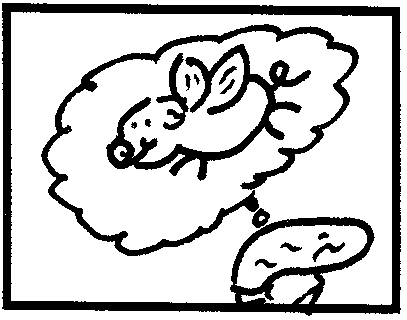
Yesterday I posted about how Elizabeth Loftus is able to Jedi mind trick our interpretations of memories, but what about creating entirely new memories?
Oh yeah, baby. Actually, making a false memory is pretty easy. Loftus describes a father convincing his daughter she’d gotten lost in a mall when she was five years old. At first, the daughter denied any memory of the event, but as the father provided more fake details—“Don’t you remember that I told you we would meet at the Tug Boat”—the daughter began to “remember” and even provide details of her own. Eventually when her father said “I was so scared,” she responded “Not as scared as I was!”
What's more universal in culture than a "thumbs up"?
To our brains, whether we seem to have a cultural familiarity or not, it isn't familiar at all, says new research in Human Brain Mapping.
People seem to react quickly and intuitively to body language, tone of voice and gaze but gestures are different, at least when the gesturer offers no other cues. Less surprisingly, the new study also found that same-race interaction leads to greater activity in the mirror neuron system, a region of the brain linked to subconscious imitation.
No, the following does not belong into the humor section, because I know of people who made a career with the method described below. This is serious! This is another article in my
series on the
usual cheating in science.
POP-science culture (POP = publish or perish = popular) ensures that only publications count in academia. Successful grant applications also count, but the grant you get only if you have many publications. And “friends” count, which you get with coauthoring and publications. And all that impacts science – no conspiracy theory necessary here. This is science today:
It's election season and the biggest schism in American culture come November voting won't be abortion or global warming, it will be the size and role of the U.S. government in the last two years.
But increased government involvement is not new in American cultural debates - nor is it even new in science.
Scientists have altered cardiac muscle cells to make them controllable with light and showed an ability to cause conditions such as arrhythmia in genetically modified mice, which opens up new possibilities for researching the development and therefore treatment of arrhythmias.
Tobias Brügmann and his colleagues from the University of Bonn’s Institute of Physiology I used a “channelrhodopsin” for their experiments - a type of light sensor. At the same time, it can act as an ion channel in the cell membrane because when stimulated with blue light, this channel opens, and positive ions flow into the cell. This causes a change in the cell membrane’s pressure, which stimulates cardiac muscle cells to contract.
Over at
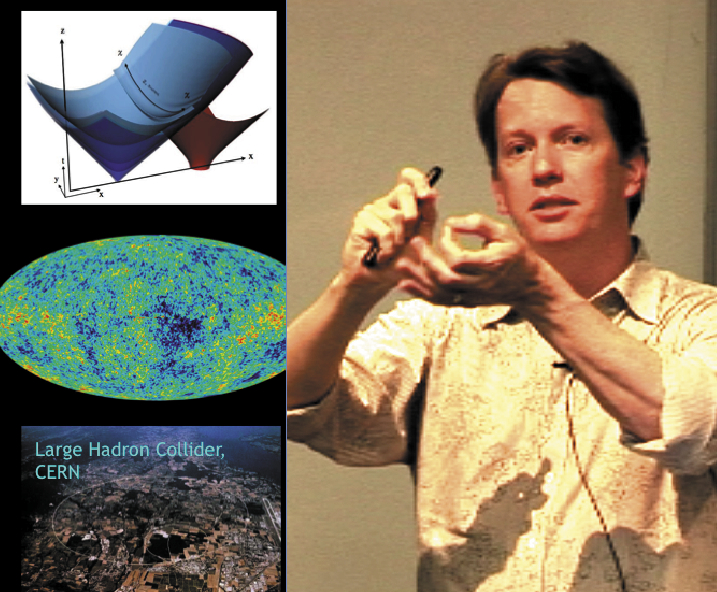
Cosmic Variance Sean Carroll is fighting an interesting battle. In a series of recent blogs that started under the title
"The Laws Underlying The Physics of Everyday Life Are Completely Understood" he is making the claim that physicists have fully figured out whatever we may encounter in our day-to-day lives. Everything. No exception. Sean wonders why this several decades old achievement never got the attention it deserves.
Like many of history's greatest minds, narcissists spend a great deal of time deep in thought - but for narcissists it is thought about themselves.
Neuroscientists recently found a correlation between high scores on the Machiavellian Egocentricity subscale - a measure of narcissism - and activity during rest in the posteromedial cortex, a brain region that previous studies have associated with thoughts about the self. The study also found a correlation between poor decision-making and brain activity during rest in the medial prefrontal cortex. Impulsive action without regard for consequences is another aspect of psychopathic behavior.
When you drink a soda, you may not think it has much in common with horseradish or peppers, but your body does.
New research from USC says the carbon dioxide in fizzy drinks triggers the same pain sensors in the nasal cavity as mustard or other spicy foods, though at a lower intensity. That burning sensation people feel in different degrees comes from a system of nerves that respond to sensations of pain, skin pressure and temperature in the nose and mouth.
Despite vast great differences between the atmospheres of Venus and Earth, it turns out very similar mechanisms produce lightning on the two planets. The rates of discharge, the intensity and the spatial distribution of lightning are comparable - which may help us understand the evolution of the atmospheres of the two planets.