











Subtle genetic changes that confer an evolutionary advantage upon a species, such as the dexterity characteristic of the human hand, while difficult to detect and even harder to reproduce in a model system, have nevertheless generated keen interest amongst evolutionary biologists.

In findings published in Science, researchers have uncovered a specifically human 13-nucelotide change concealed in the vast three-billion-letter landscape of the human genome. Their experiments reveal this stretch of DNA to be a recently evolved regulator of gee expression that, when introduced into a mouse embryo system, influence the molecular machinery to yield human limb and thumb development patterns.

Astronomical instruments needed to answer crucial questions, such as the search for Earth-like planets or the way the Universe expands, have come a step closer with the first demonstration at the telescope of a new calibration system for precise spectrographs. The method uses a Nobel Prize-winning technology called a 'laser frequency comb', and is published in this week's issue of Science.

"It looks as if we are on the way to fulfil one of astronomers' dreams," says team member Theodor Hänsch, director at the Max Planck Institute for Quantum Optics (MPQ) in Germany. Hänsch, together with John Hall, was awarded the 2005 Nobel Prize in Physics for work including the frequency comb technique.

TORONTO, September 4 /PRNewswire/ --

<< Companies to Begin Deployment of Networks Based on 802.16e-2005 Technologies for Carriers in the Asia-Pacific Region in 2008 >>

Binge drinking (5+ alcoholic beverages at one time) is associated with risky sexual behaviors. A new study is one of the few to examine this association by gender in an urban clinic for sexually transmitted diseases (STDs). Results show that binge drinking among women attending the clinic was linked to unsafe sexual practices – such as multiple partners and anal sex – and high rates of gonorrhea.

"The link between binge drinking and risky sexual behavior is complex," said Heidi E. Hutton, assistant professor of psychiatry and behavioral sciences at Johns Hopkins University School of Medicine as well as corresponding author for the study. "We wanted to examine one component of that relationship, whether binge drinking increased the risk of engaging in sexual behaviors and having STDs. We found gender differences in binge drinking among patients at an STD clinic, and also that binge drinking increased STD risk for women."

GENEVA, September 4 /PRNewswire/ --

- Merck Serono and Ablynx to Equally Contribute to Discover and Develop Nanobodies(R) Against two Targets in Oncology and Immunology and Equally Share the Resulting Profits

Merck Serono, a division of Merck KGaA, Darmstadt, Germany, today announced that it has entered into an agreement with Ablynx (Euronext Brussels: ABLX), to co-discover and co-develop Nanobodies(R) against two targets in oncology and immunology. The agreement includes an upfront cash payment to Ablynx of EUR10 million.

Bumblebees learn to avoid camouflaged predators by sacrificing foraging speed for predator detection, according to scientists from Queen Mary, University of London.

One of the bumblebee's main predators is the crab spider. Crab spiders hunt pollinating insects like bees and butterflies by lying in wait on flowers, and are particularly difficult for their prey to spot because they can change their colour to blend in with their surroundings.

Dr Tom Ings and Professor Lars Chittka from Queen Mary's School of Biological and Chemical Sciences wanted to discover whether bumblebees could learn to avoid these crab spiders. Their study, funded by the NERC and published in the journal Current Biology, shows how a run in with a spider affected the bees' foraging patterns.

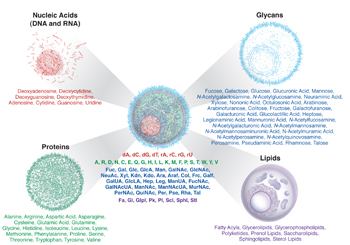
Why is it that the origins of many serious diseases remain a mystery? In considering that question, a scientist at the University of California, San Diego School of Medicine has come up with a unified molecular view of the indivisible unit of life, the cell, which may provide an answer.

Reviewing findings from multiple disciplines, Jamey Marth, Ph.D., UC San Diego Professor of Cellular and Molecular Medicine and Investigator with the Howard Hughes Medical Institute, realized that only 68 molecular building blocks are used to construct these four fundamental components of cells: the nucleic acids (DNA and RNA), proteins, glycans and lipids. His work, which illustrates the primary composition of all cells, is published in the September issue of Nature Cell Biology.

Like the periodic table of elements, first published in 1869 by Russian chemist Dmitri Mendeleev, is to chemistry, Marth’s visual metaphor offers a new framework for biologists.

Sarah Palin, the Republican nominee for vice president, is different from many female leaders around the world in at least one respect – her political career does not follow that of a male relative, according to an expert on women in global politics.

Many female leaders around the world had a family connection to a politically powerful male, said Pamela Paxton, associate professor of sociology and political science at Ohio State University.

“In many countries with traditional cultures, women are easily seen as ‘stand-ins’ for their father or husband,” said Paxton, who is co-author of the book "Women, Politics, and Power: A Global Perspective" (Pine Forge Press, 2007) with Melanie Hughes from the University of Pittsburgh. Often, women leaders achieve power when their male relative dies, is martyred, or otherwise is forced to leave office.

As if things weren’t tough enough for premature babies who have tubes down their throats and noses to survive, once the tubes are removed, they are often unable to take nourishment orally — that is, suck.

But 20 tube-fed preterm infants with respiratory distress syndrome treated with the NTrainer, a therapeutic device patented by the University of Kansas, rapidly learned to suck far better and transitioned to oral feeding faster than a control group of babies with the syndrome.

Respiratory distress syndrome, also known as hyaline membrane disease, is a common condition of prematurity, particularly in the youngest infants, because babies’ lungs are too immature to survive outside the womb without the help of a ventilator and/or oxygen. Overall, it is the seventh leading cause of death among infants younger than one year, fifth for African-American and third for Hispanic infants.

Researchers from the National Institute of Standards and Technology (NIST) and Seoul National University (SNU) have learned how to tweak a new class of polymer-based semiconductors to better control the location and alignment of the components of the blend.

Their recent results—how to move the top to the bottom—could enable the design of practical, large-scale manufacturing techniques for a wide range of printable, flexible electronic displays and other devices.

Organic semiconductors—novel carbon-based molecules that have similar electrical properties to more conventional semiconducting materials like silicon and germanium—are a hot research topic because practical, high-performance organic semiconductors would open up whole new categories of futuristic electronic devices. Think of tabloid-sized “digital paper” that you could fold up into your pocket or huge sheets of photovoltaic cells that are dirt cheap because they’re manufactured by—basically—ink-jet printing.


