The cell membrane at first may seem a simple device, but it is in fact a very complex machine. The basic building block is the phospholipid, a set of molecules that have hydrophilic (water loving) heads on one side and a hydrophobic (water hating) tail on the other. Because of this relationship the water loving heads want to be near aqueous environments and the water hating tails like to be near other water hating tails, or fats. Since cells live in aqueous environments, and are filled with aqueous fluids the cell membrane forms two layers with the heads pointing out and the tails pointing towards each other.
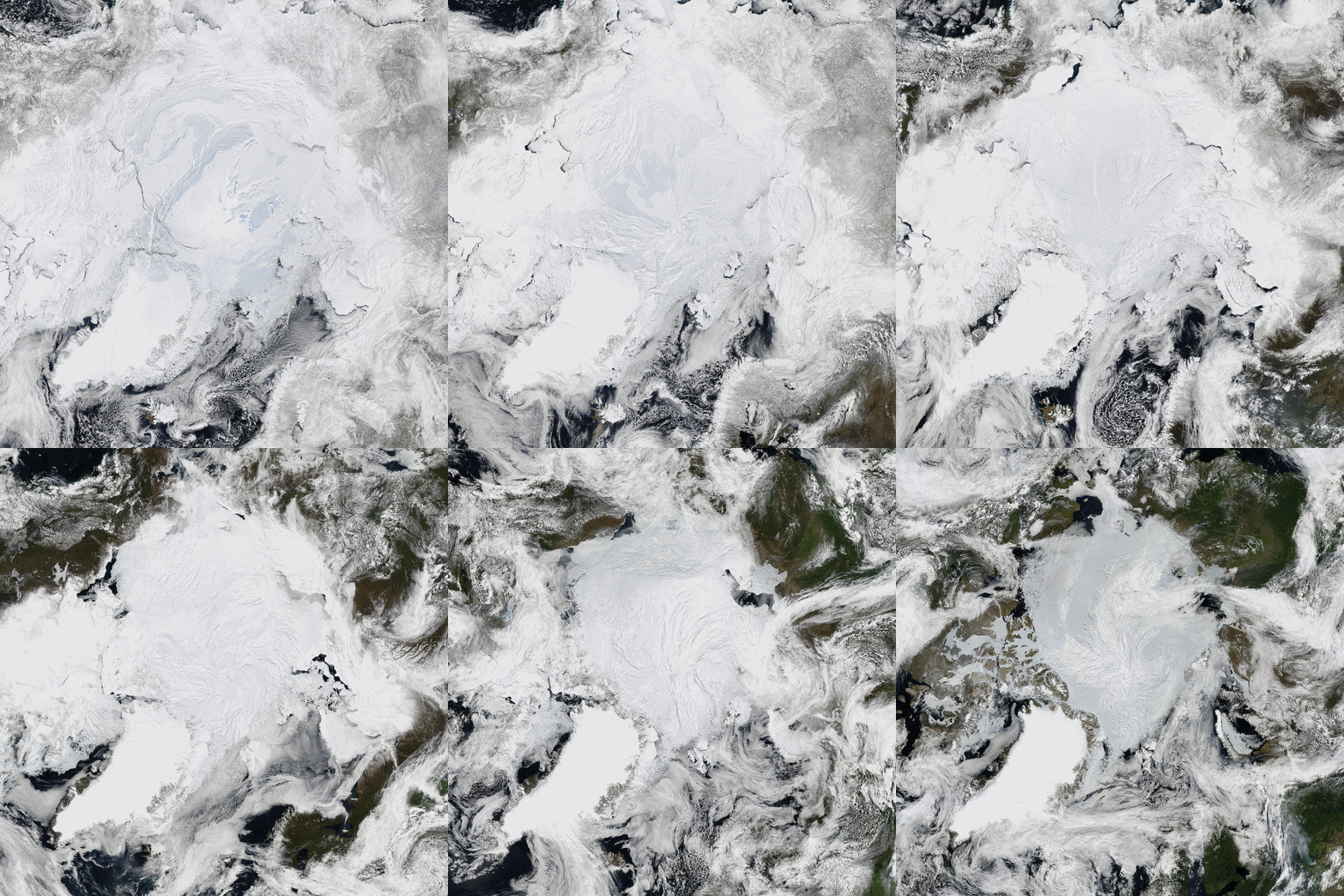
MODIS Rapidfire For Citizen Scientists - #4This is part #4 of a brief explanation of the NASA/GSFC MODIS Rapid Response System -
Rapidfire - together with a Howto for citizen scientists. The first part was
MODIS Rapidfire For Citizen Scientists - #1In this part, I describe some of the things to be seen in the MODIS images.
By optimizing magnets, hybrid and electric cars can be made economically competitive, according to a research project currently underway at St. Pölten University of Applied Sciences in Austria.
Their project is seeking to find the ideal composition and structure of high-performance permanent magnets intended for use in cars, a move which can help conserve raw materials and they say the ideal designs can be identified quickly and without major expense, thanks to numerical simulation methods.
If you drink bottled water, soda (or pop, depending on whether you are from Philadelphia or Pittsburgh), or a micro brew-beer in Dallas, Denver or numerous other American cities, you may be carrying an 'iso-signature', a natural chemical imprint related to that geographic location.
Iso-signatures are a chemical in imprint in hair due to beverages may and could be used to track your travels over time, a new study suggests in the Journal of Agricultural and Food Chemistry.