What's the best way to swim?

If "best" is the same as "tried and recommended by the majority of fish," then the answer is easy. Think of your basic sardine beating its tail back and forth propel itself forward, and you've got it. This undulatory swimming is used by aquatic animals from the size of a pencil eraser to the size of a house, and it is by far the dominant method of locomotion in the ocean (at macroscopic scales, at least).

But there is one whopping exception to the rule: squid, of course. Although they do have fins, and various species undulate these fins to various degrees, they are only a supplement to the real thrust: jet propulsion. The squid sucks water into its body, and squirts it out through a funnel.
Arctic Ice June 2010 - Solstice Update


This is an update to my articles Arctic Ice June 2010 and Arctic Ice June 2010 - Update, part of my ongoing series of articles about the Arctic.


The NSIDC ice extent graph continues to show ice extent well below the 2007 levels.

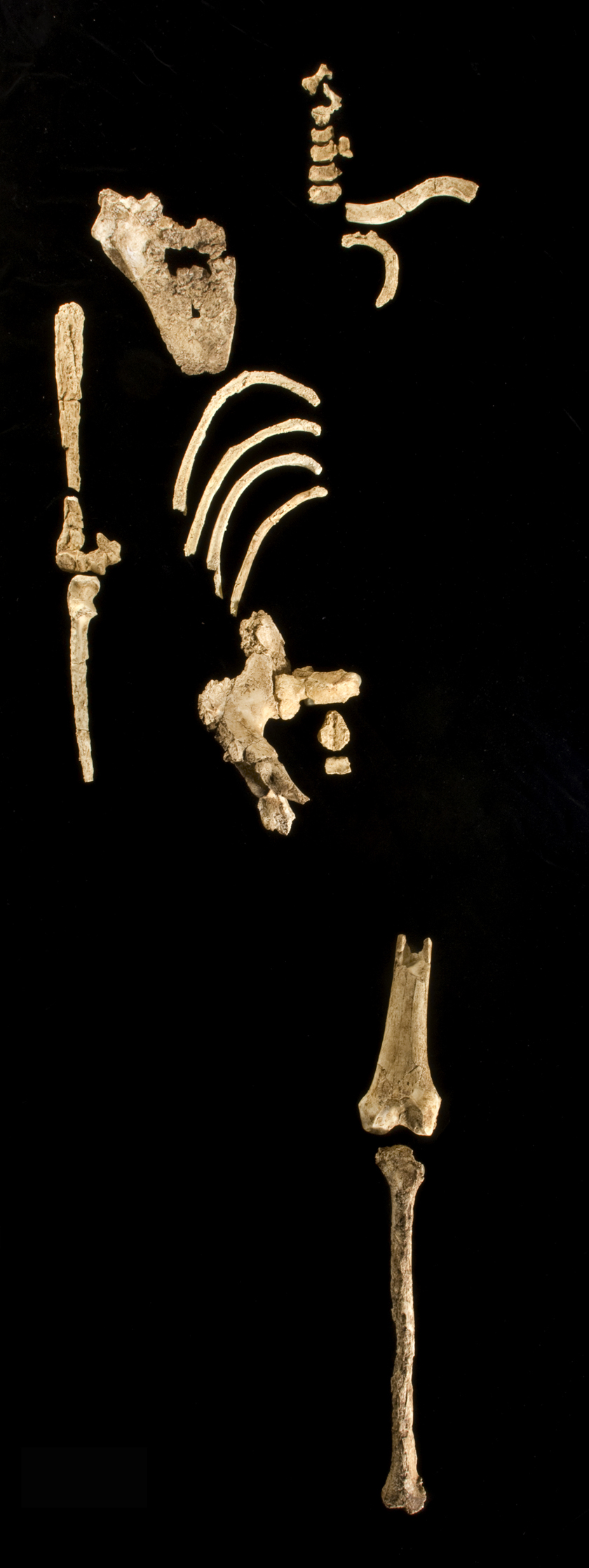
Meet Lucy's 'great-grandfather'.   Scientists from The Cleveland Museum of Natural History, Kent State University, Case Western Reserve University, Addis Ababa University and Berkeley Geochronology Center were part of an international team that discovered and analyzed a 3.6 million-year-old partial skeleton found in Ethiopia. They say the early hominid is 400,000 years older than the famous Lucy skeleton and that their research on this new specimen indicates that advanced human-like, upright walking occurred much earlier than previously thought. 

The partial skeleton belongs to Lucy's species, Australopithecus afarensis. It was found in the Woranso-Mille area of Ethiopia's Afar region by a team led by first author Dr.

Wilson Tucker’s 1952 The Long Loud Silence is The Road of the 1950’s.

It’s a pure survival story, one about the complete deterioration of society into a vicious, gritty state of no-holds-barred struggle after a nuclear and biological holocaust. Unlike many other post-apocalyptic novelists, Tucker doesn’t envision much society left at all after total destruction: there is no reversion to a pseudo-Native American tribal state, to early rural 19th century agrarianism, to feudalism, to a theocratic dystopia. A total Hobbesian (or Darwinian) state of nature prevails for decades after the catastrophe. Society does not rebuild.


