If you own(ed) a digital video recorder like a
Replay, you probably never felt so liberated. While watching a television show, it jumped over the entire block of commercials. You could send programs to friends over the internet and watch them in different parts of your house. It was a miracle of viewer-friendly technology and that's why it was under constant lawsuit pressure from large media companies.
Consuming caffeine at any time during pregnancy is associated with an increased risk of fetal growth restriction (low birth weight), according to research published on bmj.com today.
Although some previous studies have also shown this, the study additionally shows that any amount and type of
caffeine intake — from tea, cola, chocolate, cocoa, and some prescription drugs, as well as coffee—is linked with relatively slower fetal growth.
Dr Justin Konje and colleagues from the University of Leicester as well as collaborators from the University of Leeds, examined the association of maternal caffeine intake and individual caffeine metabolism on birth weight.
An unfortunate downside to the energy debate is that, when politics get involved, science goes out the window. The same activist groups that insisted ethanol would be the savior of the environment for 20 years (and were horribly wrong) now insist solar energy is the perfect solution.
Fibromyalgia is frequently considered an 'invisible syndrome' since musculoskeletal imaging is negative. Some researchers have thought that the pain reported by fibromyalgia patients was the result of depression rather than symptoms of a disorder.
It seems like common sense, right? We don't allow cigarettes on TV because the risk to impressionable younger people is greater than it is with adults. Adolescents who have high levels of exposure to television programs that contain sexual content are twice as likely to be involved in a pregnancy over the following three years as their peers who watch few such shows, according to a new RAND Corporation study.
The study, published in the November edition of the journal Pediatrics, is the first to establish a link between teenagers' exposure to sexual content on TV and either pregnancies among girls or responsibility for pregnancies among boys.
Researchers in Spain writing in the Journal of Proteome Research report deep new insights into how evolution changes the biochemistry of living things, helping them to adapt to new environments. Their study, based on an analysis of proteins produced by two populations of marine snails, reveals chemical differences that give one population a survival-of-the fittest edge for life in its cold, wave-exposed environment.
Researchers in China writing in Journal of the American Chemical Society are reporting development of a new DNA "tweezers" that are the first of their kind capable of grasping and releasing objects on-demand. The microscopic tweezers could have several potential uses, the researchers note. Those include microsurgery, drug and gene delivery for gene therapy, and in the manufacturing of nano-sized circuits for futuristic electronics.
WAGENINGEN, The Netherlands, November 3 /PRNewswire/ -- The Netherlands and Malaysia have joined forces to dispel the confusion that has arisen surrounding greenhouse gas emissions from oil palm cultivation in tropical peatland areas. Dutch Minister Cramer (Housing, Regional Development and Environment) and Malaysian Minister Chin (Plantation Industries and Commodities) set up the Joint Committee on Carbon Emissions, which is charged to shed light on this subject in the coming years.
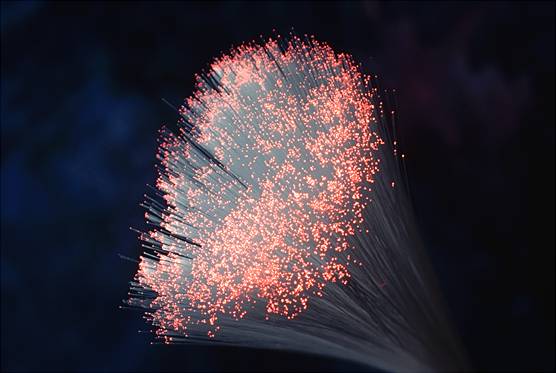
Optical science has taken another leap forward. Increasing amounts of technologies rely on the usage of optic fibers for transmission of phone calls, TV broadcasts, and the internet. Optical fibers allows a higher bandwidth which means faster downloads, and connections.
A team of researchers from Clemson University, headed by Professor John Ballato, have devised a new optic fiber, containing a silicon core. Their findings, published in Optics Express (1), have propelled optic science into a new wave of applications for optic fibers.
You've had the flu three years in a row. The first year, you got it from Bob, the IT guy, who sneezed while updating your computer. The second year, you got it from Harry, who touched the tab on the water cooler after sneezing into his hand. The third year, you got it from Linda because she made out with Harry, and Harry's wife got the flu from their kids. Gross.